




Synthesis and Characterization of P-Doped Diamond Crystals in the FeNiCo-C System under High Temperature and High Pressure
-
摘要: 为探究磷掺杂对金刚石晶体生长的影响,在5.5 GPa、1 300 ℃的条件下,将Fe3P掺入FeNiCo-C体系中,采用温度梯度法沿(111)晶面合成了磷掺杂金刚石单晶。对合成的金刚石样品进行傅里叶变换红外光谱、拉曼光谱、光致发光光谱以及X射线光电子能谱测试。随着Fe3P添加量的上升,金刚石晶体颜色逐渐变浅,晶体结构由八面体向六-八面体转变。金刚石晶体中氮杂质含量随着Fe3P添加量的上升呈下降趋势,原因是Fe3P的掺入改变了触媒特性,使触媒的氮溶解度增加,从而减少了进入金刚石内部的氮原子数量。磷掺杂会使金刚石晶体内应力增大,产生晶格畸变,降低金刚石质量,这一结论可通过金刚石拉曼峰位偏移和半高宽变化得到证实。磷原子的掺入不利于金刚石晶体中NV−色心的形成。X射线光电子能谱测试结果证实,磷元素成功进入金刚石晶体内部。研究成果可为完善磷掺杂金刚石晶体合成机理以及推动磷掺杂金刚石晶体的潜在应用提供参考。Abstract: To investigate the effects of phosphorus doping on diamond crystal growth, diamond single crystals doped with phosphorus were synthesized along the (111) plane using the temperature gradient method. The experiments were conducted under conditions of 5.5 GPa and 1 300 ℃, with Fe3P added into the FeNiCo-C system. The synthesized diamond samples were characterized by Fourier-transform infrared (FTIR) spectroscopy, Raman spectroscopy, photoluminescence (PL) spectroscopy, and X-ray photoelectron spectroscopy (XPS). With increasing Fe3P addition, the diamond color gradually lightens, and the crystal morphology changes from octahedral to hexoctahedral. Moreover, the addition of Fe3P alters the catalyst properties, leading to the increases of nitrogen solubility of the catalyst. Thus, fewer nitrogen atoms enter the diamond lattice, resulting in a decrease of nitrogen impurity content in the diamonds. Phosphorus doping increases internal stress and induces lattice distortion in the diamond crystal, resulting in degrading of the diamond quality. This conclusion is supported by the shift and broadening of the Raman peak. The incorporation of phosphorus atoms inhibits the formation of NV− centers in diamond crystals. XPS results confirm the successful incorporation of phosphorus into the diamond lattice. This study provides useful insights for understanding the synthesis mechanism of phosphorus-doped diamond crystals, and supports potential applications of phosphorus-doped diamond crystals.
-
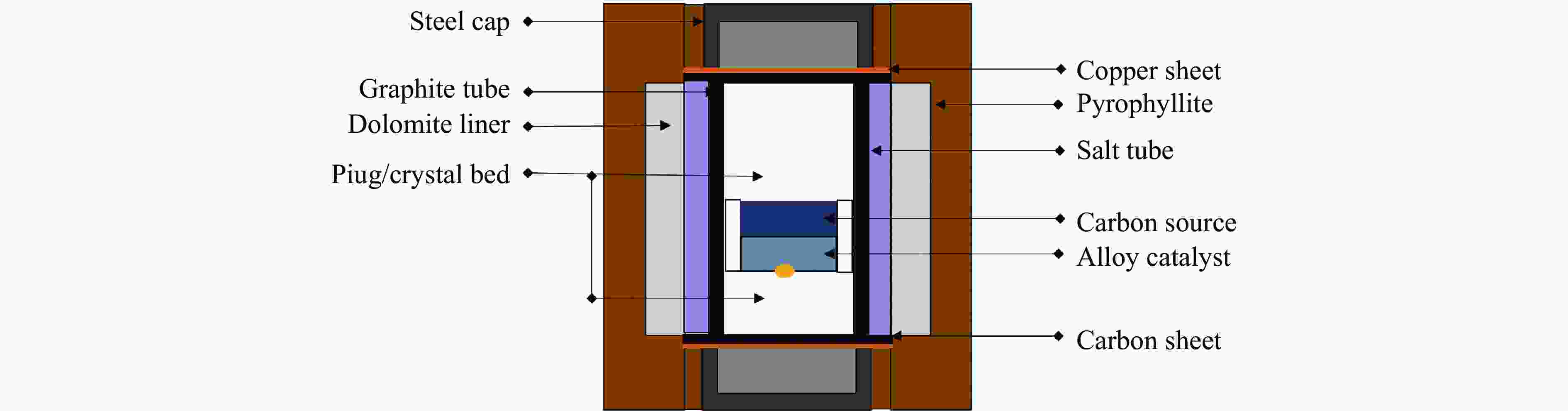
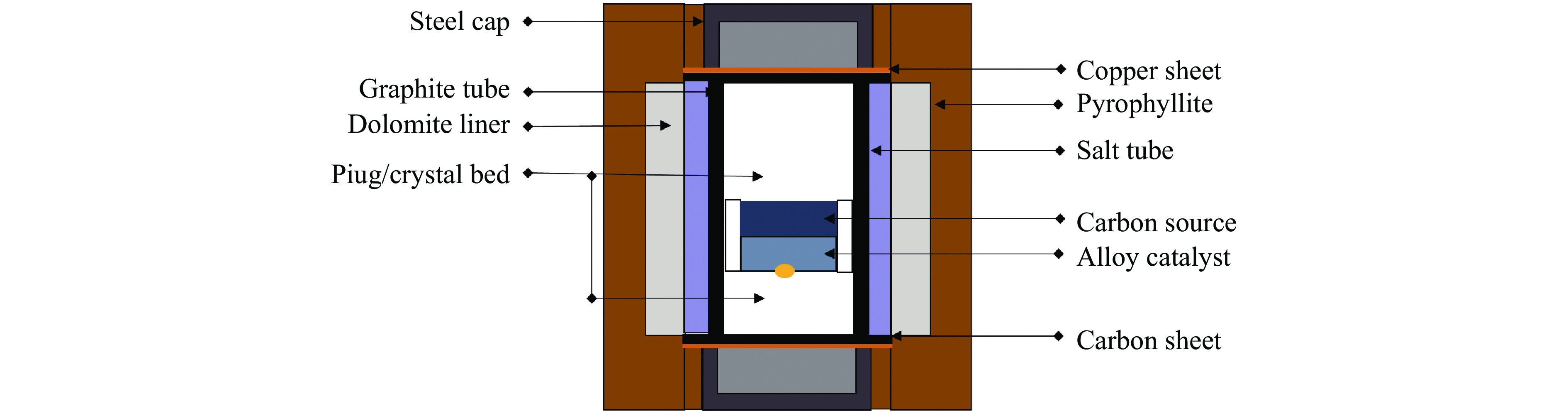
图 1 温度梯度法合成金刚石晶体腔体示意图
Figure 1. Schematic diagram of diamond growth cell via the temperature gradient method
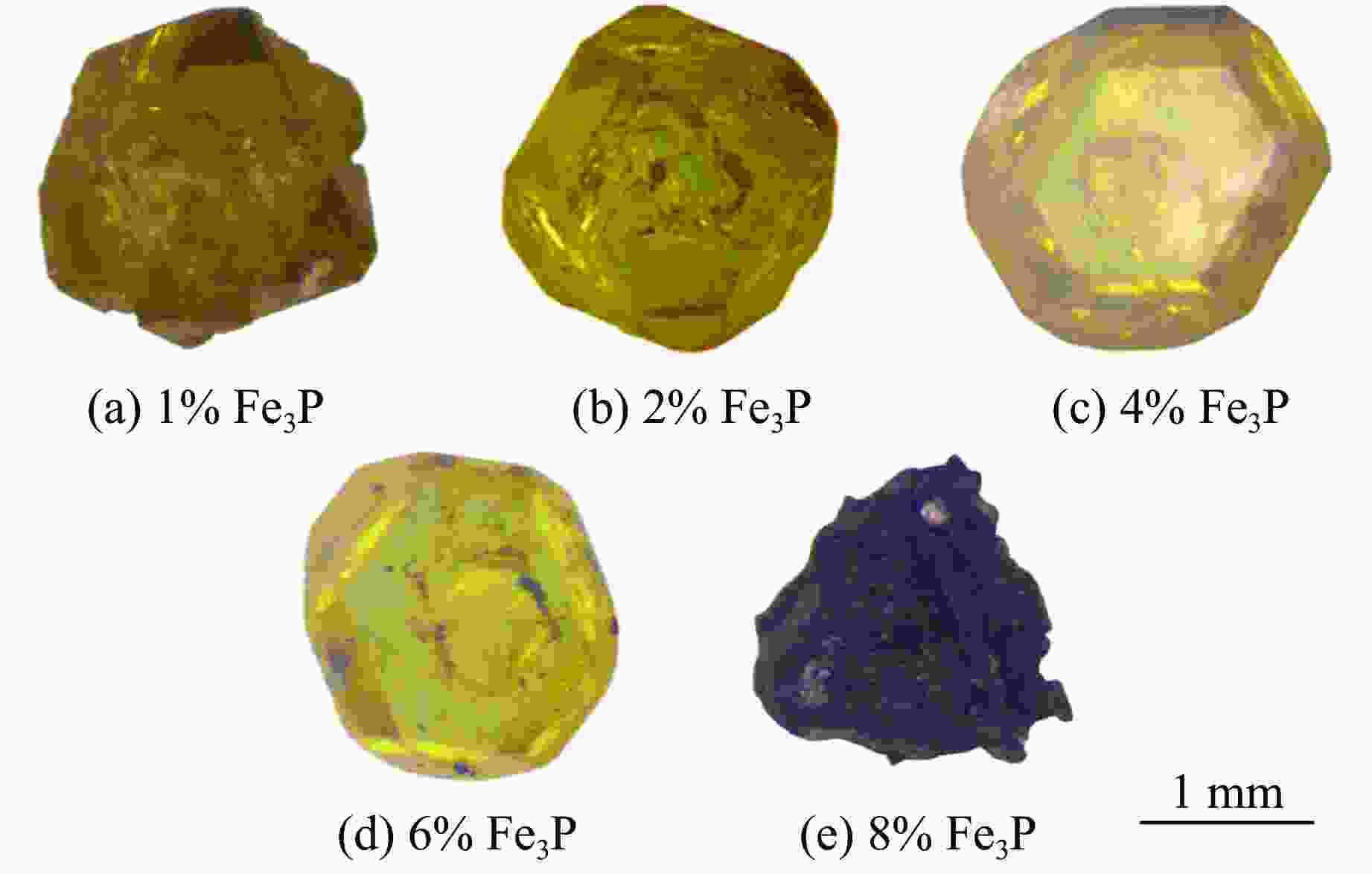
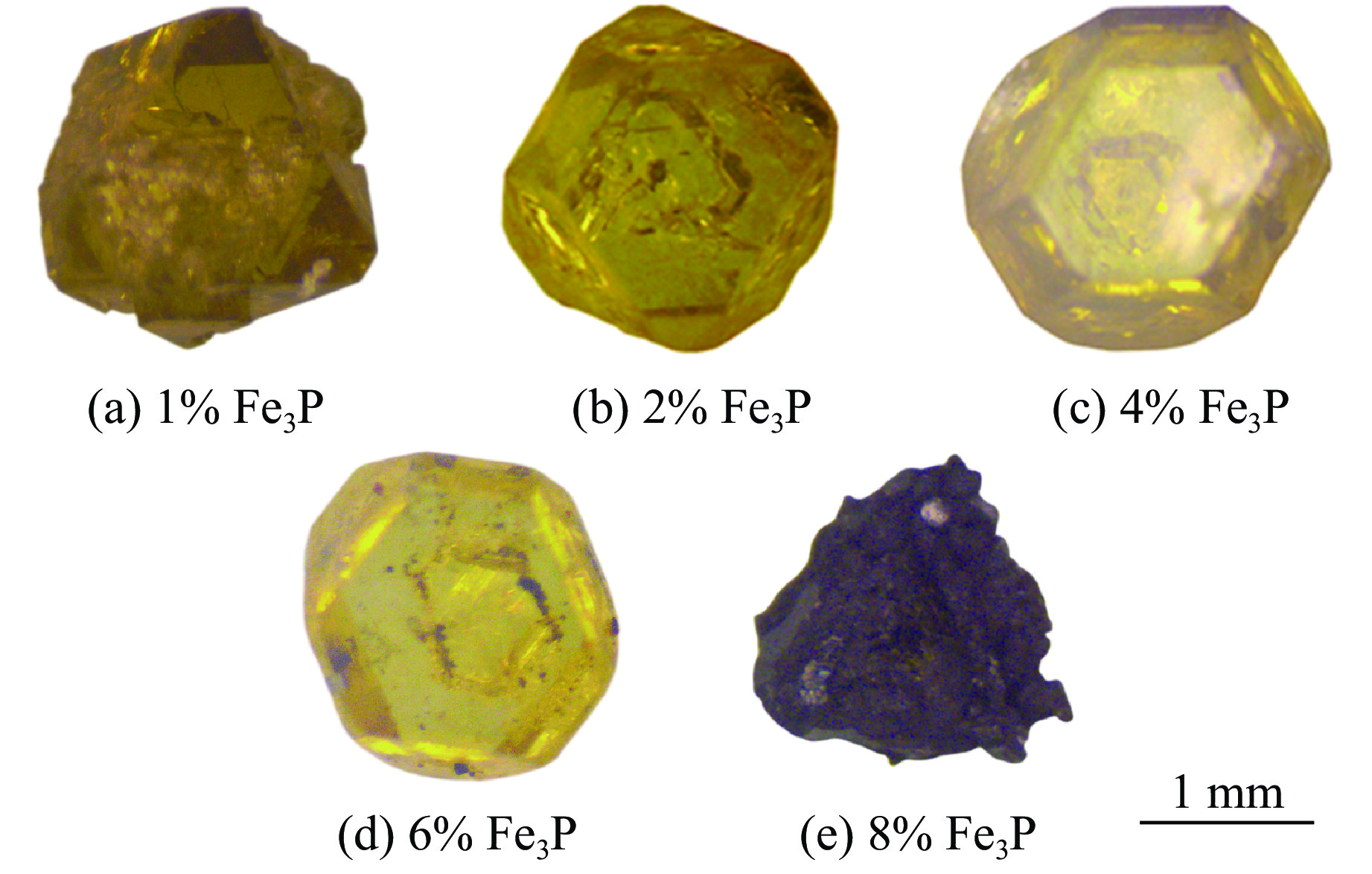
图 2 添加不同质量分数Fe3P的金刚石晶体的光学显微照片
Figure 2. Optical micrographs of diamond crystals with different Fe3P mass fraction
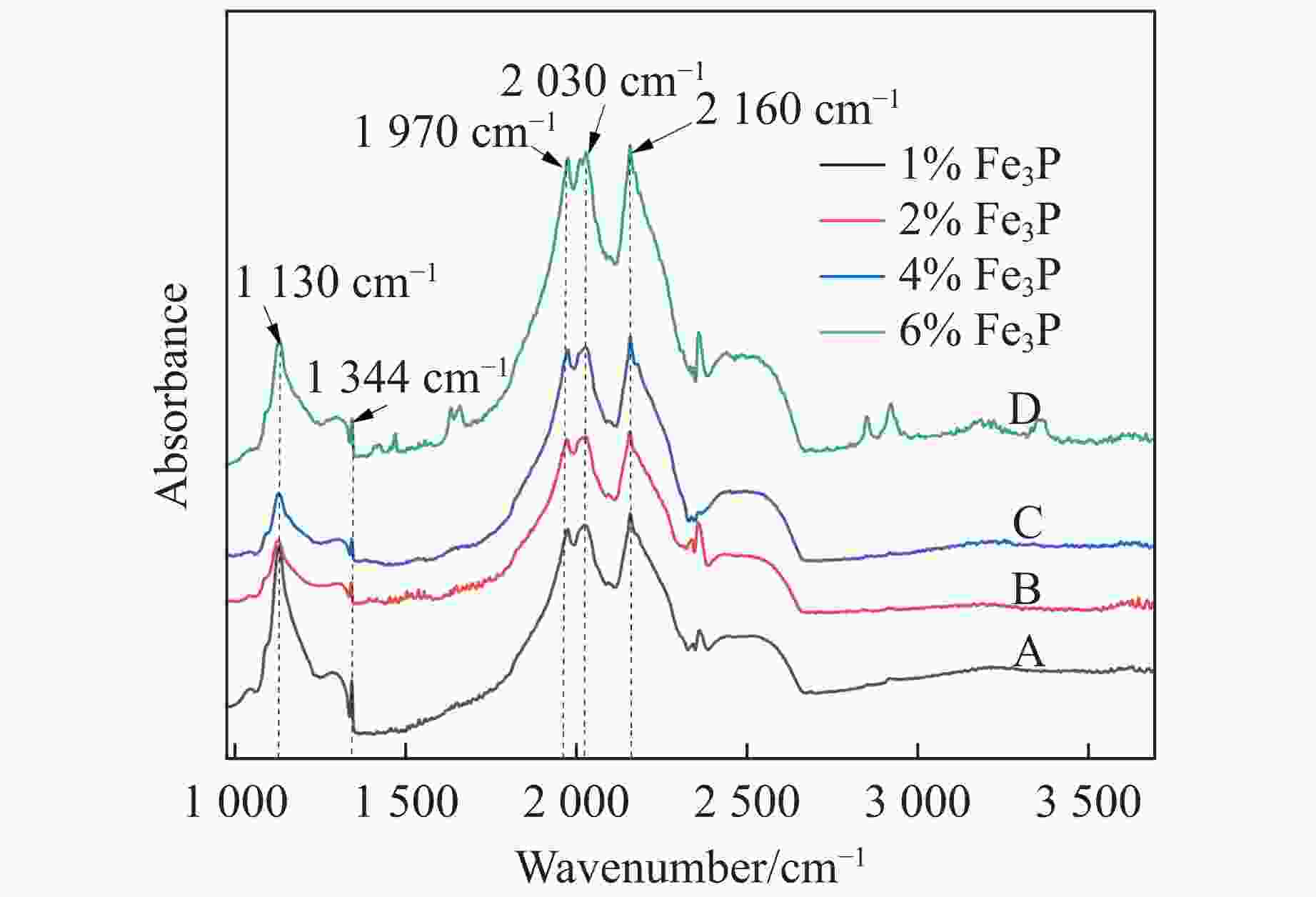
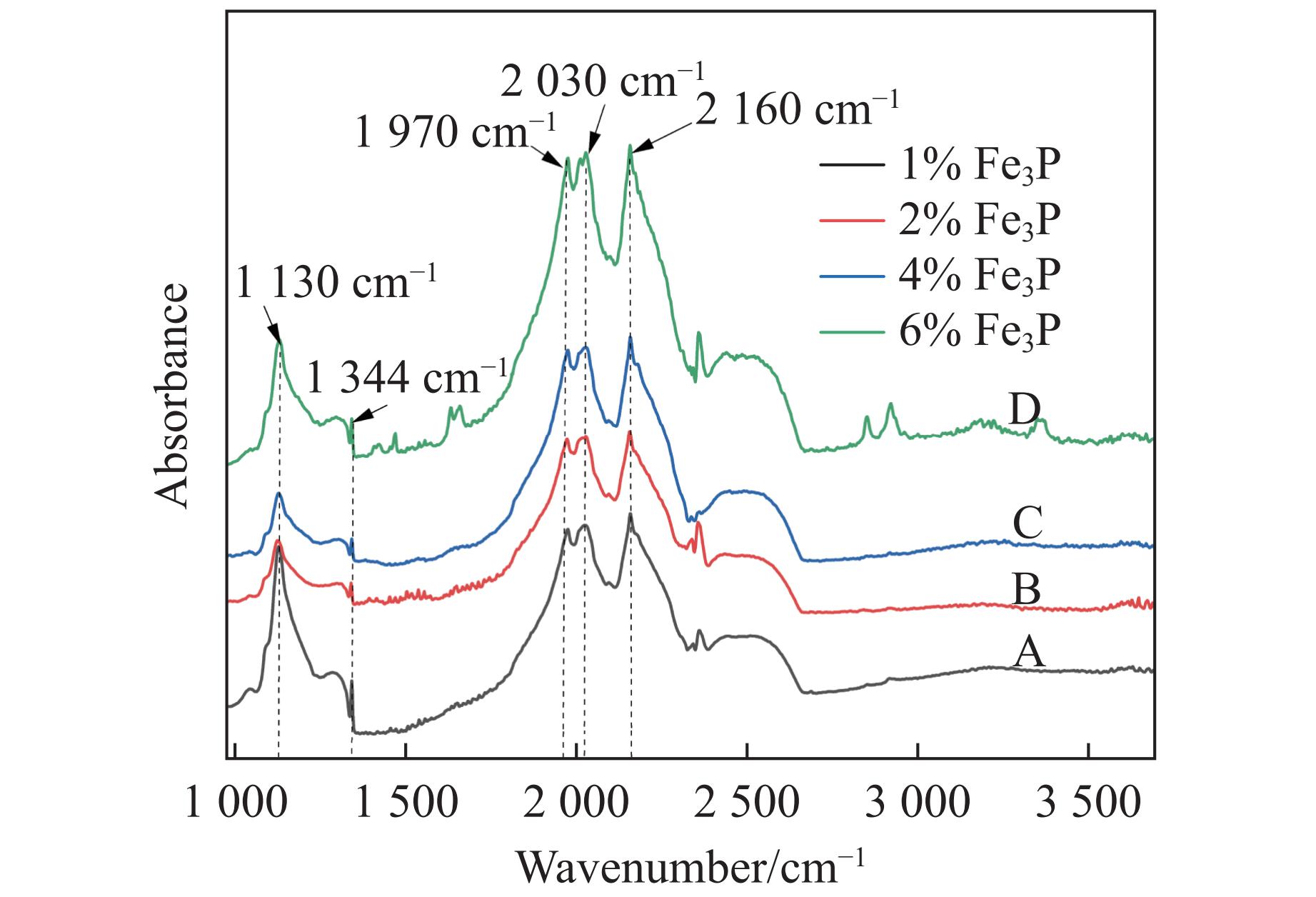
图 3 不同Fe3P添加量金刚石单晶的红外光谱
Figure 3. FTIR spectra of diamond crystals synthesized under different Fe3P mass fraction
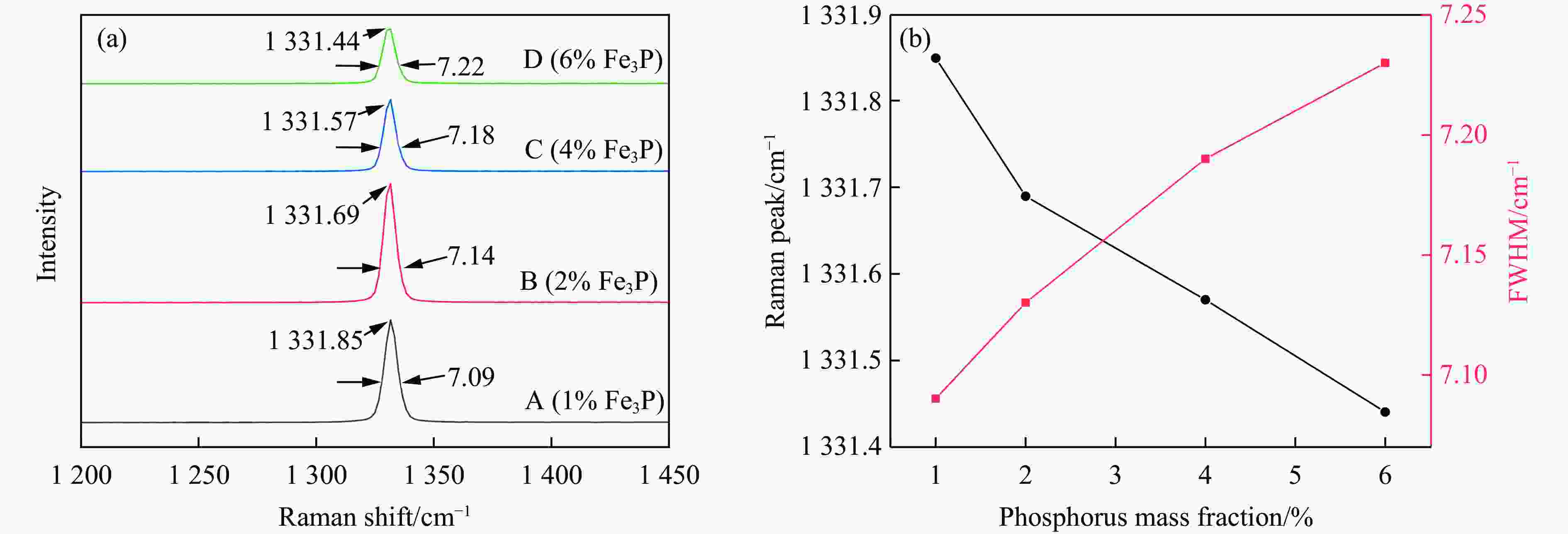
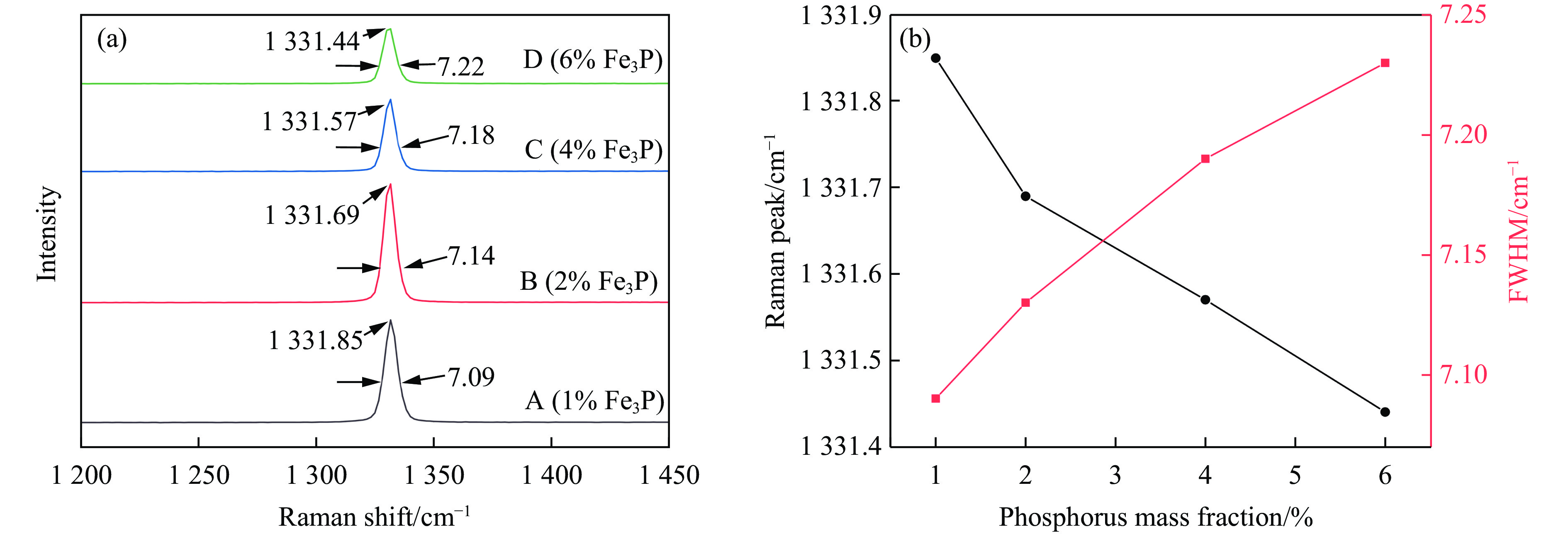
图 4 不同Fe3P质量分数金刚石单晶的(a) Raman光谱以及(b) 拉曼峰位和半高宽
Figure 4. (a) Raman spectra and (b) Raman peak positions and FWHM of diamond crystals synthesized under different Fe3P mass fraction
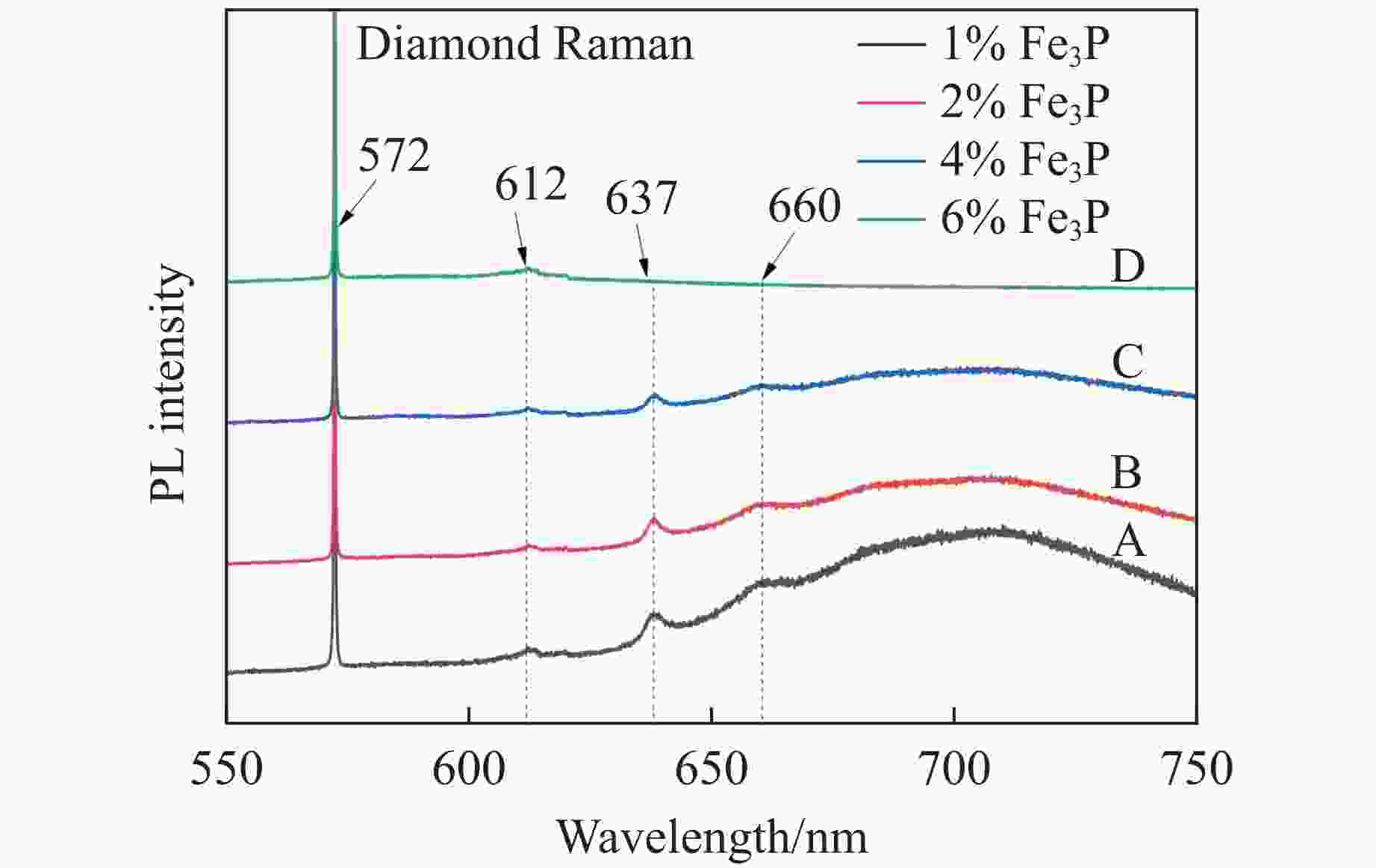
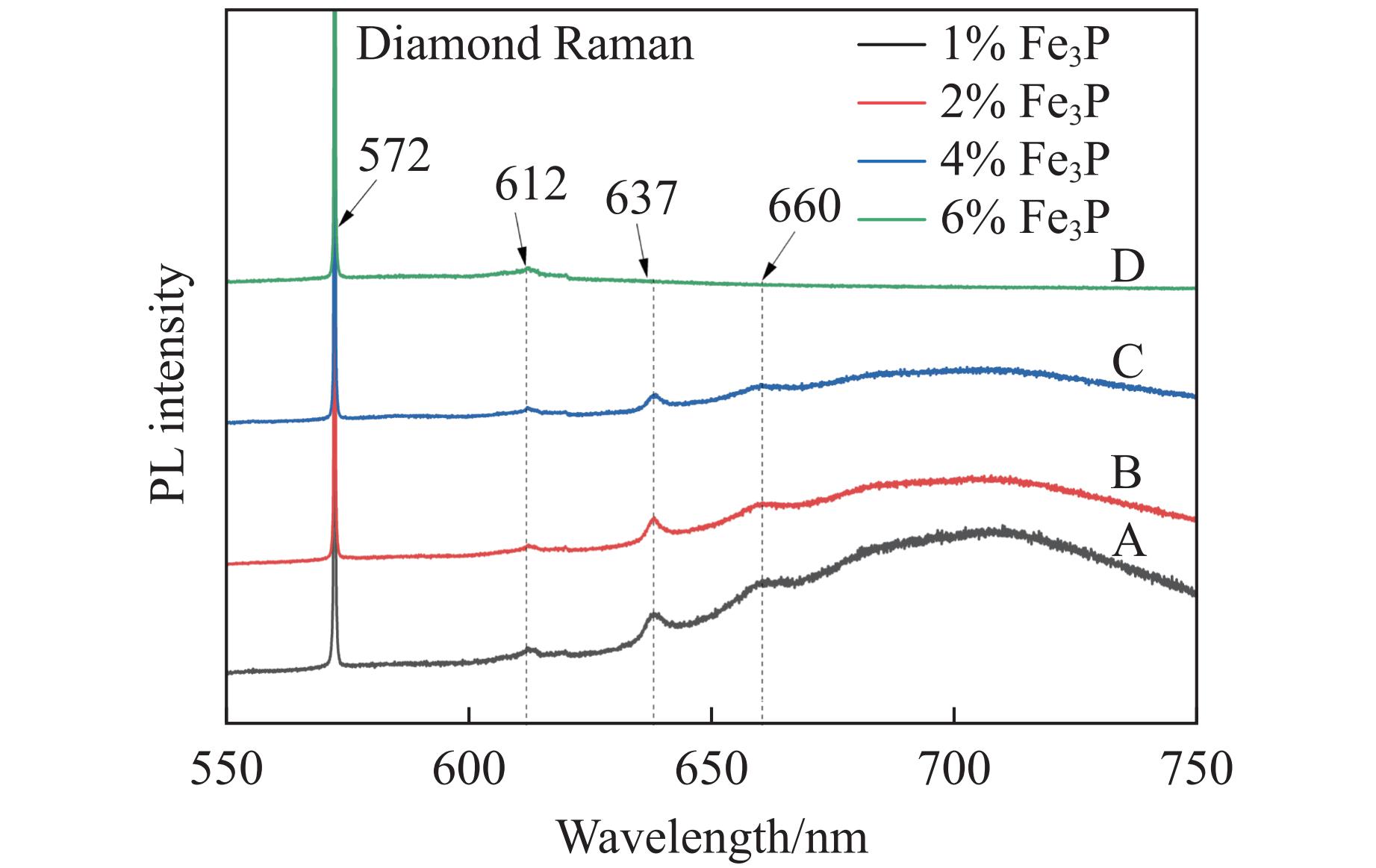
图 5 不同Fe3P添加量金刚石单晶的PL光谱
Figure 5. PL spectra of diamond crystals synthesized under different Fe3P content
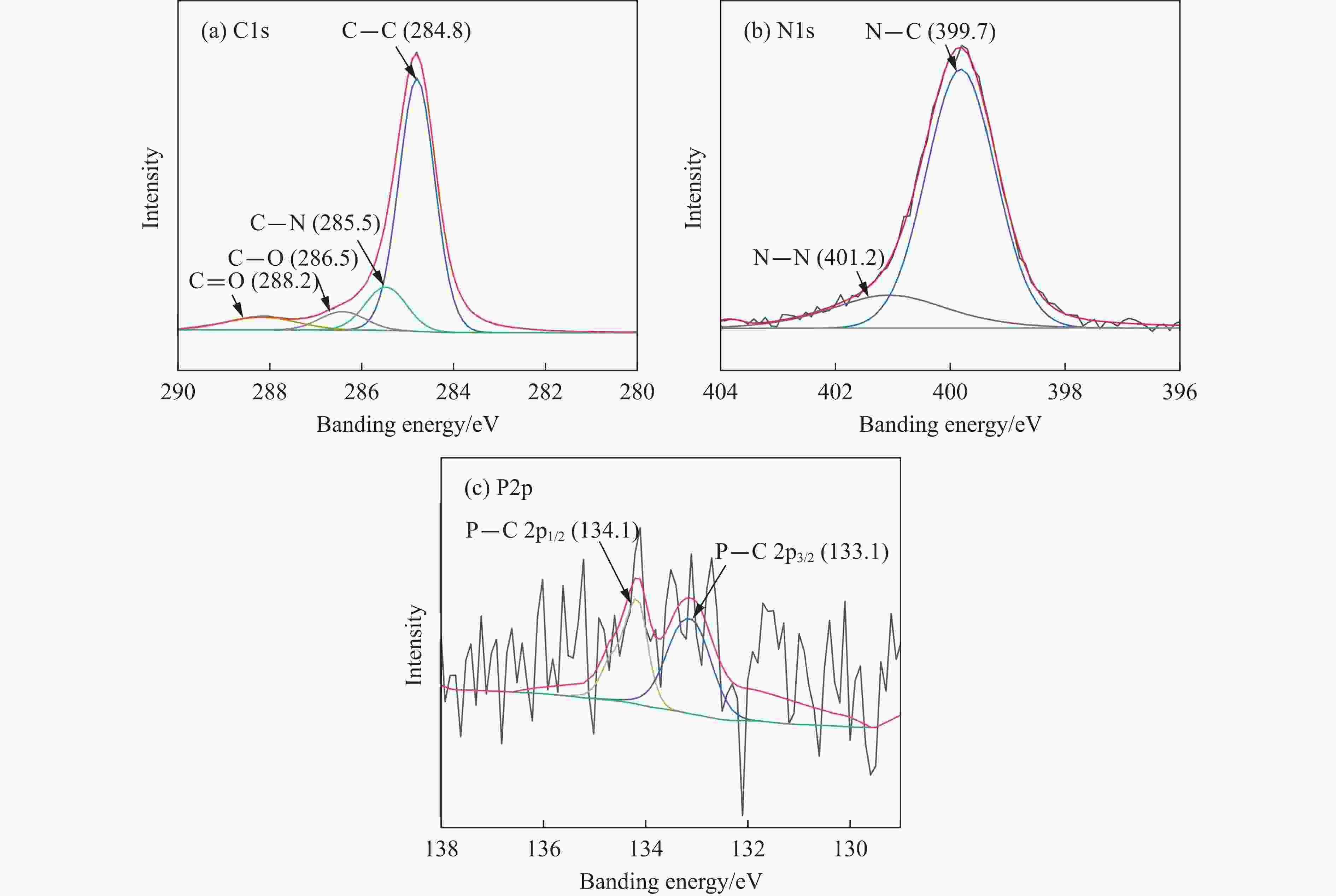
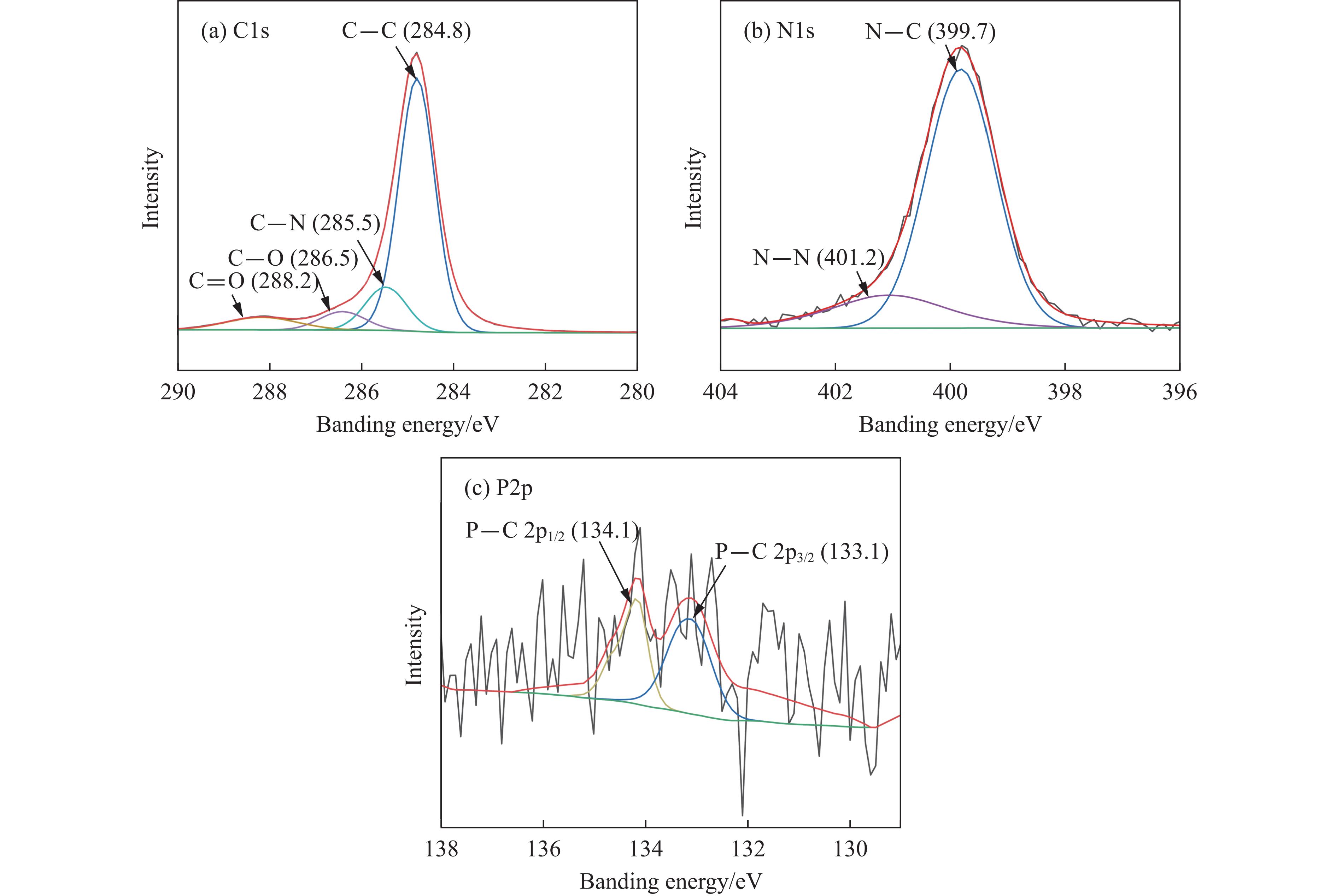
图 6 Fe3P质量分数为2%的金刚石晶体的XPS光谱
Figure 6. XPS spectra of diamond crystals with Fe3P mass fraction of 2%
表 1 P掺杂金刚石晶体形貌及颜色
Table 1. Morphology and color of P-doped diamond crystals
Sample Mass fraction of Fe3P/% Morphology Color Inclusion A 1 Octahedron Yellow No B 2 Hexoctahedral Yellow Little C 4 Hexoctahedral Light yellow Little D 6 Hexoctahedral Light yellow Many E 8 Skeletal crystal Dark  下载: 导出CSV
表 2 P掺杂金刚石晶体的氮含量
Table 2. Nitrogen concentration of P-doped diamond crystals
Sample CN/10−6 A 387 B 157 C 134 D 111
下载: 导出CSV
表 3 不同Fe3P质量分数的金刚石单晶的内应力
Table 3. Internal stress of diamond crystals synthesized under different Fe3P mass fraction
Sample σh/GPa A 0.052 B 0.107 C 0.149 D 0.194
下载: 导出CSV
-
[1] DENG H, HE J. A study of the grinding performance of laser micro-structured coarse-grained diamond grinding wheels [J]. The International Journal of Advanced Manufacturing Technology, 2017, 93(5): 1989–1997. doi: 10.1007/s00170-017-0639-9 [2] DU J B, LIU H Z, YANG N, et al. Modification of diamond tool by focused ion beam in dry single-point diamond turning [J]. Applied Surface Science, 2023, 637: 157882. doi: 10.1016/j.apsusc.2023.157882 [3] BOVENKERK H P, BUNDY F P, HALL H T, et al. Preparation of diamond [J]. Nature, 1959, 184(4693): 1094–1098. doi: 10.1038/1841094a0 [4] NEBEL C E. Electrons dance in diamond [J]. Nature Materials, 2013, 12(8): 690–691. doi: 10.1038/nmat3724 [5] 罗宁, 李尚升, 贾晓鹏. 在FeNiCo-C系统中生长板状Ⅰb型宝石级金刚石 [J]. 金刚石与磨料磨具工程, 2012, 32(2): 15–19. doi: 10.13394/j.cnki.jgszz.2012.02.002LUO N, LI S S, JIA X P. Growth of synthetic tabular Ⅰb-type large diamond crystal in FeNiCo-C system under HPHT [J]. Diamond & Abrasives Engineering, 2012, 32(2): 15–19. doi: 10.13394/j.cnki.jgszz.2012.02.002 [6] 王健康, 李尚升, 宋艳玲, 等. 有限元法在金刚石合成中的应用进展 [J]. 高压物理学报, 2019, 33(1): 013101. doi: 10.11858/gywlxb.20180550WANG J K, LI S S, SONG Y L, et al. Progress in the application of finite element method in synthetic diamonds [J]. Chinese Journal of High Pressure Physics, 2019, 33(1): 013101. doi: 10.11858/gywlxb.20180550 [7] 郝敬林, 邓丽芬, 王凯悦, 等. 高温高压合成掺杂金刚石研究进展 [J]. 人工晶体学报, 2024, 53(2): 194–209. doi: 10.16553/j.cnki.issn1000-985x.20240004.004HAO J L, DENG L F, WANG K Y, et al. Synthesis of doped diamond by high-pressure and high temperature: a review [J]. Journal of Synthetic Crystals, 2024, 53(2): 194–209. doi: 10.16553/j.cnki.issn1000-985x.20240004.004 [8] JIA J F, GUO B, ZHANG Q H, et al. Grinding performance and acoustic emissions of structured CVD diamond micro-grinding tools [J]. Journal of Materials Processing Technology, 2023, 318: 118011. doi: 10.1016/j.jmatprotec.2023.118011 [9] BULUSHEVA L G, ARKHIPOV V E, POPOV K M, et al. Electronic structure of nitrogen- and phosphorus-doped graphenes grown by chemical vapor deposition method [J]. Materials, 2020, 13(5): 1173. doi: 10.3390/ma13051173 [10] BAUCH E, SINGH S, LEE J, et al. Decoherence of ensembles of nitrogen-vacancy centers in diamond [J]. Physical Review B, 2020, 102(13): 134210. doi: 10.1103/PhysRevB.102.134210 [11] HU M H, BI N, LI S S, et al. Effects of FeNi-phosphorus-carbon system on crystal growth of diamond under high pressure and high temperature conditions [J]. Chinese Physics B, 2015, 24(3): 038101. doi: 10.1088/1674-1056/24/3/038101 [12] PALYANOV Y N, KUPRIYANOV I N, SOKOL A G, et al. Diamond growth from a phosphorus-carbon system at high pressure high temperature conditions [J]. Crystal Growth & Design, 2011, 11(6): 2599–2605. doi: 10.1021/cg2003468 [13] GONG C S, LI S S, ZHANG H R, et al. Study on synthesis and electrical properties of slab shape diamond crystals in FeNiMnCo-C-P system under HPHT [J]. International Journal of Refractory Metals and Hard Materials, 2017, 66: 116–121. doi: 10.1016/j.ijrmhm.2017.03.003 [14] YU K P, LI S S, YANG Q, et al. Effects of phosphorus doping via Mn3P2 on diamond growth along the (100) surfaces [J]. CrystEngComm, 2019, 21(44): 6810–6818. doi: 10.1039/C9CE01257E [15] GUO R A, LI S Q, ZHANG J W, et al. Phosphorus-doped n-type diamond with high ionization efficiency through high-pressure thermal diffusion [J]. Science China Materials, 2025, 68(4): 1196–1202. doi: 10.1007/s40843-024-3233-5 [16] GUO Z H, LI S S, NIE Y, et al. Synthesis and characterization of diamond single crystals with Fe3P-doped under high pressure and high temperature [J]. Nano, 2026, 21(6): 2550093. doi: 10.1142/S1793292025500936 [17] 郝兆印, 王魁香. Fe基合金与金刚石单晶生长 [J]. 高压物理学报, 1991, 5(3): 177–181. doi: 10.11858/gywlxb.1991.03.003HAO Z Y, WANG K X. Fe-based alloys and the growth of single crystal diamond [J]. Chinese Journal of High Pressure Physics, 1991, 5(3): 177–181. doi: 10.11858/gywlxb.1991.03.003 [18] MA H A, JIA X P, CHEN L X, et al. High-pressure pyrolysis study of C3N6H6: a route to preparing bulk C3N4 [J]. Journal of Physics: Condensed Matter, 2002, 14(44): 11269–11273. doi: 10.1088/0953-8984/14/44/466 [19] 王君卓, 李尚升, 宿太超, 等. Ⅰb型金刚石大单晶的限形生长 [J]. 物理学报, 2018, 67(16): 168101. doi: 10.7498/aps.67.20180356WANG J Z, LI S S, SU T C, et al. Shape controlled growth for type Ⅰb large diamond crystals [J]. Acta Physica Sinica, 2018, 67(16): 168101. doi: 10.7498/aps.67.20180356 [20] YIN L W, LI M S, CUI J J, et al. Planar defects and dislocations in HPHT as-grown diamond crystals [J]. Diamond and Related Materials, 2002, 11(2): 268–272. doi: 10.1016/S0925-9635(01)00690-2 [21] 王蒙召, 许安涛, 李尚升, 等. FeNi、NiMnCo及其复合触媒中Ⅰb型金刚石的生长特性 [J]. 人工晶体学报, 2021, 50(11): 2060–2066. doi: 10.16553/j.cnki.issn1000-985x.20211101.020WANG M Z, XU A T, LI S S, et al. Growth characteristics of type Ⅰb diamonds in FeNi, NiMnCo and their composite catalysts [J]. Journal of Synthetic Crystals, 2021, 50(11): 2060–2066. doi: 10.16553/j.cnki.issn1000-985x.20211101.020 [22] 肖宏宇, 王帅, 康如威, 等. Li3N添加金刚石单晶的高温高压生长研究 [J]. 物理学报, 2025, 74(7): 070701. doi: 10.7498/aps.74.20241769XIAO H Y, WANG S, KANG R W, et al. Study on the growth of Li3N doped diamond single crystals under HPHT [J]. Acta Physica Sinica, 2025, 74(7): 070701. doi: 10.7498/aps.74.20241769 [23] LI L J, HE Y L, YANG Y H, et al. Recent advances in Mn, Fe, Co, and Ni-catalyzed organic reactions [J]. CCS Chemistry, 2024, 6(3): 537–584. doi: 10.31635/ccschem.023.202303412 [24] LAI S L, SHEN W X, ZHANG Z F, et al. High-pressure high-temperature industrial preparation of micron-sized diamond single crystals with silicon-vacancy colour centres [J]. International Journal of Refractory Metals and Hard Materials, 2022, 105: 105806. doi: 10.1016/j.ijrmhm.2022.105806 [25] FANG S, MA H A, WANG Z K, et al. Study on growth characteristics of Ⅰb-type diamond in an Fe-Ni-C-S system [J]. CrystEngComm, 2019, 21(40): 6010–6017. doi: 10.1039/C9CE01194C [26] FANG C, JIA X P, CHEN N, et al. HPHT synthesis of N-H co-doped diamond single crystals [J]. Journal of Crystal Growth, 2016, 436: 34–39. doi: 10.1016/j.jcrysgro.2015.11.042 [27] LIANG Z Z, KANDA H, JIA X, et al. Synthesis of diamond with high nitrogen concentration from powder catalyst-C-additive NaN3 by HPHT [J]. Carbon, 2006, 44(5): 913–917. doi: 10.1016/j.carbon.2005.10.018 [28] BURNS R C, HANSEN J O, SPITS R A, et al. Growth of high purity large synthetic diamond crystals [J]. Diamond and Related Materials, 1999, 8(8/9): 1433–1437. doi: 10.1016/s0925-9635(99)00042-4 [29] 陈宁. 硫(氢)掺杂金刚石单晶的高压合成及金刚石色心研究 [D]. 长春: 吉林大学, 2018: 53–54.CHEN N. Synthesis and color center research of S (H) doped diamond under high pressure [D]. Changchun: Jilin University, 2018: 53–54. [30] YAN B M, JIA X P, FANG C, et al. The effect of phosphorus and nitrogen co-doped on the synthesis of diamond at high pressure and high temperature [J]. International Journal of Refractory Metals and Hard Materials, 2016, 54: 309–314. doi: 10.1016/j.ijrmhm.2015.08.009 [31] 韩飞, 李尚升, 朱丽飞, 等. 激光拉曼光谱法在金刚石研究中的应用 [J]. 人工晶体学报, 2018, 47(5): 1060–1065. doi: 10.16553/j.cnki.issn1000-985x.2018.05.030HAN F, LI S S, ZHU L F, et al. Application of laser Raman spectroscopy method in research of diamond [J]. Journal of Synthetic Crystals, 2018, 47(5): 1060–1065. doi: 10.16553/j.cnki.issn1000-985x.2018.05.030 [32] CHOUDHARY V R, JANA P. Synergetic effect of two halogen promoters present in acidic reaction medium or catalyst on the H2O2 formation (in H2-to-H2O2 oxidation) and destruction over Pd/C (or Al2O3) catalyst [J]. Journal of Catalysis, 2007, 246(2): 434–439. doi: 10.1016/j.jcat.2006.12.012 [33] LI M, GUO Q Y, TENG Y, et al. Effect of pressure on large size diamond single crystal synthesized by temperature gradient method under low nitrogen condition [J]. International Journal of Refractory Metals and Hard Materials, 2023, 115: 106307. doi: 10.1016/j.ijrmhm.2023.106307 [34] 吴晓磊, 徐帅, 赵延军, 等. CVD单晶金刚石[NV]和[SiV]缺陷的抑制与消除 [J]. 金刚石与磨料磨具工程, 2020, 40(5): 42–44.WU X L, XU S, ZHAO Y J, et al. Suppression and elimination of [NV] and [SiV] defects in CVD single crystal diamond [J]. Diamond & Abrasives Engineering, 2020, 40(5): 42–44. -

 下载:
下载:

计量
- 文章访问数: 1327
- HTML全文浏览量: 741
- PDF下载量: 116
