




Parameter Optimization of the Corrugated Whipple Protective Structure under Hypervelocity Impact
-
摘要: 瓦楞型Whipple防护结构的几何构型是影响其防护性能的重要因素。为优化瓦楞型Whipple防护结构在超高速撞击下的防护性能,提出了一种结合有限元-光滑粒子流体动力学(finite element method-smoothed particle hydrodynamics,FEM-SPH)耦合算法与正交试验设计的综合优化方法。通过构建可靠的数值仿真模型,引入z轴动量密度作为防护性能评价指标,系统研究了瓦楞厚度、跨度与角度3个因素对防护效果的影响。正交试验结果表明,按照因素的影响程度,由高到低依次为厚度、角度、跨度。进一步开展了双因素密集试验,并建立了二次多项式模型,获取了最优几何参数组合,其防护性能较平板提升了33.72%。研究证实,优化后的瓦楞构型Whipple防护结构能够有效促进弹丸破碎与碎片云扩散,实现动量三维重分布,从而显著提升结构的防护性能,为航天器防护设计提供理论依据与参数优化路径。
-
关键词:
- Whipple防护结构 /
- 超高速碰撞 /
- FEM-SPH耦合算法 /
- 正交试验
Abstract: The geometric configuration of the corrugated Whipple protective structure significantly influences their protective capability against hypervelocity impact. To optimize the performance of the corrugated Whipple protective structures under hypervelocity impact, an integrated optimization method combining the finite element method-smoothed particle hydrodynamics (FEM-SPH) coupled algorithm with orthogonal experimental design was proposed. A reliable numerical simulation model was constructed, and the z-axis momentum density was introduced as an evaluation factor for protective performance. The three geometric parameters of the corrugation, namely thickness, span, and angle, were systematically investigated for their protective effects on the shielding. Orthogonal test results indicated that the order of influence of these factors, in descending order of magnitude, is thickness, angle, and span. Further double-factor refined tests were conducted, and a quadratic polynomial model was developed to identify the optimal geometric parameters. The optimal configuration improved the protective performance by 33.72% compared to a flat plate. The study confirms that the optimized corrugated structure effectively promotes projectile fragmentation and debris cloud dispersion, facilitating three-dimensional redistribution of the momentum, thereby significantly enhancing protective performance of the shield. This research provides a theoretical basis and a parameter optimization pathway to the design of spacecraft protective structures. -
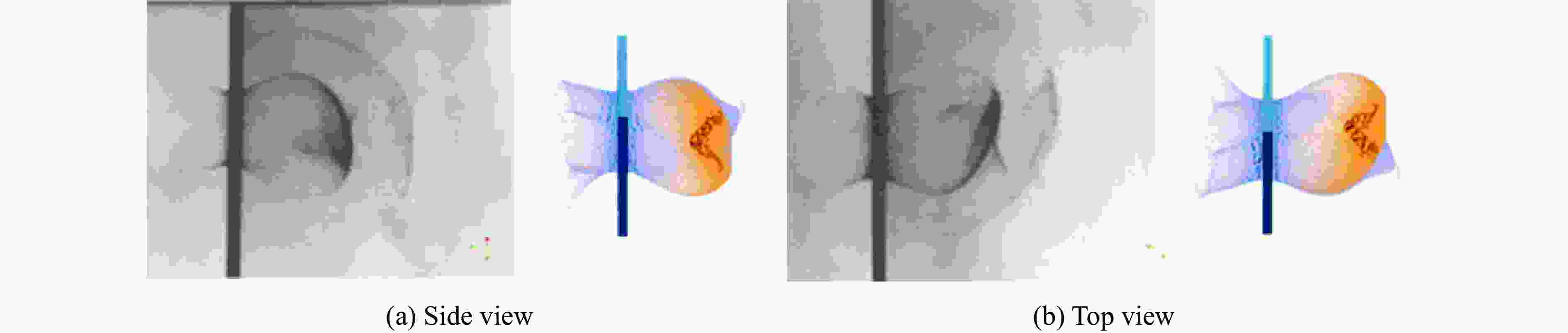
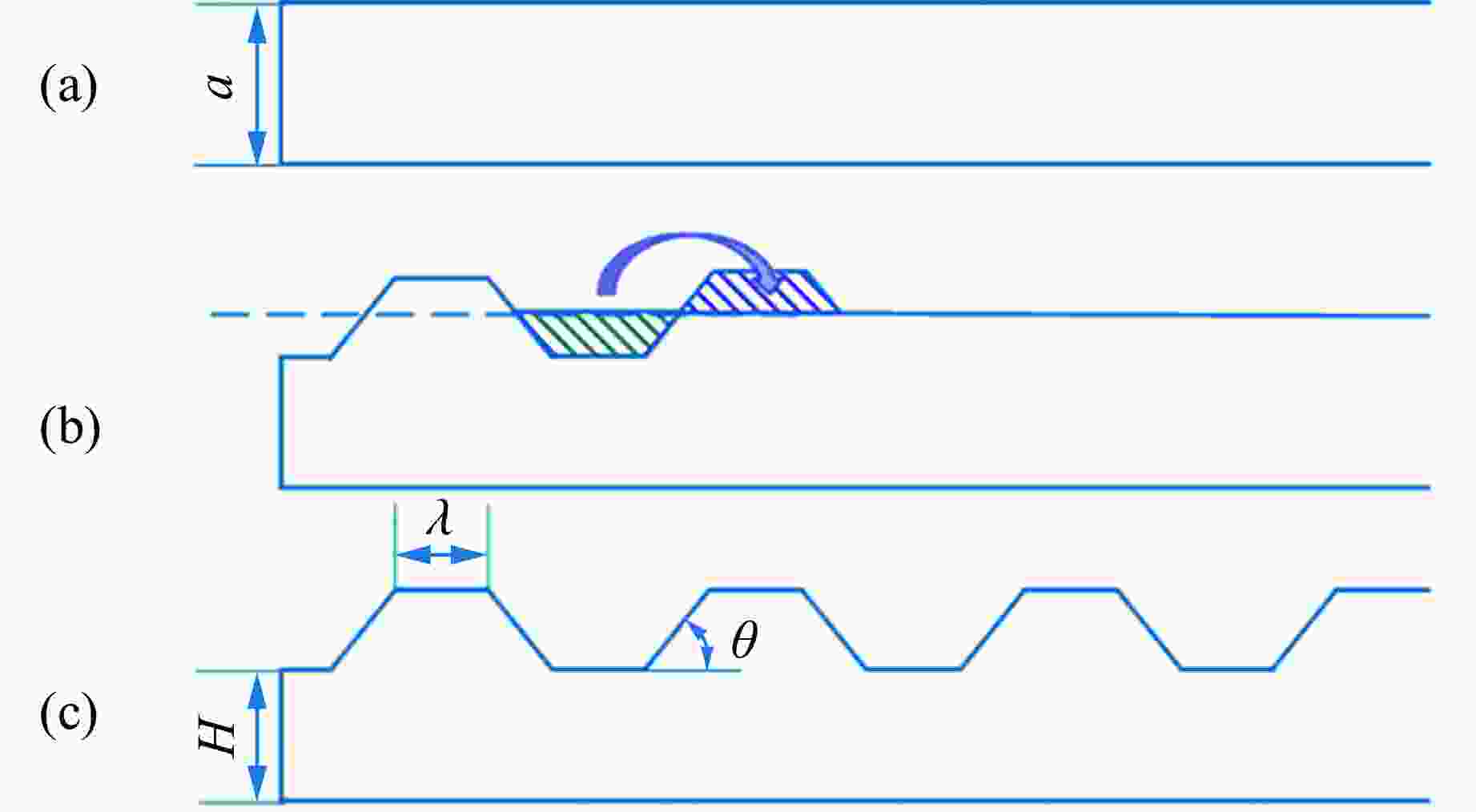
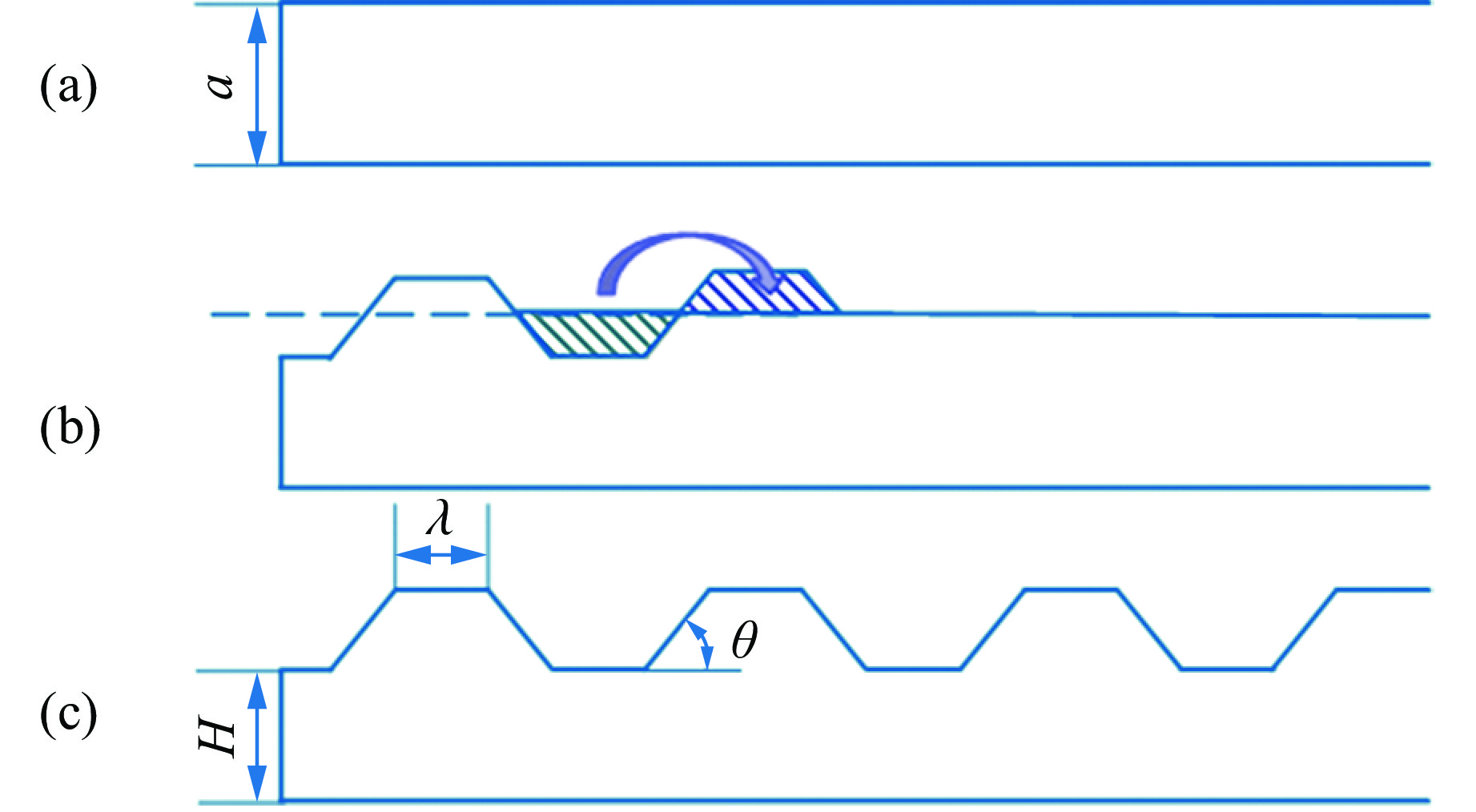
图 2 瓦楞构型结构的几何形状和几何参数
Figure 2. Geometric shape and geometrical parameters of corrugated structures
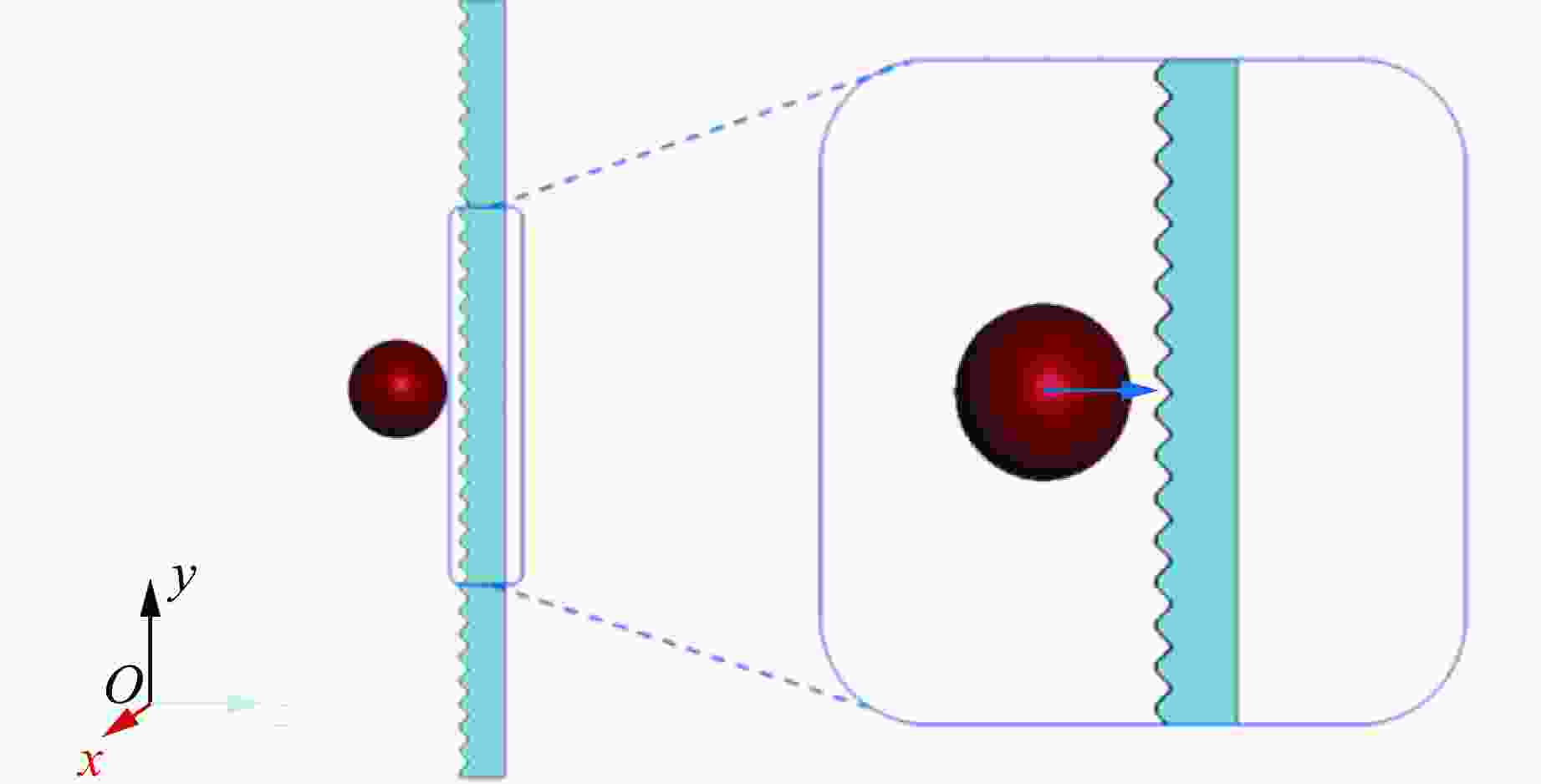
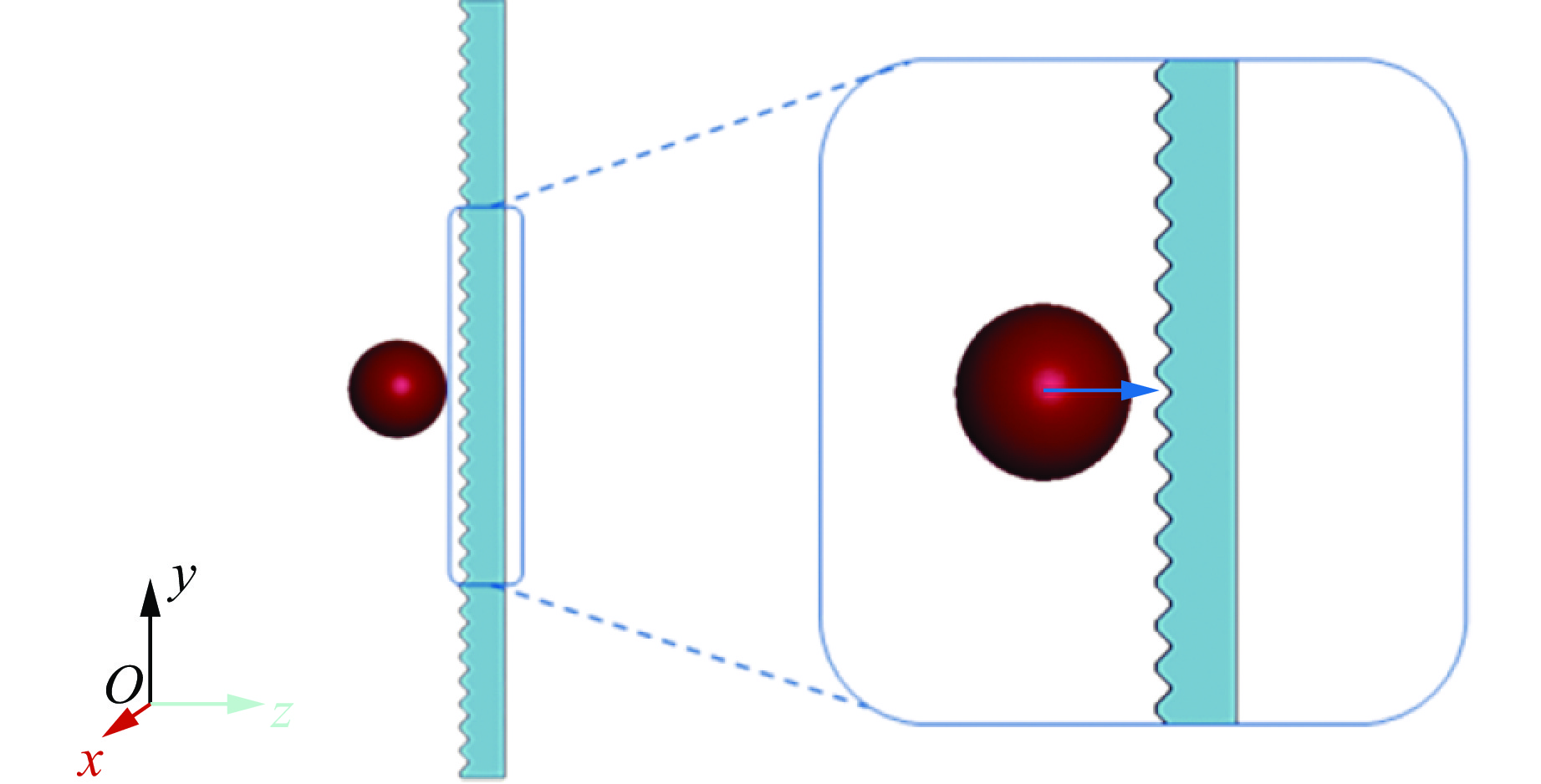
图 3 弹丸撞击瓦楞构型防护结构模型
Figure 3. Model of projectile impacting into corrugated protective structure
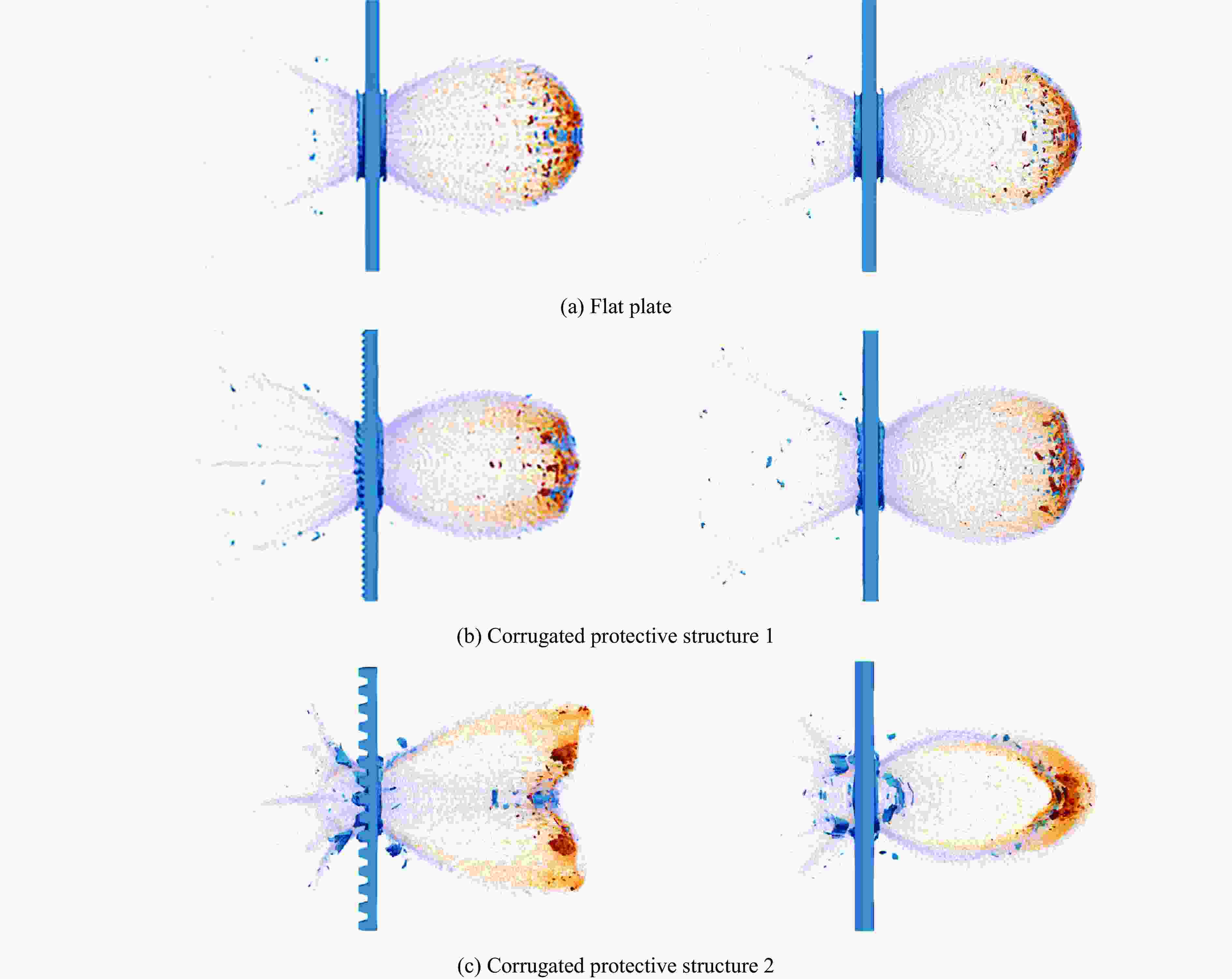
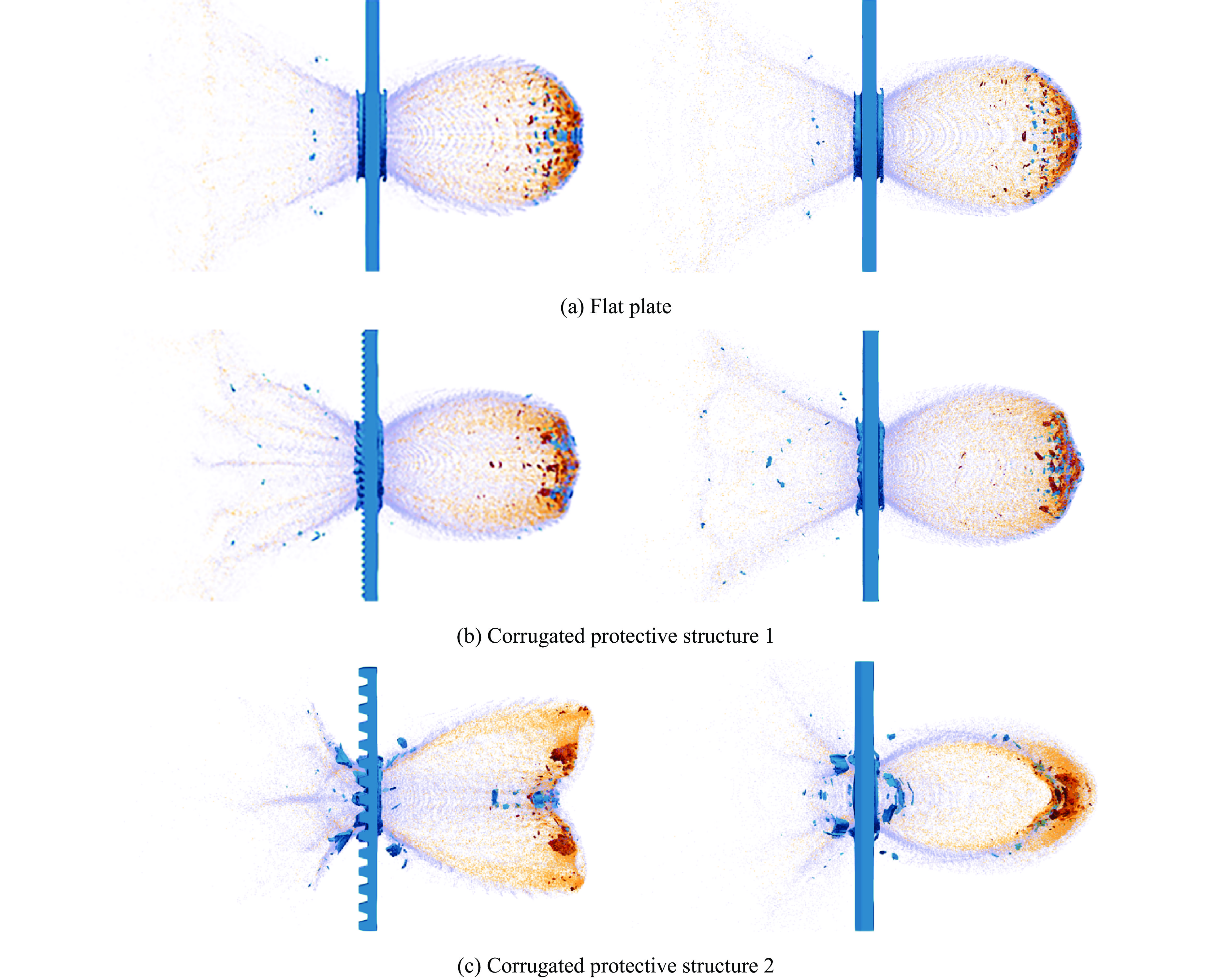
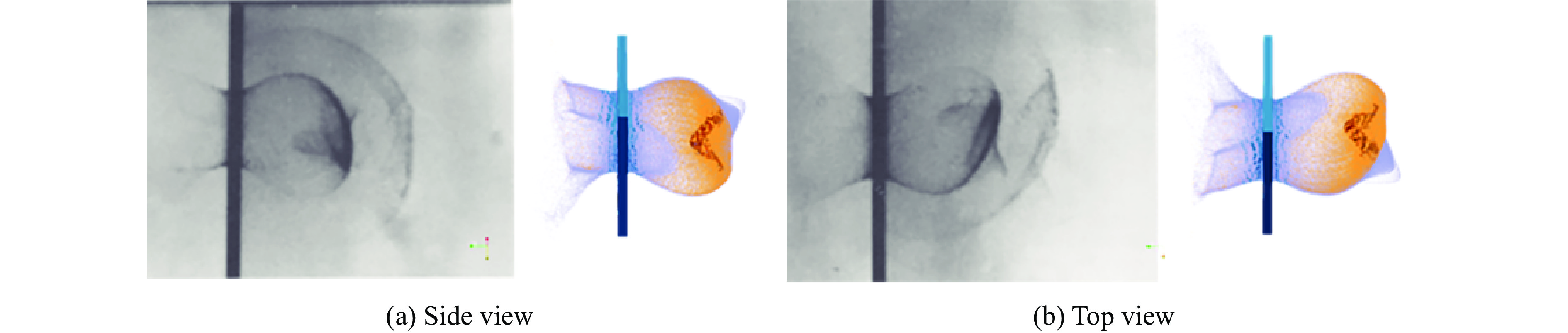
图 4 10 μs时弹丸撞击平板和瓦楞型防护结构形成的碎片云形貌(左:正视图;右:俯视图)
Figure 4. Morphologies of the debris cloud following the projectile impacting the flat plate and the corrugated protective structure at 10 μs (Left: front view; right: top view.)
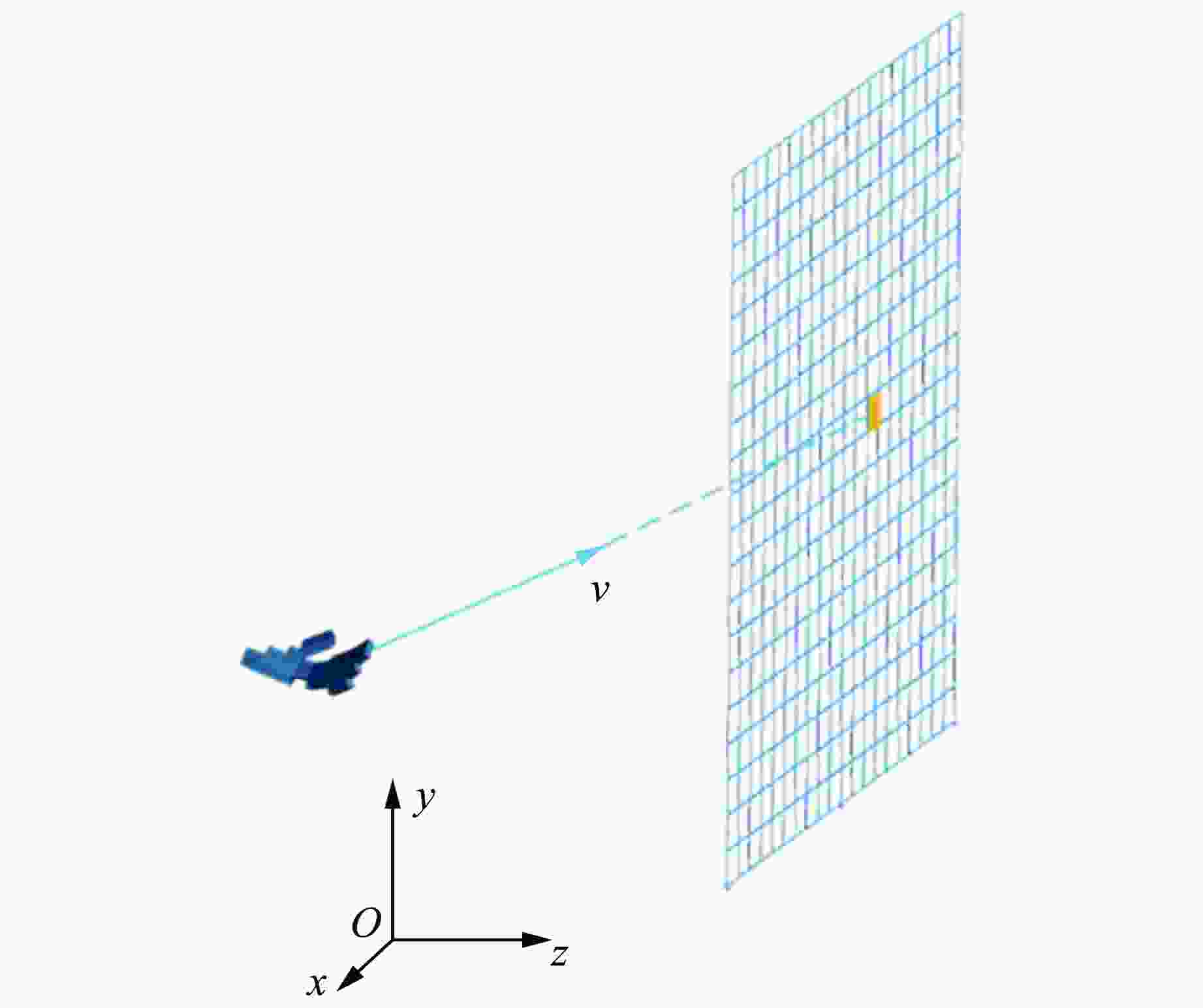
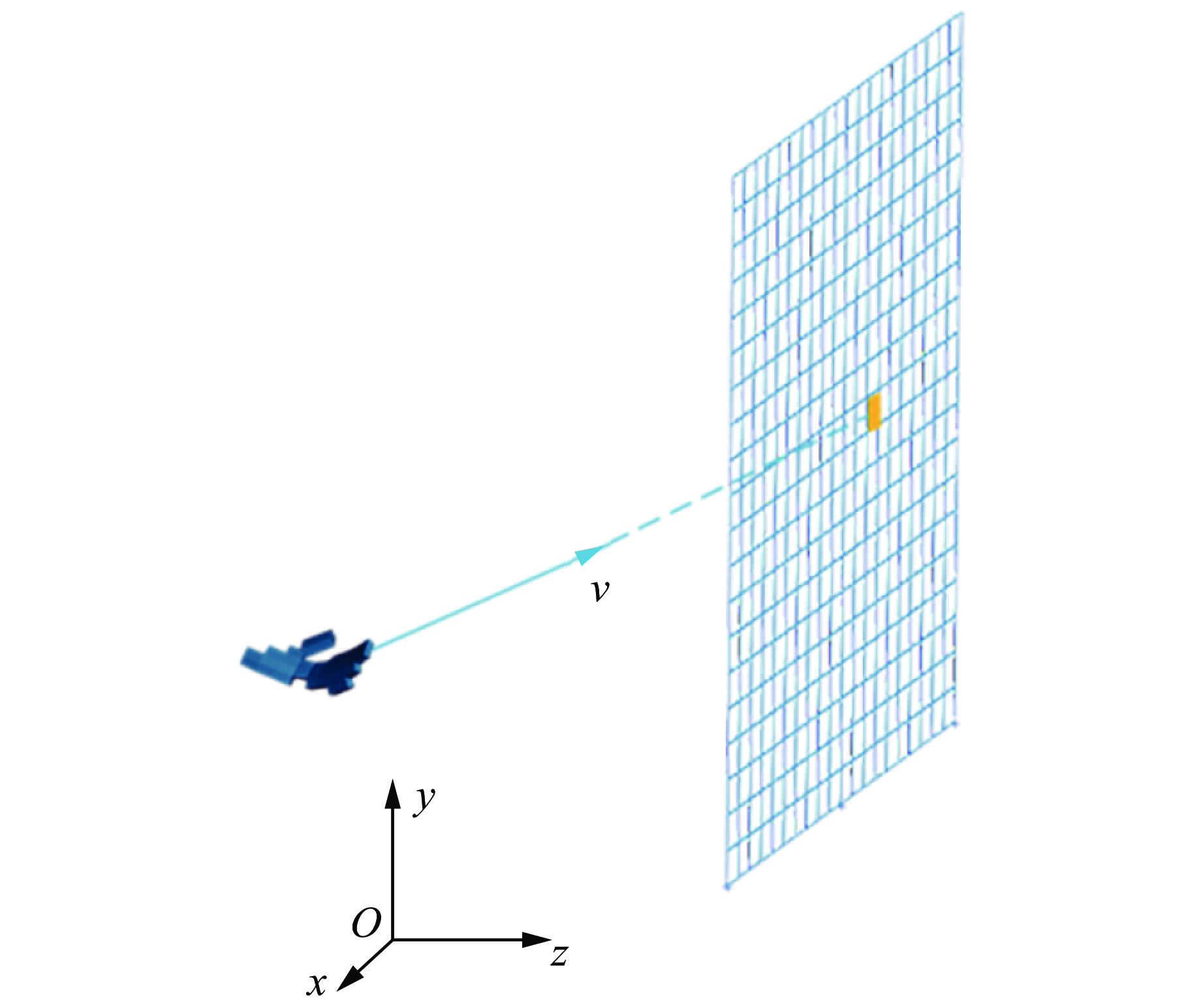
图 5 沿速度矢量投射到虚拟背面的危险碎片示意图
Figure 5. Schematic diagram for hazardous debris projected onto the virtual backside along the velocity vector
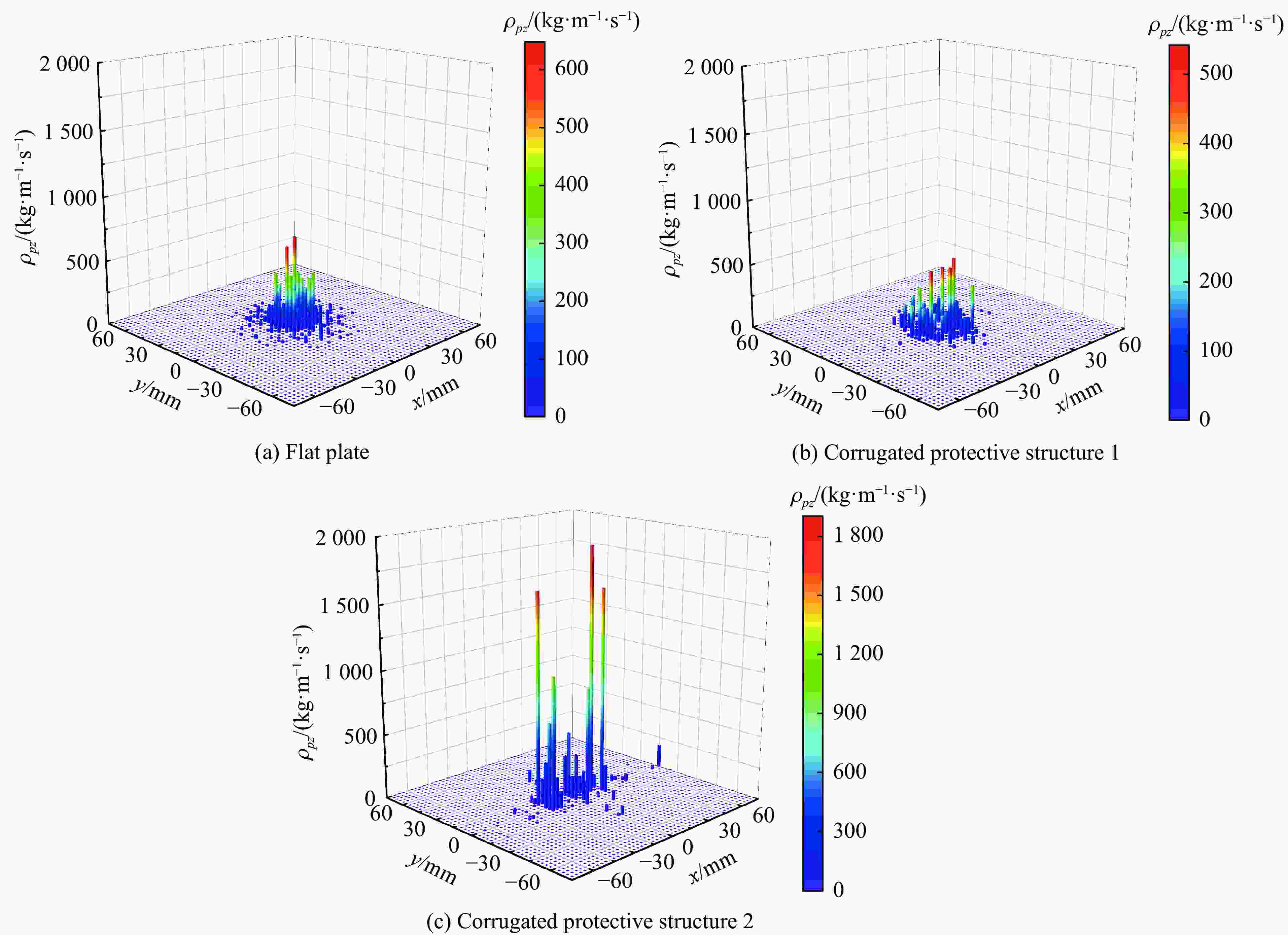
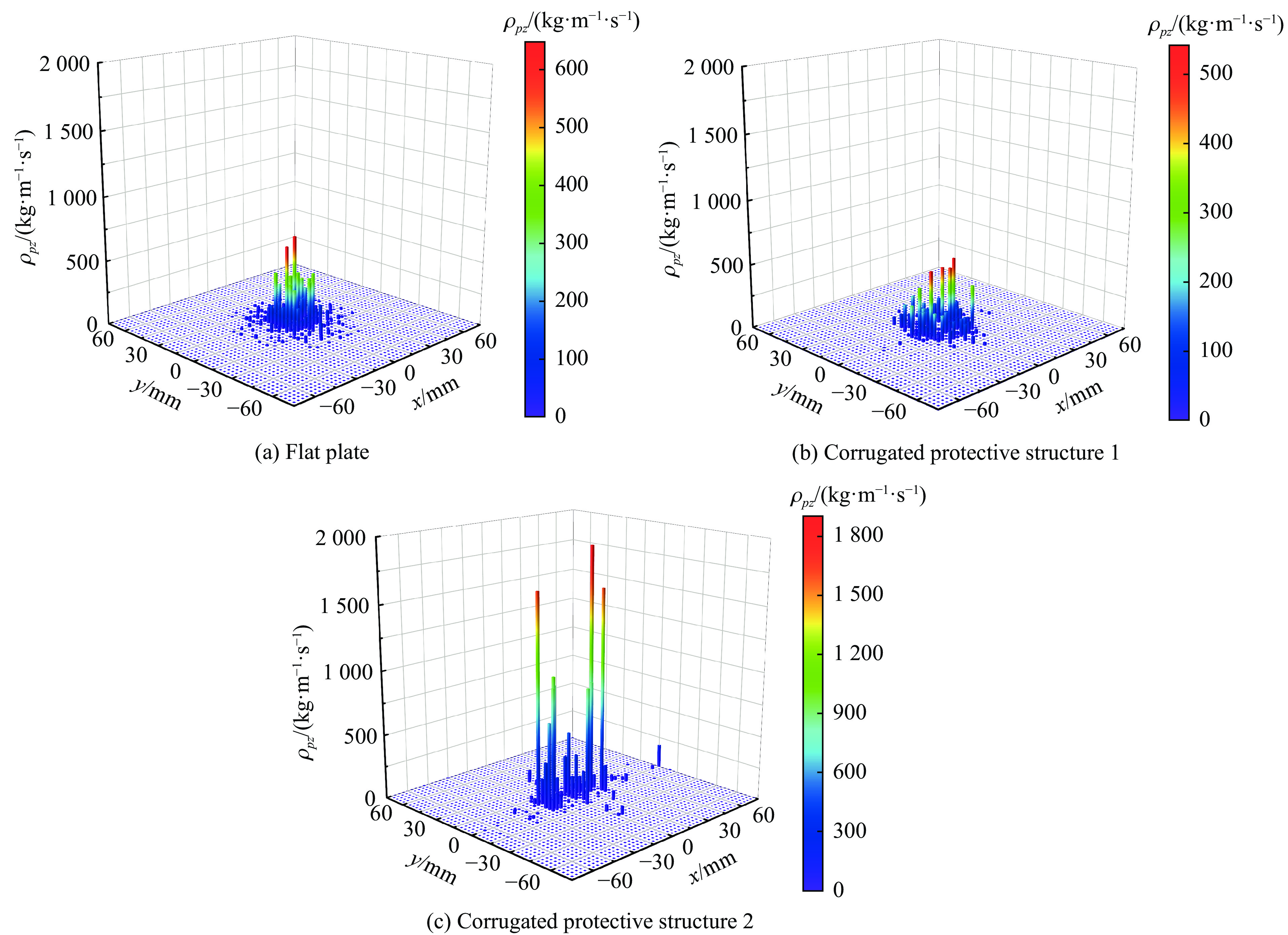
图 6 10 μs时弹丸撞击平板和瓦楞板防护结构时碎片云z轴动量密度分布对比
Figure 6. Comparison of the z-axis momentum distribution of the debris cloud for the flat plate and corrugated plate protection structures impacted by a projectile at 10 μs
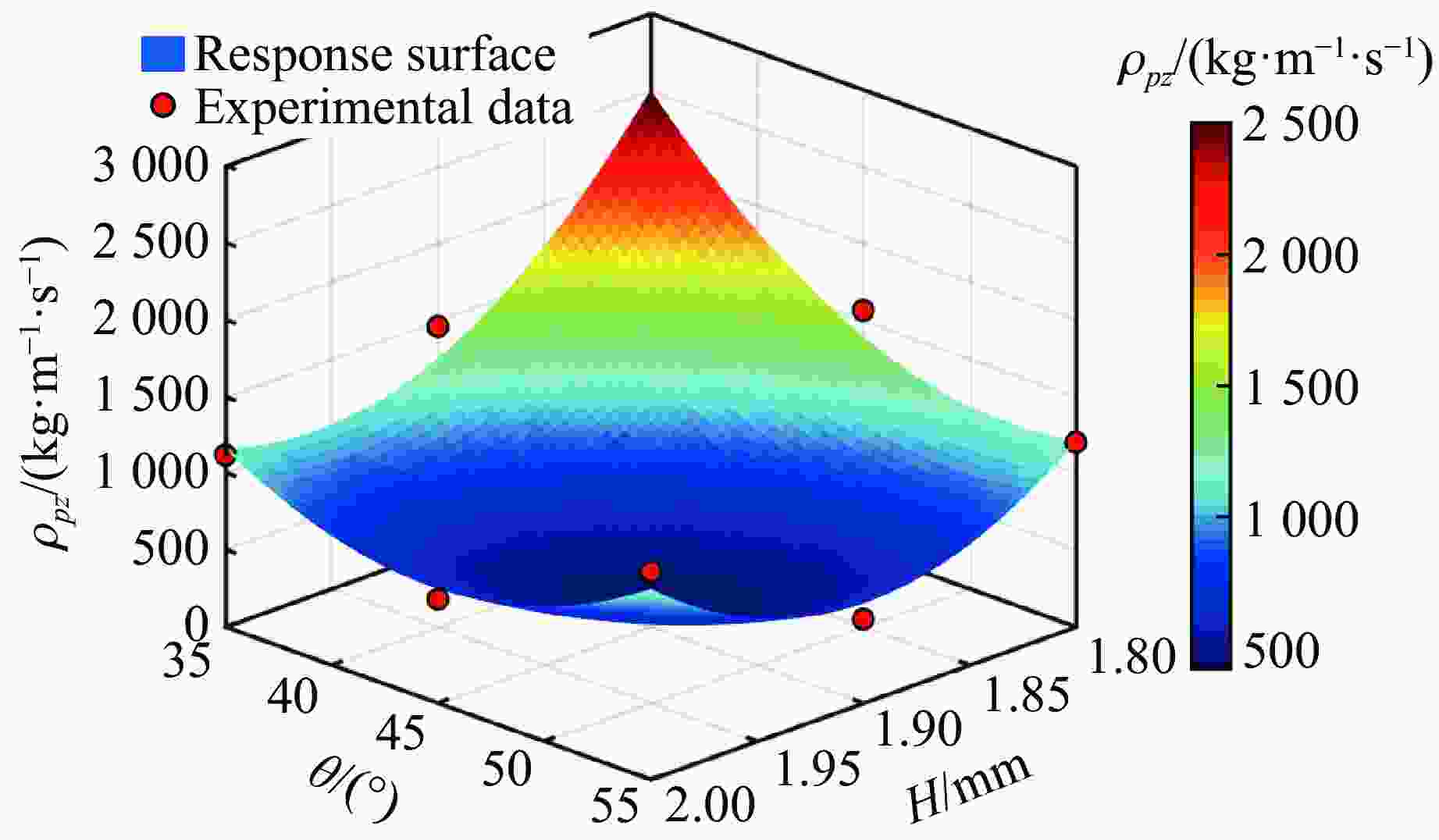
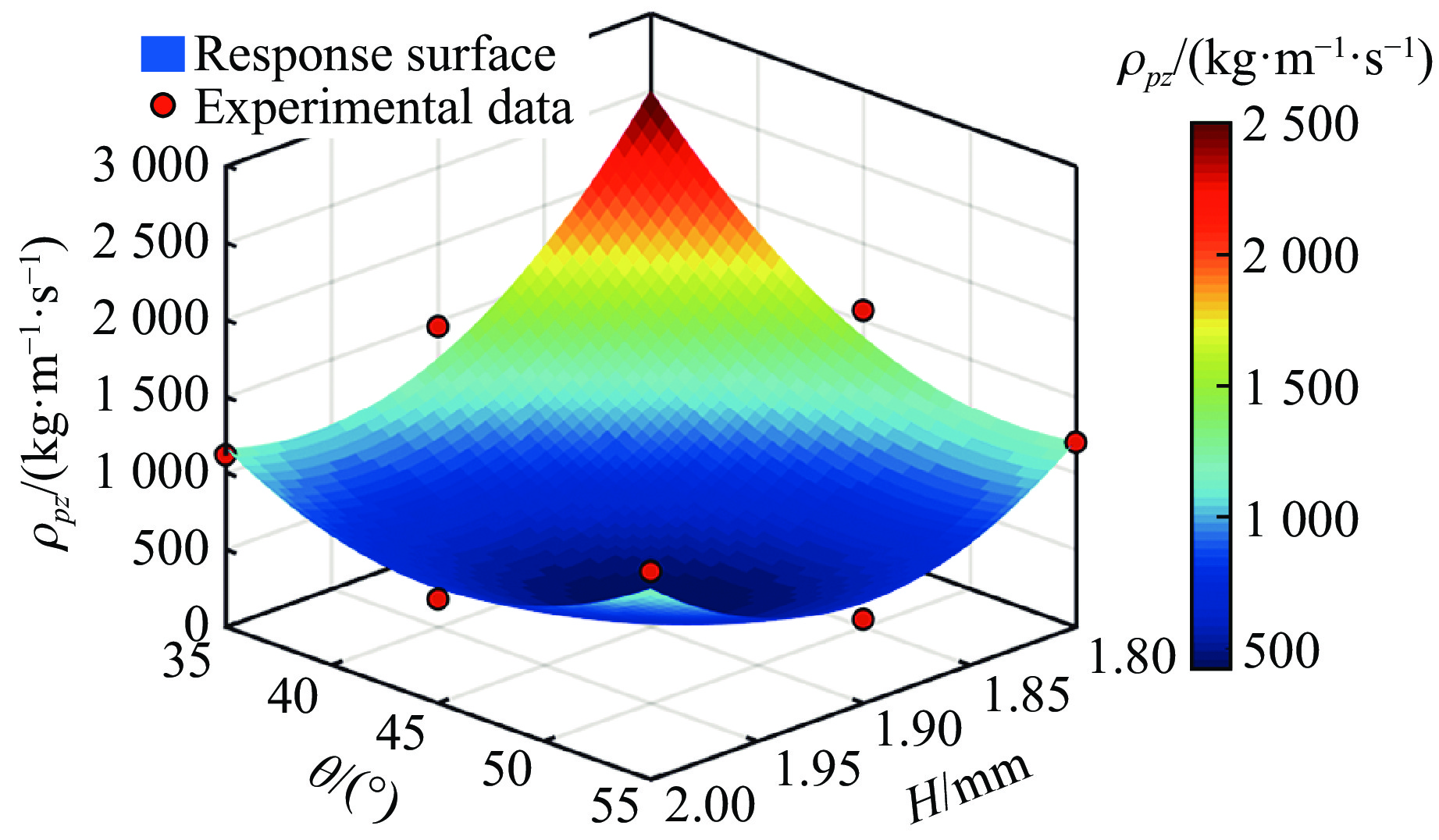
图 7 瓦楞型Whipple防护结构的z轴动量密度响应面
Figure 7. z-axis momentum density response surface of the corrugated Whipple protective structure
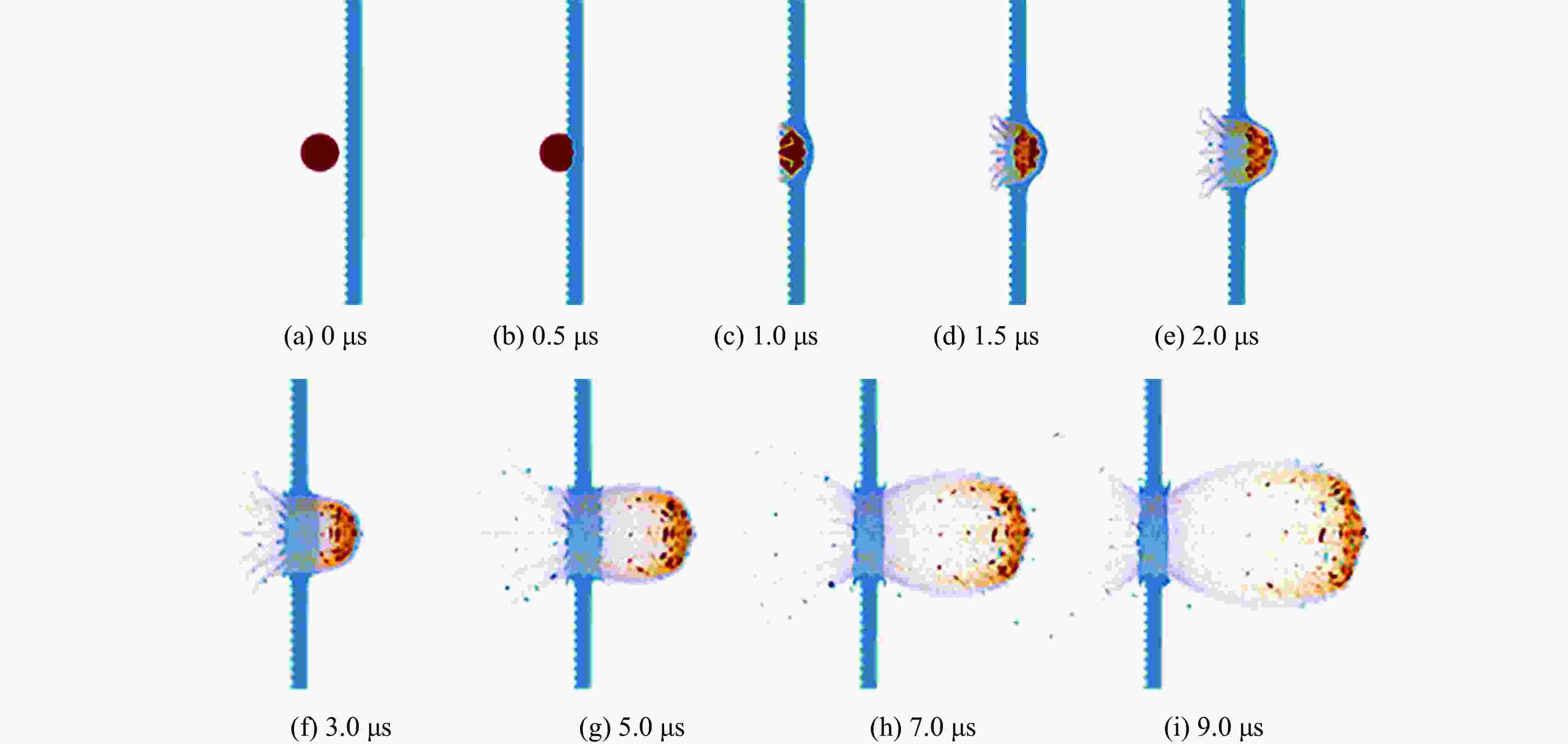
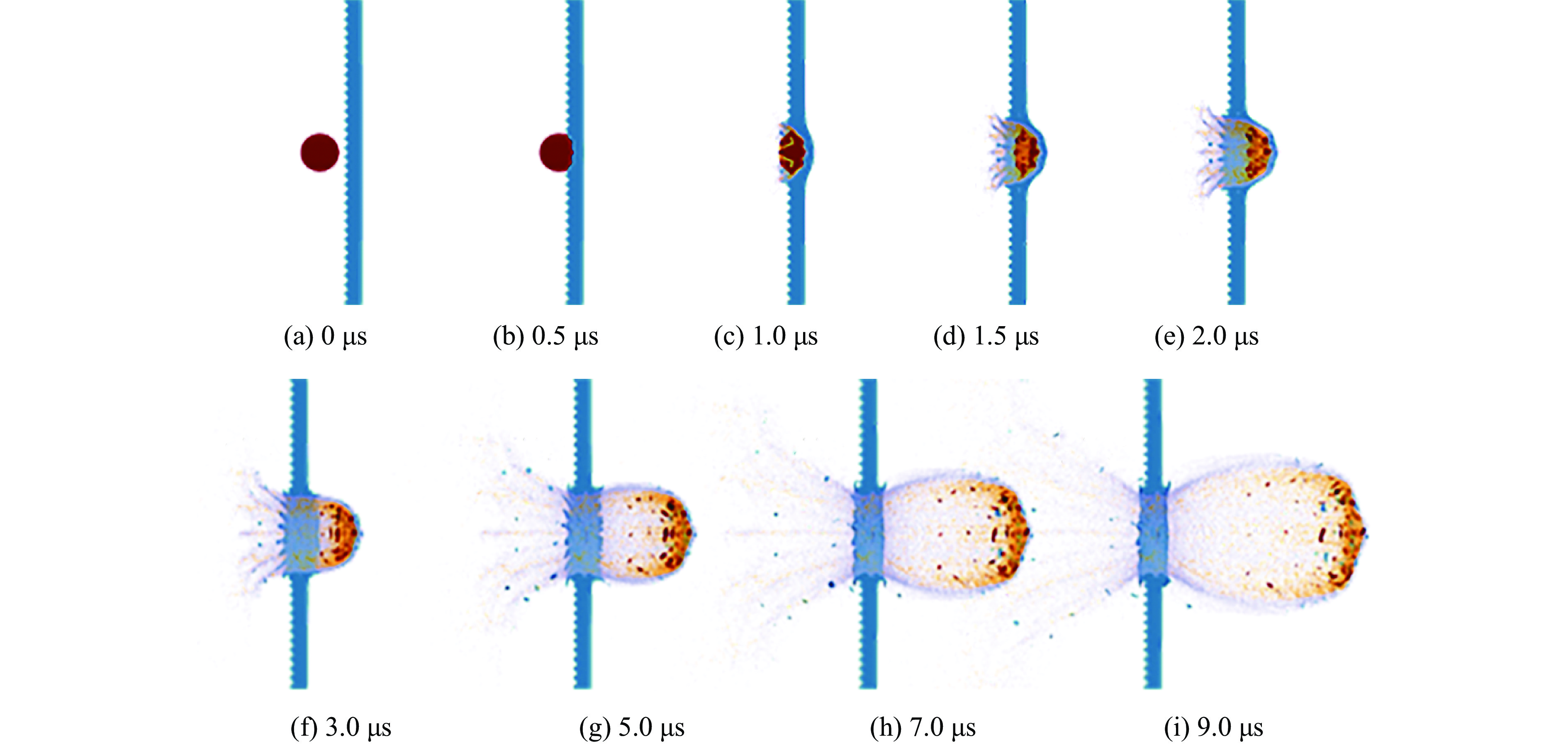
图 8 弹丸超高速碰撞具有最优构型的瓦楞型Whipple防护结构过程
Figure 8. Process of the corrugated Whipple protection structure with the optimal configuration impacted by hypervelocity projectile
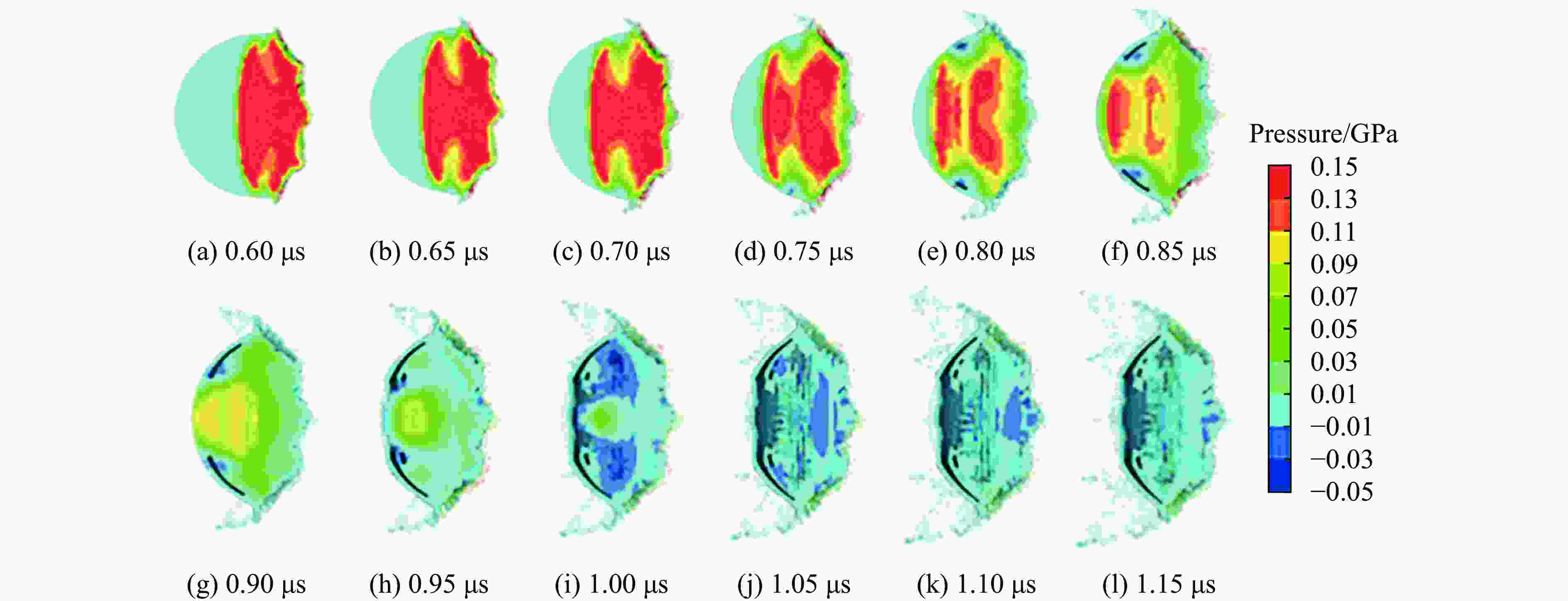
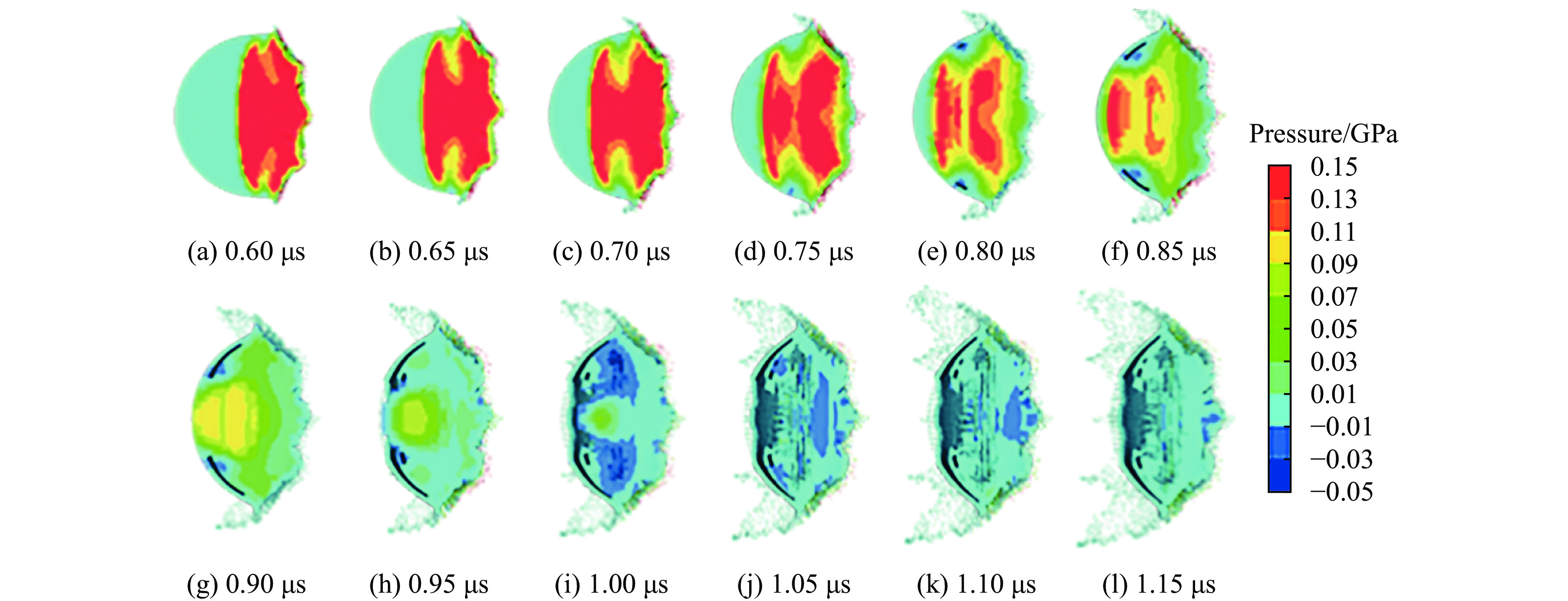
图 9 弹丸超高速碰撞具有最优构型的瓦楞型Whipple防护结构时弹丸内部的应力云图演变
Figure 9. Evolution of the stress contour within the projectile during hypervelocity impact on a corrugated Whipple shield with an optimal configuration
表 1 正交试验设计因素和水平
Table 1. Orthogonal test design factors and levels
Level Factor H/mm λ/mm θ/(°) 1 0.9 0.2 30 2 1.4 0.6 45 3 1.9 1.0 60  下载: 导出CSV
表 2 正交试验方案及试验结果
Table 2. Orthogonal test program and results
No. H/mm λ/mm θ/(°) ρpz/(kg·m−1·s−1) No. H/mm λ/mm θ/(°) ρpz/(kg·m−1·s−1) 1 0.9 0.2 60 5719.63 6 1.4 1.0 45 5931.89 2 0.9 0.6 45 2780.70 7 1.9 0.2 45 394.47 3 0.9 1.0 30 2244.38 8 1.9 0.6 30 2250.10 4 1.4 0.2 30 1672.53 9 1.9 1.0 60 1066.58 5 1.4 0.6 60 2091.21
下载: 导出CSV
表 3 极差分析结果
Table 3. Results of the variance analysis
Factor K1 K2 K3 k1 k2 k3 R H 10744.71 9695.63 3711.15 3581.57 3231.88 1237.05 2344.52 λ 7786.63 7122.00 9242.85 2595.54 2374.00 3080.95 706.95 θ 8877.42 9107.05 6167.01 2959.14 3035.68 2055.67 980.01
下载: 导出CSV
表 4 双因素三水平密集试验方案及结果
Table 4. Test program and results for double-factor, three-level encryption
No. H/mm θ/(°) ρpz/(kg·m−1·s−1) No. H/mm θ/(°) ρpz/(kg·m−1·s-¹) D1 1.8 35 2340.74 D6 1.9 55 542.27 D2 1.8 45 1566.87 D7 2.0 35 1113.50 D3 1.8 55 1195.35 D8 2.0 45 673.06 D4 1.9 35 1461.78 D9 2.0 55 1347.03 D5 1.9 45 394.47
下载: 导出CSV
-
[1] 吴树范, 王伟, 温济帆, 等. 低轨互联网星座发展研究 [J]. 北京航空航天大学学报, 2024, 50(1): 1–11. doi: 10.13700/j.bh.1001-5965.2022.0242WU S F, WANG W, WEN J F, et al. Review on development of LEO internet constellation [J]. Journal of Beijing University of Aeronautics and Astronautics, 2024, 50(1): 1–11. doi: 10.13700/j.bh.1001-5965.2022.0242 [2] 郭甲, 庞兆君, 岳帅, 等. 空间绳系组合体的继电型控制离轨策略 [J]. 航空学报, 2021, 42(12): 324738. doi: 10.7527/S1000-6893.2020.24738GUO J, PANG Z J, YUE S, et al. De-orbit strategy using Bang-Bang control for space tethered-combination [J]. Acta Aeronautica et Astronautica Sinica, 2021, 42(12): 324738. doi: 10.7527/S1000-6893.2020.24738 [3] 李梦生, 岳帅, 杜忠华, 等. 空间长方形绳网展开动力学及多参数特性分析 [J]. 北京航空航天大学学报, 2024, 50(3): 994–1004. doi: 10.13700/j.bh.1001-5965.2022.0342LI M S, YUE S, DU Z H, et al. Deployment dynamics and multi-parameter performances analysis of spatial rectangular tether-net [J]. Journal of Beijing University of Aeronautics and Astronautics, 2024, 50(3): 994–1004. doi: 10.13700/j.bh.1001-5965.2022.0342 [4] 陈鹏旭, 吴晨晨, 倪智宇. 空间飞网系统动力学建模与仿真 [J]. 北京航空航天大学学报, 2024, 50(9): 2951–2962. doi: 10.13700/j.bh.1001-5965.2022.0747CHEN P X, WU C C, NI Z Y. Dynamic modelling and simulation of a tethered-net in space [J]. Journal of Beijing University of Aeronautics and Astronautics, 2024, 50(9): 2951–2962. doi: 10.13700/j.bh.1001-5965.2022.0747 [5] ZHAO W, PANG Z J, ZHAO Z, et al. A simulation and an experimental study of space harpoon low-velocity impact, anchored debris [J]. Materials, 2022, 15(14): 5041. doi: 10.3390/ma15145041 [6] 张品亮, 龚自正, 杨武霖, 等. 激光移除空间碎片过程的三维仿真与建模 [J]. 宇航学报, 2017, 38(3): 323–330. doi: 10.3873/j.issn.1000-1328.2017.03.014ZHANG P L, GONG Z Z, YANG W L, et al. Three-dimensional simulation and modeling on removing orbital debris with lasers [J]. Journal of Astronautics, 2017, 38(3): 323–330. doi: 10.3873/j.issn.1000-1328.2017.03.014 [7] WHIPPLE F L. Meteorites and space travel [J]. Astronomical Journal, 1947, 52: 131. doi: 10.1086/106009 [8] COUR-PALAIS B G, CREWS J L. A multi-shock concept for spacecraft shielding [J]. International Journal of Impact Engineering, 1990, 10(1): 135–146. doi: 10.1016/0734-743X(90)90054-Y [9] NAM Y W, SATHISH KUMAR S K, ANKEM V A, et al. Multi-functional aramid/epoxy composite for stealth space hypervelocity impact shielding system [J]. Composite Structures, 2018, 193: 113–120. doi: 10.1016/j.compstruct.2018.03.046 [10] CHRISTIANSEN E L, CREWS J L, WILLIAMSEN J E, et al. Enhanced meteoroid and orbital debris shielding [J]. International Journal of Impact Engineering, 1995, 17(1): 217–228. doi: 10.1016/0734-743X(95)99848-L [11] KE F W, HUANG J, WEN X Z, et al. Test study on the performance of shielding configuration with stuffed layer under hypervelocity impact [J]. Acta Astronautica, 2016, 127: 553–560. doi: 10.1016/j.actaastro.2016.06.037 [12] CHRISTIANSEN E L, KERR J H. Mesh double-bumper shield: a low-weight alternative for spacecraft meteoroid and orbital debris protection [J]. International Journal of Impact Engineering, 1993, 14(1): 169–180. doi: 10.1016/0734-743X(93)90018-3 [13] 管公顺, 陈礼文, 王少恒, 等. 不锈钢网/铝板多冲击防护屏高速撞击防护性能实验研究 [J]. 高压物理学报, 2012, 26(2): 127–134. doi: 10.11858/gywlxb.2012.02.002GUAN G S, CHEN L W, WANG S H, et al. Experimental investigation on resist capability of stainless steel mesh/Al multi-shock shield by high-velocity impact [J]. Chinese Journal of High Pressure Physics, 2012, 26(2): 127–134. doi: 10.11858/gywlxb.2012.02.002 [14] SATHISH KUMAR S K, KIM Y, CHA J H, et al. Hybrid interspaced and free-boundary aramid fabric back bumper for hypervelocity impact shielding system [J]. International Journal of Impact Engineering, 2023, 171: 104377. doi: 10.1016/j.ijimpeng.2022.104377 [15] BALUCH A H, PARK Y, KIM C G. Hypervelocity impact on carbon/epoxy composites in low Earth orbit environment [J]. Composite Structures, 2013, 96: 554–560. doi: 10.1016/j.compstruct.2012.09.010 [16] GIANNAROS E, KOTZAKOLIOS A, KOSTOPOULOS V, et al. Hypervelocity impact response of CFRP laminates using smoothed particle hydrodynamics method: implementation and validation [J]. International Journal of Impact Engineering, 2019, 123: 56–69. doi: 10.1016/j.ijimpeng.2018.09.016 [17] ROGERS J A, MOTE A, MEAD P T, et al. Hypervelocity impact response of monolithic UHMWPE and HDPE plates [J]. International Journal of Impact Engineering, 2022, 161: 104081. doi: 10.1016/j.ijimpeng.2021.104081 [18] CHERNIAEV A. Modeling of hypervelocity impact on open cell foam core sandwich panels [J]. International Journal of Impact Engineering, 2021, 155: 103901. doi: 10.1016/j.ijimpeng.2021.103901 [19] PAI A, SHARMA A, EBY I M, et al. A numerical approach for response of Whipple shields with coated and monolithic front bumper to hypervelocity impact by spherical projectiles [J]. Acta Astronautica, 2023, 202: 433–441. doi: 10.1016/j.actaastro.2022.10.041 [20] 管公顺, 戴训洋, 张铎. 玄武岩纤维布/铝板组合防护结构的高速撞击防护性能 [J]. 高压物理学报, 2022, 36(1): 014102. doi: 10.11858/gywlxb.20210806GUAN G S, DAI X Y, ZHANG D. High velocity impact shielding performance of basalt fiber cloth/Al-plate composite shields [J]. Chinese Journal of High Pressure Physics, 2022, 36(1): 014102. doi: 10.11858/gywlxb.20210806 [21] 张宝玺, 哈跃, 邓云飞, 等. 超高速撞击Kevlar纤维布填充防护结构研究 [J]. 高压物理学报, 2013, 27(1): 105–112. doi: 10.11858/gywlxb.2013.01.015ZHANG B X, HA Y, DENG Y F, et al. Optimal structural design of stuffed shields with Kevlar fiber clothes against hypervelocity impact [J]. Chinese Journal of High Pressure Physics, 2013, 27(1): 105–112. doi: 10.11858/gywlxb.2013.01.015 [22] RAKIB M A, SMITH S T, TAFSIROJJAMAN T. A review of shielding systems for protecting off-Earth structures from micrometeoroid and orbital debris impact [J]. Acta Astronautica, 2024, 223: 404–425. doi: 10.1016/j.actaastro.2024.07.019 [23] WEN K, CHEN X W, LU Y G. Research and development on hypervelocity impact protection using Whipple shield: an overview [J]. Defence Technology, 2021, 17(6): 1864–1886. doi: 10.1016/j.dt.2020.11.005 [24] REN S Y, ZHANG P L, WU Q, et al. Review of bumper materials for spacecraft shield against orbital debris hypervelocity impact [J]. Defence Technology, 2025, 45: 137–177. doi: 10.1016/j.dt.2024.09.002 [25] MACLAY T D, CULP R D, BAREISS L, et al. Topographically modified bumper concepts for spacecraft shielding [J]. International Journal of Impact Engineering, 1993, 14(1): 479–489. doi: 10.1016/0734-743X(93)90044-8 [26] SILNIKOV M, GUK I, MIKHAYLIN A, et al. Efficiency of needle structure at hypervelocity impact [J]. Acta Astronautica, 2018, 150: 73–80. doi: 10.1016/j.actaastro.2017.10.026 [27] ÖNDER A. Projectile fragmentation and debris cloud formation behaviour of wavy plates in hypervelocity impact [J]. International Journal of Impact Engineering, 2024, 183: 104788. doi: 10.1016/j.ijimpeng.2023.104788 [28] DOU L L, HE L L, YIN Y H. Numerical investigation on protective mechanism of metal cover plate for alumina armor against impact of fragment by FE-converting-SPH method [J]. Materials, 2023, 16(9): 3405. doi: 10.3390/ma16093405 [29] YANG Y L, LI J Z. SPH-FE-based numerical simulation on dynamic characteristics of structure under water waves [J]. Journal of Marine Science and Engineering, 2020, 8(9): 630. doi: 10.3390/jmse8090630 [30] 赵微, 陈利, 张庆明, 等. 水滴超高速撞击Whipple防护结构的毁伤特性 [J]. 高压物理学报, 2022, 36(4): 044103. doi: 10.11858/gywlxb.20220515ZHAO W, CHEN L, ZHANG Q M, et al. Damage characteristics of Whipple protective structure impacted by water droplets at hypervelocity [J]. Chinese Journal of High Pressure Physics, 2022, 36(4): 044103. doi: 10.11858/gywlxb.20220515 [31] 杨玉好, 郭香华, 张庆明. 动能块超高速碰撞多层防护结构的毁伤特性数值模拟 [J]. 高压物理学报, 2022, 36(4): 044204. doi: 10.11858/gywlxb.20220533YANG Y H, GUO X H, ZHANG Q M. Numerical simulation of damage characteristics of multi-layer protective structure under hypervelocity impact of kinetic energy block [J]. Chinese Journal of High Pressure Physics, 2022, 36(4): 044204. doi: 10.11858/gywlxb.20220533 [32] HE Q G, CHEN J F, CHEN X W. Velocity-space analysis method for hazardous fragments in debris clouds [J]. International Journal of Impact Engineering, 2022, 161: 104087. doi: 10.1016/j.ijimpeng.2021.104087 [33] JOHNSON G R, COOK W H. Fracture characteristics of three metals subjected to various strains, strain rates, temperatures and pressures [J]. Engineering Fracture Mechanics, 1985, 21(1): 31–48. doi: 10.1016/0013-7944(85)90052-9 [34] PIEKUTOWSKI A J. Debris clouds generated by hypervelocity impact of cylindrical projectiles with thin aluminum plates [J]. International Journal of Impact Engineering, 1987, 5(1): 509–518. doi: 10.1016/0734-743X(87)90066-2 [35] PELTON J N. US government and NASA documents related to orbital space debris mitigation [M]//PELTON J N, MADRY S. Handbook of Small Satellites: Technology, Design, Manufacture, Applications, Economics and Regulation. Cham: Springer, 2020: 1−9. [36] HE Q G, CHEN X W, CHEN J F. Finite element-smoothed particle hydrodynamics adaptive method in simulating debris cloud [J]. Acta Astronautica, 2020, 175: 99–117. doi: 10.1016/j.actaastro.2020.05.056 [37] ARNOLD J, CHRISTIANSEN E L, DAVIS A, et al. Handbook for designing MMOD protection, version A: JSC-64399 [R]. Houston: Johnson Space Center, 2009. -

 下载:
下载:

计量
- 文章访问数: 1226
- HTML全文浏览量: 449
- PDF下载量: 143
