




Influence of Rock Mass Joints on Slot Blasting and Parameter Optimization Based on Discrete Element Method
-
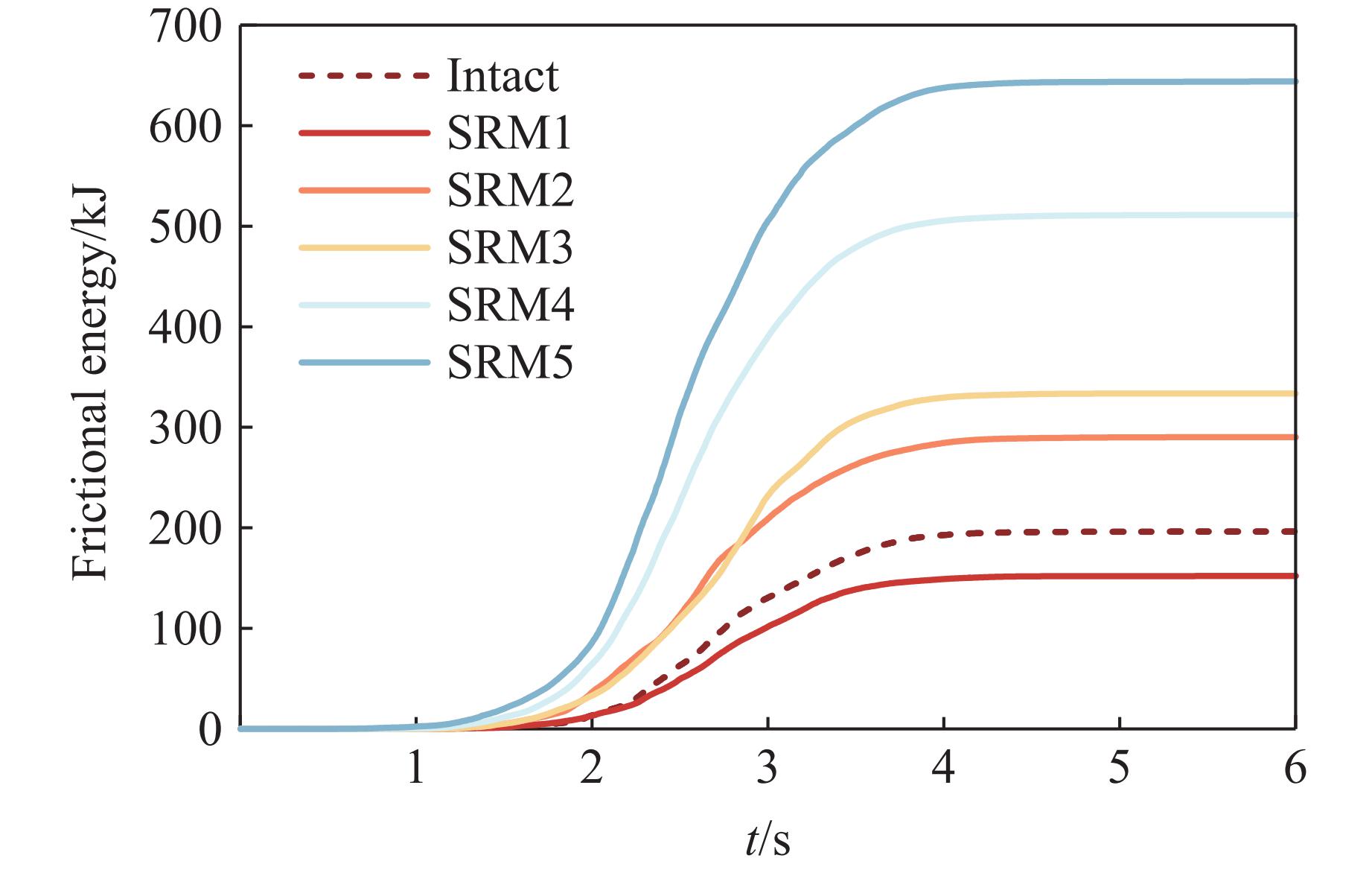
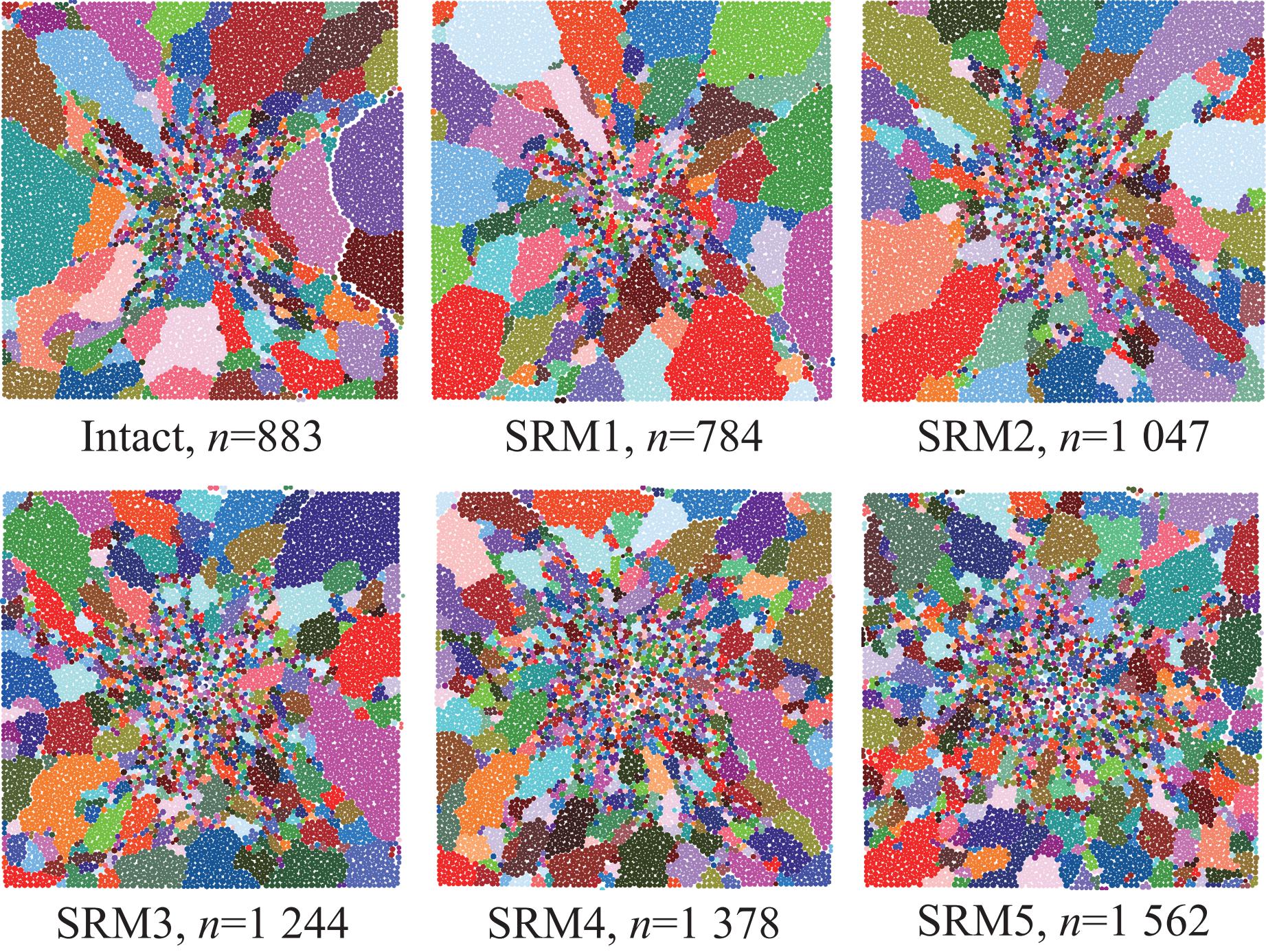
摘要: 巷道掘进中钻爆法的掏槽爆破效果直接影响爆破循环效率,而现有研究大多忽略了岩体内部节理等细观缺陷的影响。基于PFC(particle flow code) 2D离散元方法,通过引入离散裂隙网络(discrete fracture network,DFN)构建了含不同密度节理的岩体模型,采用粒子膨胀法模拟掏槽爆破过程,系统分析DFN对裂纹扩展、能量耗散及爆后块度的影响。在此基础上,优化炮孔布置方案,将原6孔布置简化为4孔菱形布置,并采用15 ms微差起爆,提高了炸药的能量利用率,爆后效果与原方案相近。现场试验表明,优化方案有效节省了实际生产成本,减少了钻孔工作量。研究结果强调了考虑岩体节理缺陷对爆破参数优化的重要性,为岩巷高效掘进提供了理论依据和参考实践。Abstract: The grooving and blasting effect of the drilling and blasting method in roadway tunneling directly affects the blasting cycle efficiency, while the existing studies mostly ignore the influence of mesoscopic defects such as internal joints of rock mass. Based on the PFC (particle flow code) 2D discrete element method, a discrete fracture network (DFN) is introduced to construct a rock mass model with different densities of joints, and the particle expansion method is used to simulate the groove blasting process, and the effects of joint density on crack propagation, energy dissipation and post-explosion block size are systematically analyzed. On this basis, the blast hole layout scheme is optimized, the original 6-hole layout is simplified to a 4-hole diamond-shaped layout, and the 15 ms differential detonation is used to improve the explosive energy utilization rate, and the post-detonation effect is similar to the original scheme. Field tests show that the optimization scheme effectively saves the actual production cost and reduces the drilling workload. The research results emphasize the importance of considering the joint defects of rock mass for the optimization of blasting parameters, and provide a theoretical basis and practical reference for efficient tunneling of rock roadways.
-
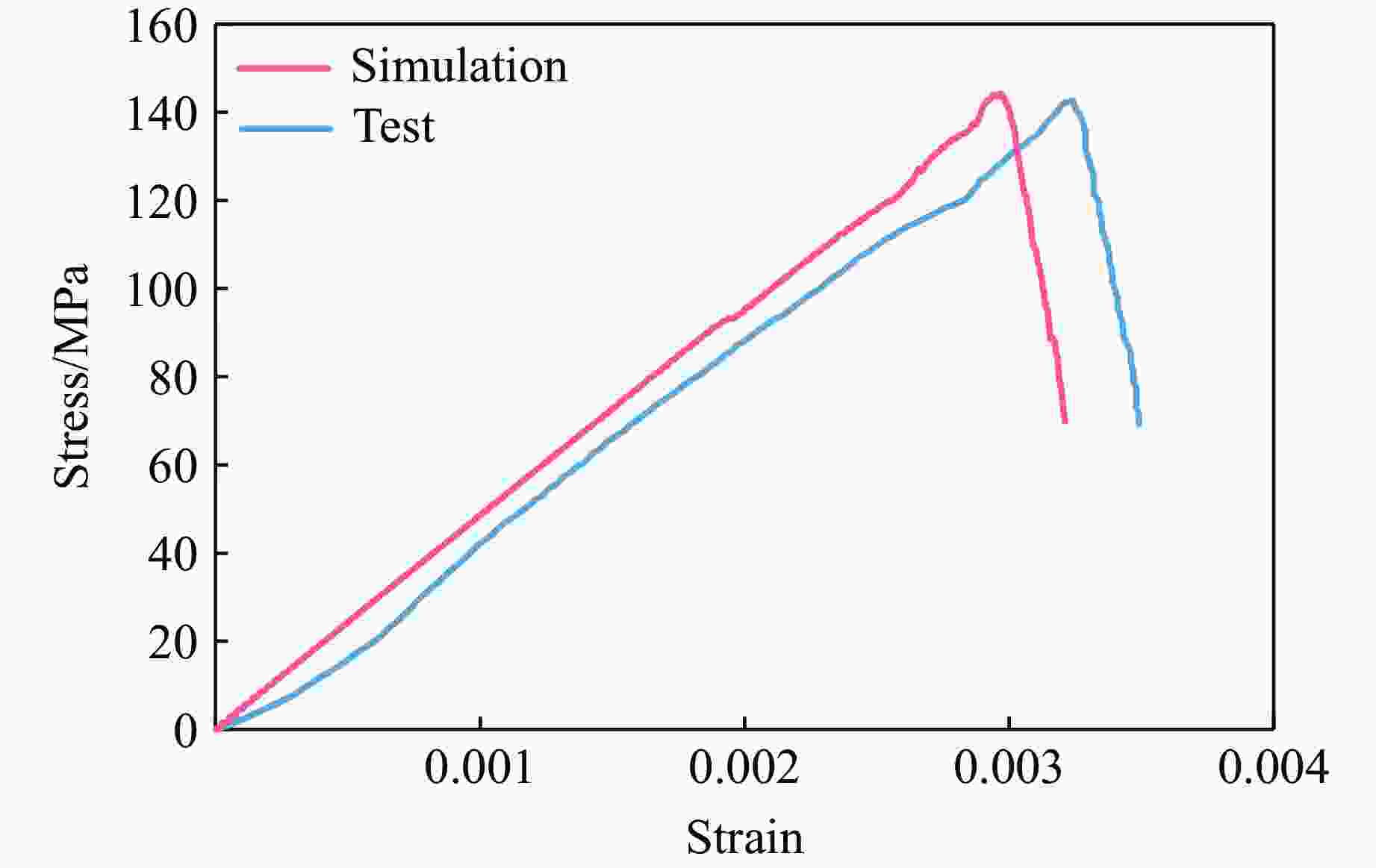
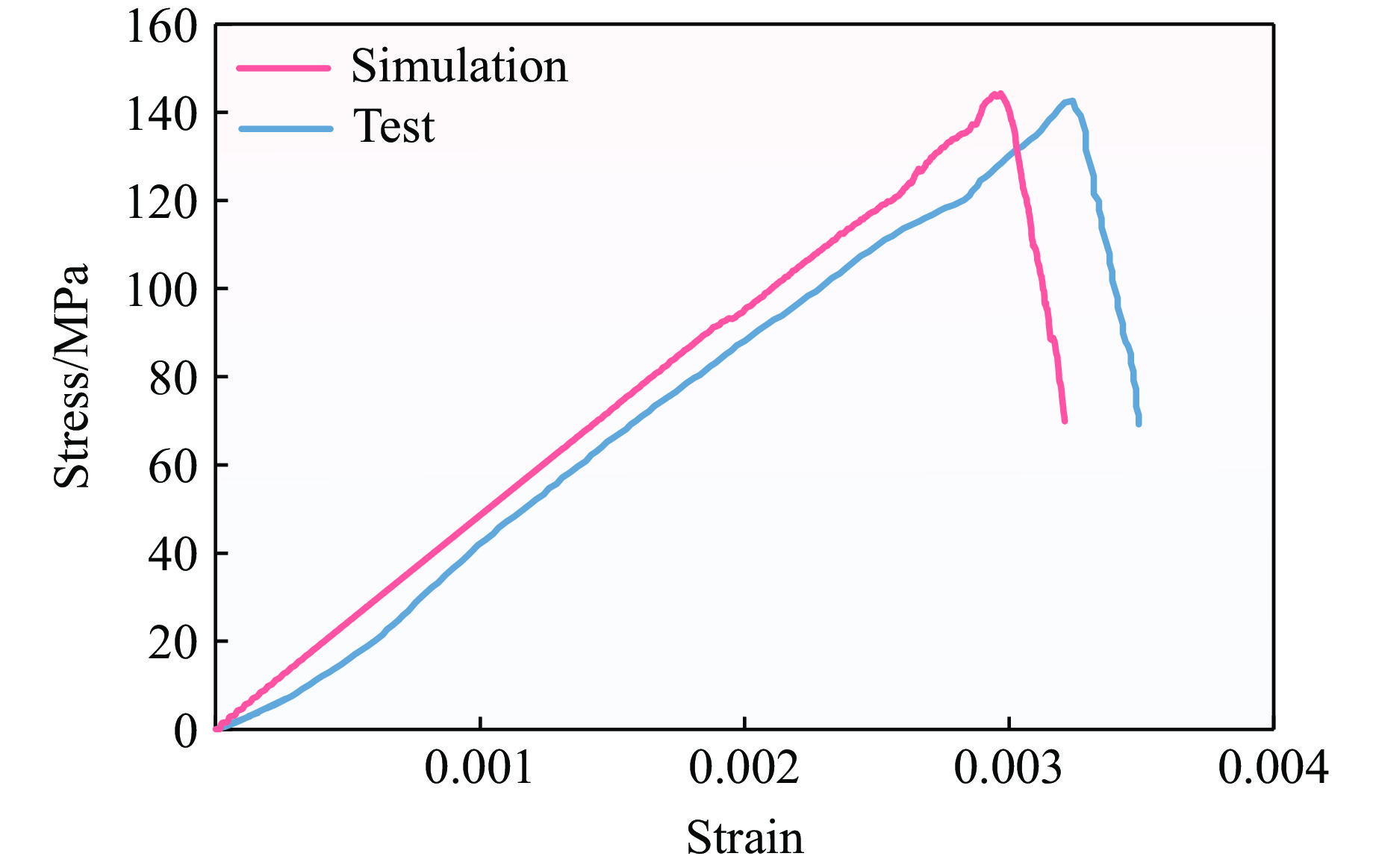
图 5 试验与模拟得到的应力-应变曲线对比
Figure 5. Comparison of stress-strain curves between test and simulation
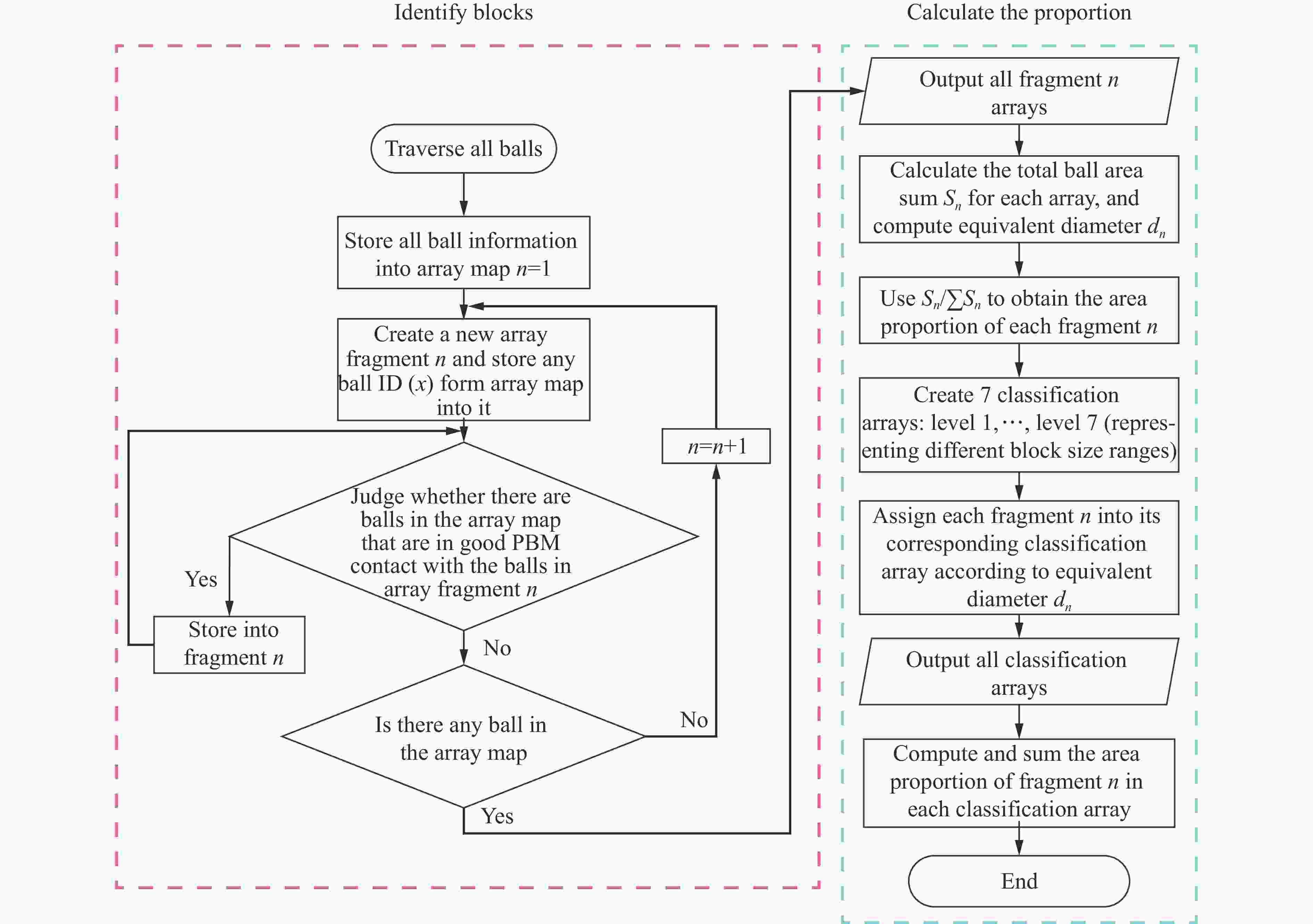
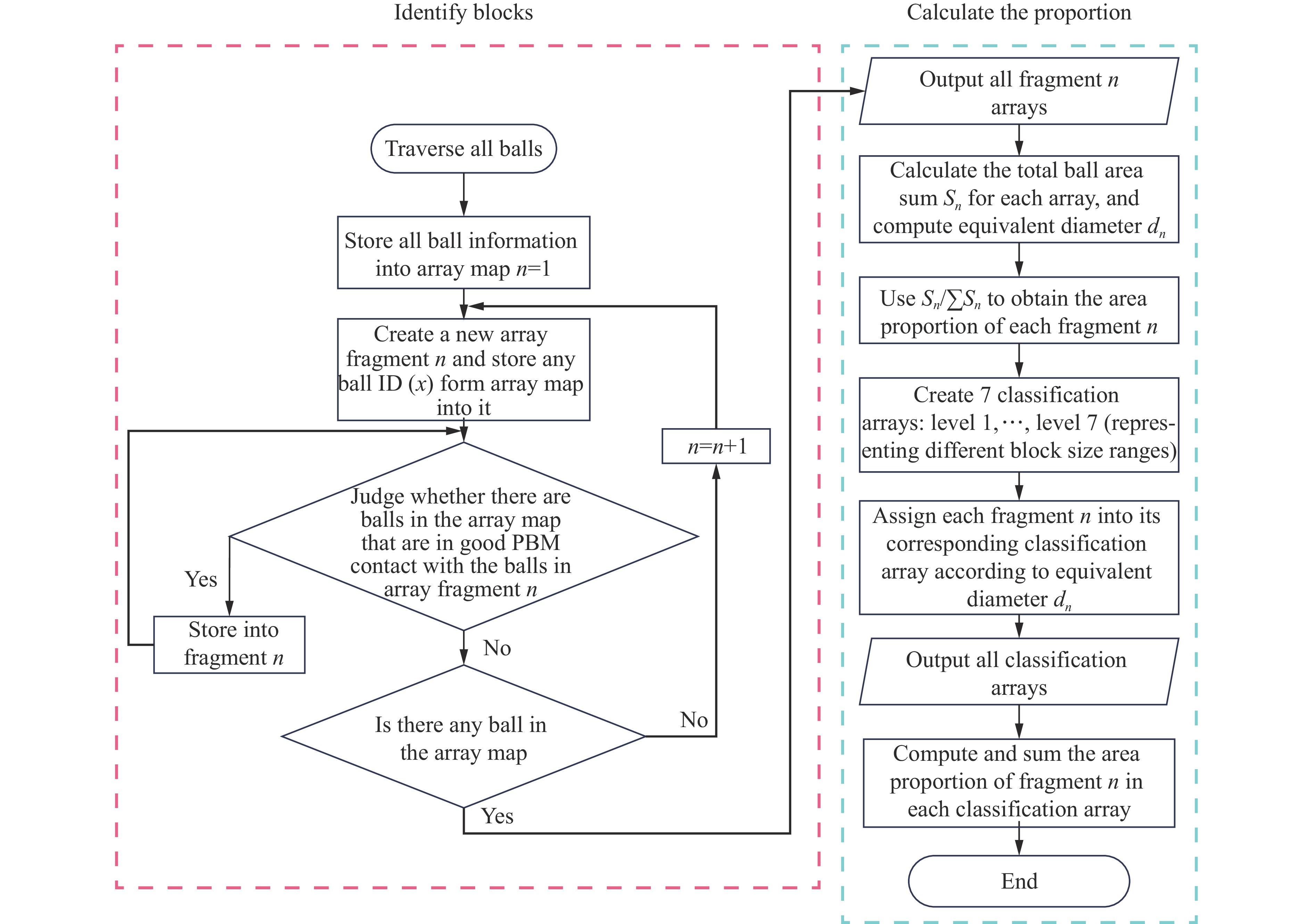
图 11 识别和计算块体占比程序
Figure 11. Program for identifying and calculating the proportion of blocks
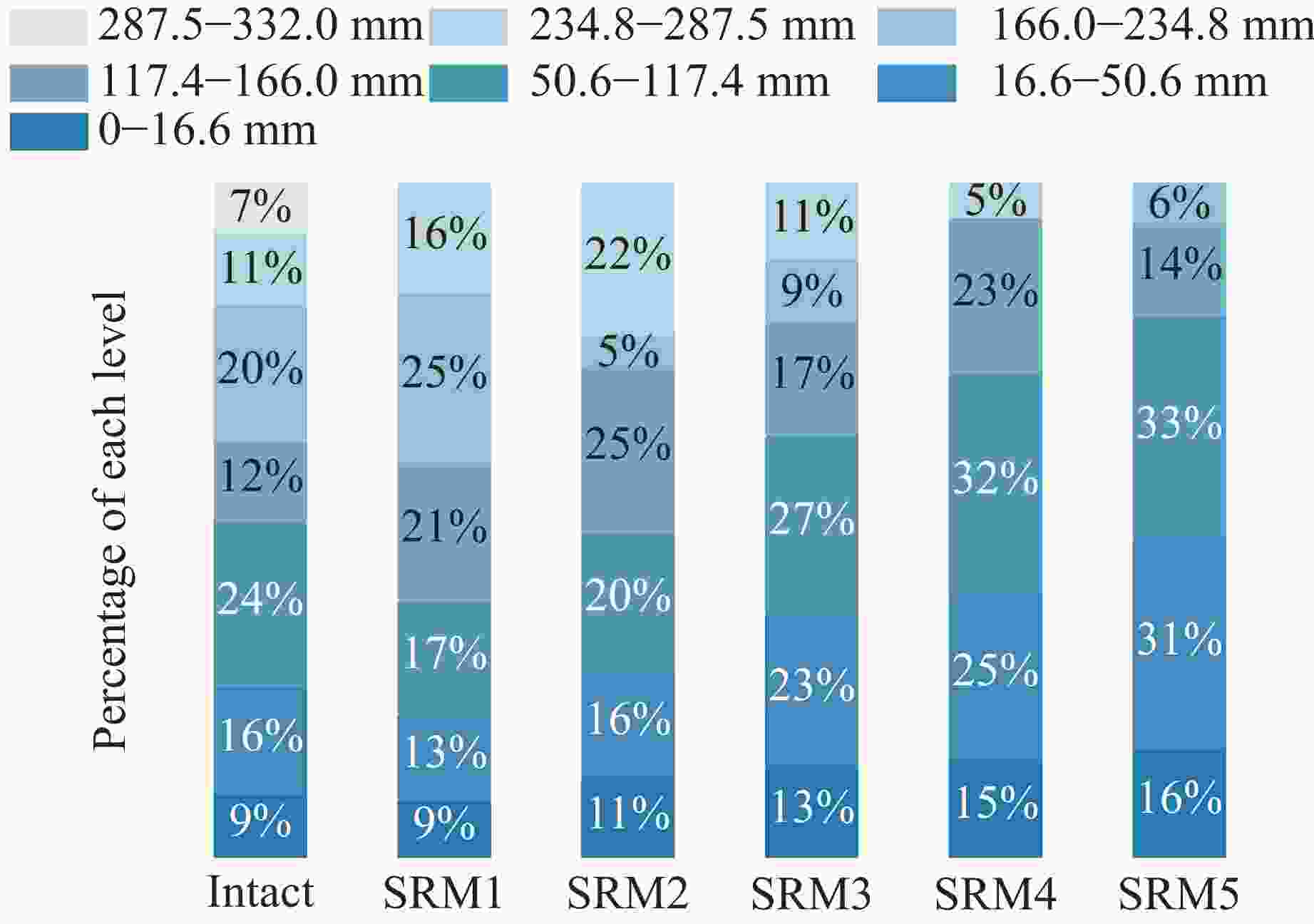
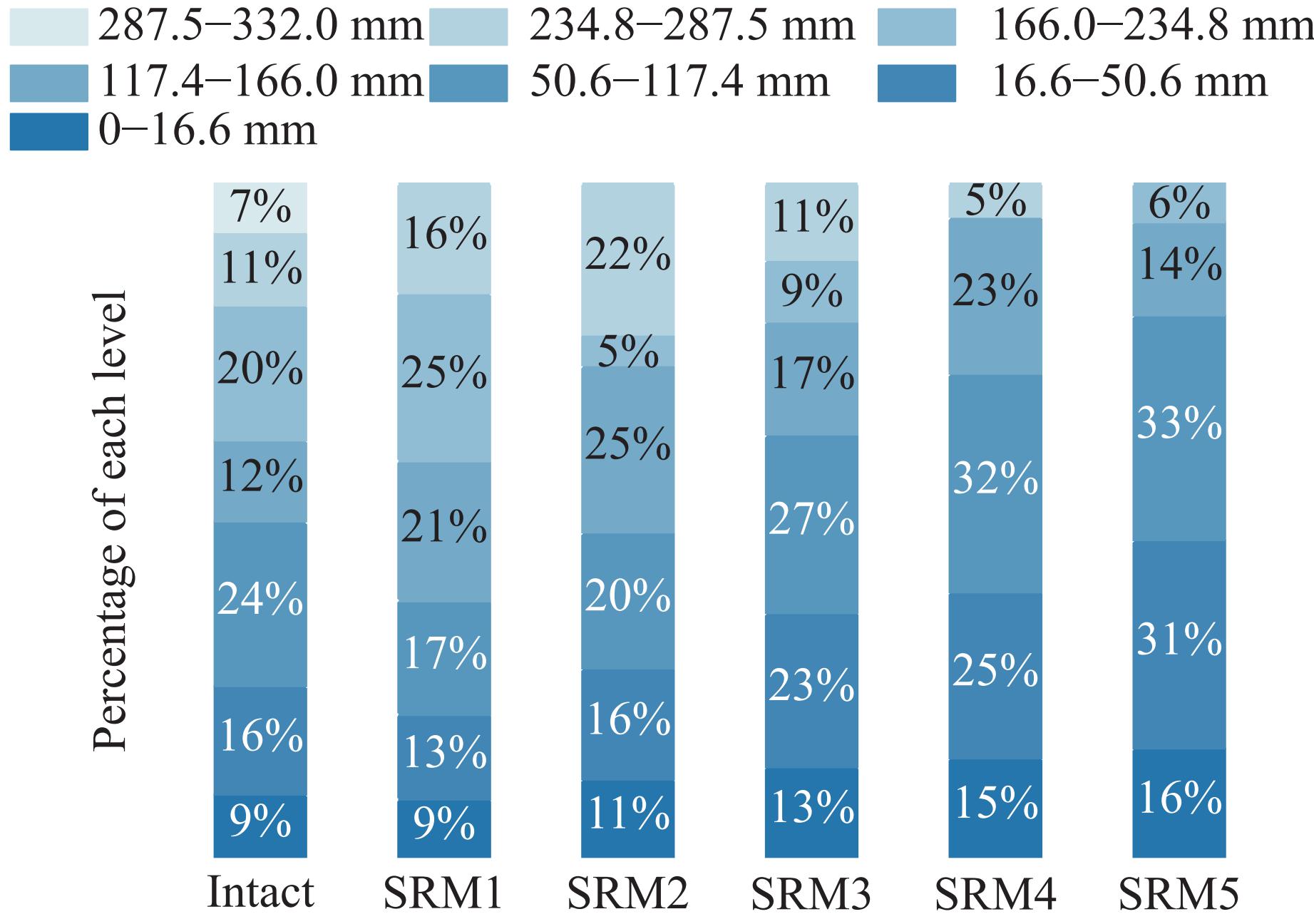
图 13 6组工况各级配块度所占百分比
Figure 13. Percentage of block degrees at each level of the six working conditions
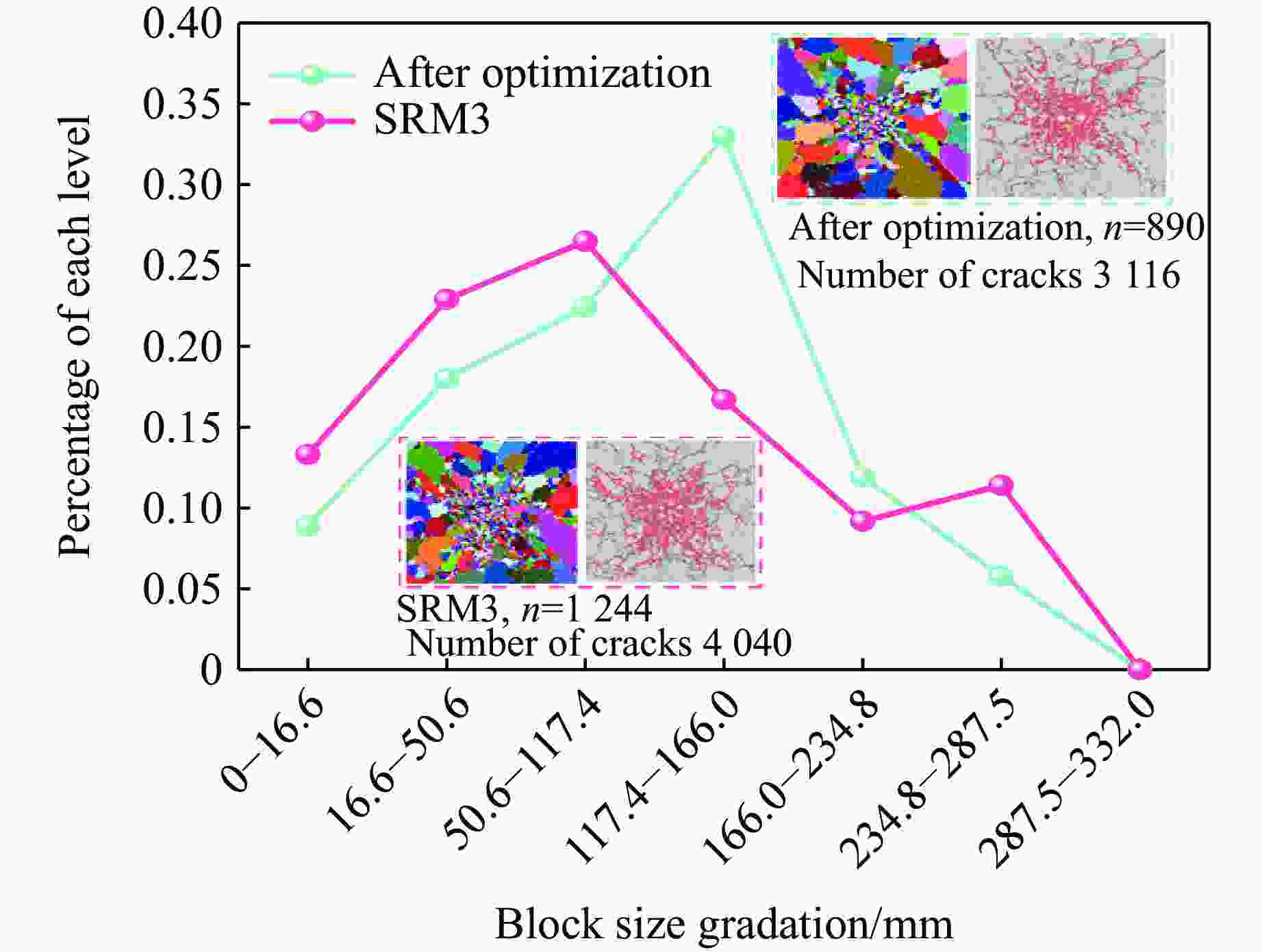
图 15 优化前后模拟块度级配占比及爆后模型
Figure 15. Proportion of simulated block gradation before and after optimization and the post-explosion model
表 1 模型参数
Table 1. Parameters of the model
Ball mesoscopic parameters LPB mesoscopic parameters Rmin/m Rmax/Rmin μ ρ/(kg·m−3) Ec/Pa pbt/Pa pbc/Pa kpb δF pbde/Pa fpb 0.01 1.66 0.5 2 720 25×109 30×106 40×106 2.0 0.5 15×109 50  下载: 导出CSV
-
[1] 杨仁树. 我国煤矿岩巷安全高效掘进技术现状与展望 [J]. 煤炭科学技术, 2013, 41(9): 18–23. doi: 10.13199/j.cnki.cst.2013.09.008YANG R S. Present status and outlook on safety and high efficient heading technology of mine rock roadway in China [J]. Coal Science and Technology, 2013, 41(9): 18–23. doi: 10.13199/j.cnki.cst.2013.09.008 [2] 王文龙. 钻眼爆破 [M]. 北京: 煤炭工业出版社, 1984.WANG W L. Drilling blasting [M]. Beijing: China Coal Industry Press, 1984. [3] 李爱军. 钻爆法岩巷四位一体快速掘进技术研究与应用 [J]. 煤炭科学技术, 2017, 45(7): 39–43, 131. doi: 10.13199/j.cnki.cst.2017.07.008LI A J. Research and application of four-in-one rock drift rapid excavation technology based on drilling and blasting method [J]. Coal Science and Technology, 2017, 45(7): 39–43, 131. doi: 10.13199/j.cnki.cst.2017.07.008 [4] WU Z Y, LUO D Y, CHEN F, et al. Numerical simulation of empty-hole effect during parallel-hole cutting under different in situ stress conditions [J]. Advances in Civil Engineering, 2021, 2021(1): 8881491. doi: 10.1155/2021/8881491 [5] 李曙光. 铁路隧道空孔直眼掏槽爆破数值模拟及现场应用 [J]. 地下空间与工程学报, 2025, 21(2): 610–619. doi: 10.20174/j.JUSE.2025.02.28LI S G. Numerical simulation of straight cutting blasting of empty hole in railway tunnel and its application [J]. Chinese Journal of Underground Space and Engineering, 2025, 21(2): 610–619. doi: 10.20174/j.JUSE.2025.02.28 [6] 章逸锋, 李洪超, 张智宇, 等. 角柱形垂直掏槽爆破参数研究 [J]. 地下空间与工程学报, 2024, 20(1): 31–41. doi: 10.20174/j.juse.2024.01.004ZHANG Y F, LI H C, ZHANG Z Y, et al. Research on blasting parameters of prism vertical cutting [J]. Chinese Journal of Underground Space and Engineering, 2024, 20(1): 31–41. doi: 10.20174/j.juse.2024.01.004 [7] 李祥龙, 张志平, 王建国, 等. 双空孔间距对爆破槽腔断面大小的影响 [J]. 爆炸与冲击, 2022, 42(11): 115201. doi: 10.11883/bzycj-2021-0471LI X L, ZHANG Z P, WANG J G, et al. Influence of double empty hole spacing on section size of blasting chamber [J]. Explosion and Shock Waves, 2022, 42(11): 115201. doi: 10.11883/bzycj-2021-0471 [8] 张宪堂, 马力, 余辉, 等. 空孔直径对有围压直眼掏槽爆破破碎效果的影响 [J]. 煤炭科学技术, 2023, 51(10): 55–64. doi: 10.13199/j.cnki.cst.2022-1357ZHANG X T, MA L, YU H, et al. Influence of diameter of empty hole on the fragmentation effect of parallel cut blasting under confining pressure [J]. Coal Science and Technology, 2023, 51(10): 55–64. doi: 10.13199/j.cnki.cst.2022-1357 [9] ZHANG X T, LI J, LI D, et al. Numerical simulation of parallel cutting with different number of empty holes [J]. Tehnički Vjesnik, 2021, 28(5): 1742–1748. doi: 10.17559/TV-20201211121650 [10] 郝英剑. 大直径中空眼在岩巷掘进中的应用 [J]. 采矿技术, 2021, 21(1): 21–23, 26. doi: 10.3969/j.issn.1671-2900.2021.01.007HAO Y J. Application of large diameter hollow hole in rock drivage [J]. Mining Technology, 2021, 21(1): 21–23, 26. doi: 10.3969/j.issn.1671-2900.2021.01.007 [11] 刘浩杉, 侯江, 张智宇, 等. 复杂环境下隧道楔形掏槽合理延期时间优化研究 [J]. 中国安全生产科学技术, 2023, 19(8): 116–123. doi: 10.11731/j.issn.1673-193x.2023.08.017LIU H S, HOU J, ZHANG Z Y, et al. Study on optimization of reasonable delay time of tunnel wedge cut in complex environment [J]. Journal of Safety Science and Technology, 2023, 19(8): 116–123. doi: 10.11731/j.issn.1673-193x.2023.08.017 [12] 王雁冰, 张航, 杨仁树, 等. 掏槽孔超深深度对爆破效果的影响 [J]. 工程科学学报, 2023, 45(2): 182–194. doi: 10.13374/j.issn2095-9389.2021.11.30.006WANG Y B, ZHANG H, YANG R S, et al. Experiment study on overdepth coefficient of the cut hole in coal mine roadway excavation blasting [J]. Chinese Journal of Engineering, 2023, 45(2): 182–194. doi: 10.13374/j.issn2095-9389.2021.11.30.006 [13] 罗仁宇, 李奇志, 黄云进, 等. 基于PFC的基坑爆破数值模拟及安全性分析 [J]. 中山大学学报(自然科学版)(中英文), 2023, 62(5): 107–114. doi: 10.13471/j.cnki.acta.snus.2023B020LUO R Y, LI Q Z, HUANG Y J, et al. Numerical simulation and safety analysis of foundation pit blasting based on PFC [J]. Acta Scientiarum Naturalium Universitatis Sunyatseni, 2023, 62(5): 107–114. doi: 10.13471/j.cnki.acta.snus.2023B020 [14] 黄尘, 李江腾, 赵远, 等. 基于PFC2D的冬瓜山铜矿爆破参数优化 [J]. 矿冶工程, 2022, 42(1): 1–4. doi: 10.3969/j.issn.0253-6099.2022.01.001HUANG C, LI J T, ZHAO Y, et al. Optimization of blasting parameters for Dongguashan copper mine based on PFC2D [J]. Mining and Metallurgical Engineering, 2022, 42(1): 1–4. doi: 10.3969/j.issn.0253-6099.2022.01.001 [15] YU R G, ZHANG Z H, GAO W L, et al. Numerical simulation of rock mass blasting vibration using particle flow code and particle expansion loading algorithm [J]. Simulation Modelling Practice and Theory, 2023, 122: 102686. doi: 10.1016/j.simpat.2022.102686 [16] 吴再海, 安龙, 齐兆军, 等. 基于LS-DYNA与PFC联合的岩体爆破数值模拟方法分析 [J]. 采矿与安全工程学报, 2021, 38(3): 609-614.WU Z H, AN L, QI Z J, et al. The numerical simulation method of rock mass blasting based on PFC combined with LS-DYNA [J]. Journal of Mining and Safety Engineering, 2021, 38(3): 609-614. [17] QIU J D, LUO L, LI X B, et al. Numerical investigation on the tensile fracturing behavior of rock-shotcrete interface based on discrete element method [J]. International Journal of Mining Science and Technology, 2020, 30(3): 293–301. doi: 10.1016/j.ijmst.2020.03.007 [18] QIU J D, LI D Y, LI X B, et al. Dynamic fracturing behavior of layered rock with different inclination angles in SHPB tests [J]. Shock and Vibration, 2017, 2017(1): 7687802. doi: 10.1155/2017/7687802 [19] WANG G H, WANG X Y, ZHAO J X, et al. Numerical study on the reinforcement mechanism of prestressed bolts based on the reconstruction of coal fracture structures [J]. Simulation Modelling Practice and Theory, 2025, 139: 103046. doi: 10.1016/j.simpat.2024.103046 [20] KHODAEI M, DELIJANI E B, HAJIPOUR M, et al. Analyzing the correlation between stochastic fracture networks geometrical properties and stress variability: a rock and fracture parameters study [J]. Journal of Petroleum Exploration and Production, 2021, 11(2): 685–702. doi: 10.1007/s13202-020-01076-z [21] 包建业, 王静. 基于离散裂隙网络模型的隧道涌水量预测 [J]. 山东大学学报(工学版), 2016, 46(6): 127–134. doi: 10.6040/j.issn.1672-3961.0.2016.144BAO J Y, WANG J. Prediction of flow rate during tunnel excavation based on discrete fracture network models [J]. Journal of Shandong University (Engineering Science), 2016, 46(6): 127–134. doi: 10.6040/j.issn.1672-3961.0.2016.144 [22] REEVES D M, PARASHAR R, POHLL G, et al. The use of discrete fracture network simulations in the design of horizontal hillslope drainage networks in fractured rock [J]. Engineering Geology, 2013, 163: 132–143. doi: 10.1016/j.enggeo.2013.05.013 [23] 杨鹏亮. 节理岩体爆破裂纹扩展机理数值模拟研究[C]//第33届全国结构工程学术会议论文集. 阜新: 中国力学学会结构工程专业委员会, 2024: 567–570.YANG P L. Numerical simulation study on crack propagation mechanism of jointed rock mass blasting [C]//The 33rd National Conference on Structural Engineering. Fuxin: Structural Engineering Committee of Chinese Society of Mechanics, 2024: 567–570. [24] 吴顺川, 张思瑞, 韩龙强, 等. 从随机节理分布角度探讨工程岩体不均匀性和尺寸效应 [J]. 中国矿业大学学报, 2024, 53(6): 1063–1073. doi: 10.13247/j.cnki.jcumt.20240170WU S C, ZHANG S R, HAN L Q, et al. Discussion on the inhomogeneity and size effect of engineering rock mass from the perspective of random joints distribution [J]. Journal of China University of Mining & Technology, 2024, 53(6): 1063–1073. doi: 10.13247/j.cnki.jcumt.20240170 [25] XIONG W, CHEN Y X, MA S G. Unified model-free interaction screening via CV-entropy filter [J]. Computational Statistics & Data Analysis, 2023, 180: 107684. doi: 10.1016/j.csda.2022.107684 [26] 王二博, 王志丰, 王亚琼. 含裂隙岩石单轴压缩下力学性能及能量演化机制研究 [J]. 高压物理学报, 2024, 38(1): 014201. doi: 10.11858/gywlxb.20230746WANG E B, WANG Z F, WANG Y Q. Mechanical properties and energy evolution characteristics of fracture-bearing rocks under uniaxial compression [J]. Chinese Journal of High Pressure Physics, 2024, 38(1): 014201. doi: 10.11858/gywlxb.20230746 [27] WANG H L, WANG W X, YANG J X, et al. A deterministic-stochastic DFN-DEM numerical modeling method with application in stability of fractured rock slope in BDa hydropower station [J]. Engineering Geology, 2025, 353: 108111. doi: 10.1016/j.enggeo.2025.108111 [28] 于润坤, 刘华生. 摄影-图象分析法测定爆堆矿岩块度 [J]. 化工矿山技术, 1993, 22(6): 45–50. doi: 10.16283/j.cnki.hgkwyjg.1993.06.018YU R K, LIU H S. Photographic-image analysis method for the determination of rock fragmentation of explosive heap [J]. Chemical Mining Technology, 1993, 22(6): 45–50. doi: 10.16283/j.cnki.hgkwyjg.1993.06.018 -

 下载:
下载:


计量
- 文章访问数: 1458
- HTML全文浏览量: 930
- PDF下载量: 70
