




Effect of Fabric Structure Hybrid on Penetration Resistance Performance of Fiber Reinforced Composite
-
摘要: 针对提升军事装备安全性的迫切需求,聚焦纤维增强复合材料的失效模式、损伤演化和能量吸收机理,探讨了织物结构混杂对纤维增强复合材料抗侵彻性能的影响规律及机制,通过弹道侵彻实验和多尺度计算,分析了平纹和缎纹织物结构混杂对芳纶/热塑性聚氨酯(thermoplastic polyurethanes,TPU)复合材料抗侵彻性能的影响机制,考察了其剩余速度、损伤机理、吸能特性和破坏形貌。结果表明,平纹织物提供高平面内刚度,缎纹织物则利于平面外变形和能量耗散。以平纹织物为迎弹面、缎纹织物为背弹面的混杂结构的抗侵彻性能更优:前层(平纹)使子弹钝化并分散冲击能量,后层(缎纹)使能量耗散最大化。其中,排列顺序为K6D21的芳纶/TPU复合材料性能最优,其剩余速度为455.81 m/s,比吸能为28.51 J/(kg·m2),抗侵彻性能提升了9.50%。通过多特征参数SHAP(shapley additive explanations)值分析,可从织物结构、纤维性能以及混杂铺层方面优化复合材料结构设计,结合多尺度数值计算与实验验证扩充数据库,为复合材料的性能提升提供坚实的理论基础。Abstract: To enhance the penetration resistance performance of fiber-reinforced composite materials and improve the safety of military equipment, this study explores the influence and mechanism of fabric structure hybridization on the penetration resistance performance of fiber-reinforced composite materials, focusing on failure modes, damage evolution, and energy absorption. Through ballistic penetration experiments and multiscale calculations, the influence mechanism of the mixed structure of plain weave and satin weave on the penetration resistance performance of aramid/thermoplastic polyurethanes (TPU) composite materials was analyzed, and the residual velocity, damage mechanism, energy absorption characteristics, and failure morphology were investigated. The results indicate that plain weave fabrics provide high in-plane stiffness, while satin weave fabrics facilitate out of plane deformation and energy dissipation. The hybrid structure with plain weave fabric as the front surface and satin weave fabric as the back surface has better penetration resistance: the front layer (plain weave) passivates bullets and disperses impact energy, while the back layer (satin weave) maximizes energy dissipation. Among them, the aramid/TPU composite material arranged in the order of K6D21 has the best performance, with a residual velocity of 455.81 m/s and a specific energy absorption of 28.51 J/(kg·m2), which improved by 9.50% compared to the control group. By analyzing the shapley additive explanations (SHAP) values of multi feature parameters, the structural design of composite materials can be optimized based on fabric structure, fiber properties, and hybrid layers. Combined with multi-scale numerical calculations and experimental verification, the database can be expanded to provide a solid theoretical basis for improving the performance of composite materials.
-
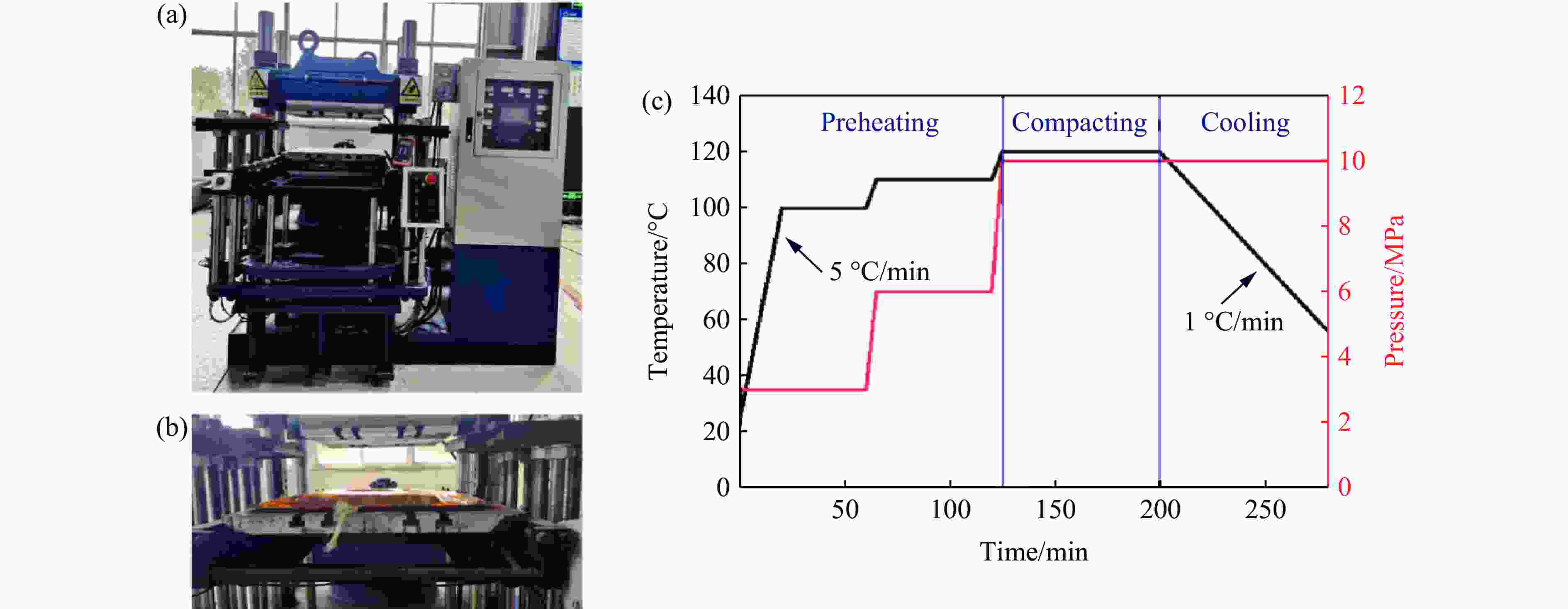
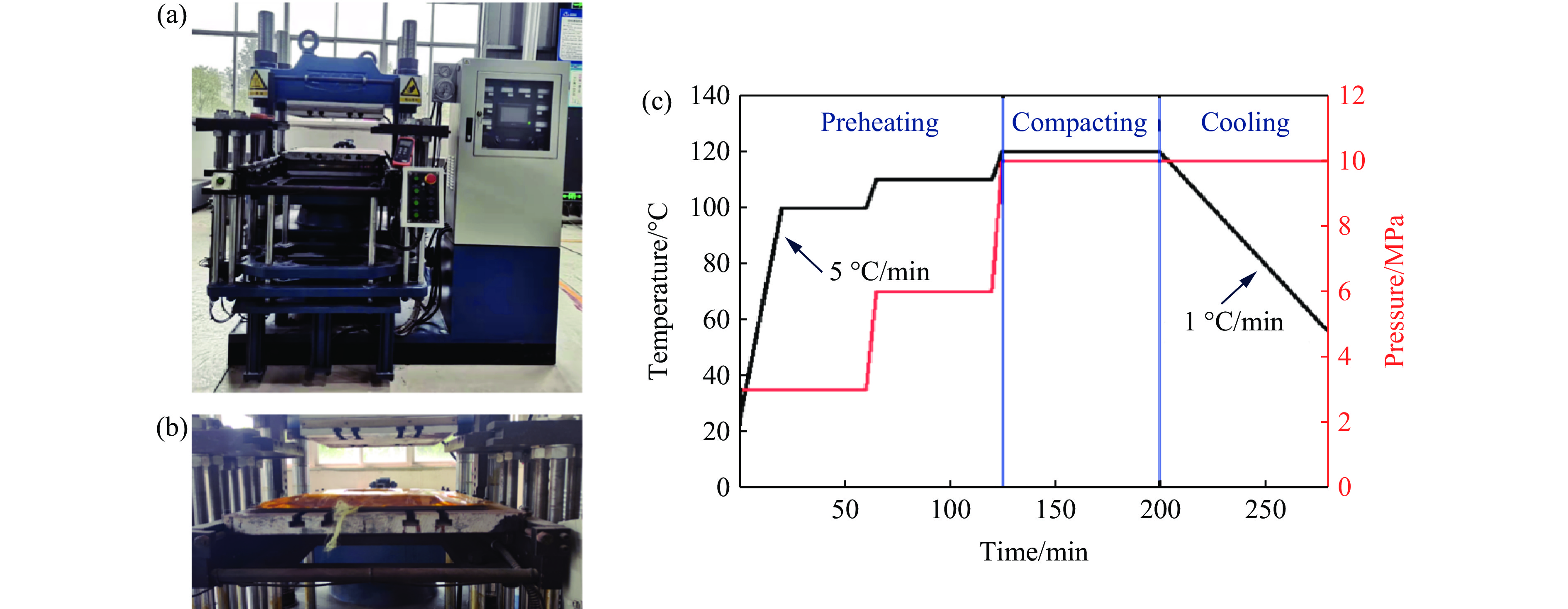
图 1 一体化梯度热压成型工艺:(a)~(b)橡胶平板硫化机,(c) 制备过程
Figure 1. Integrated gradient hot pressing process: (a)–(b) rubber plate vulcanizing machines; (c) forming process
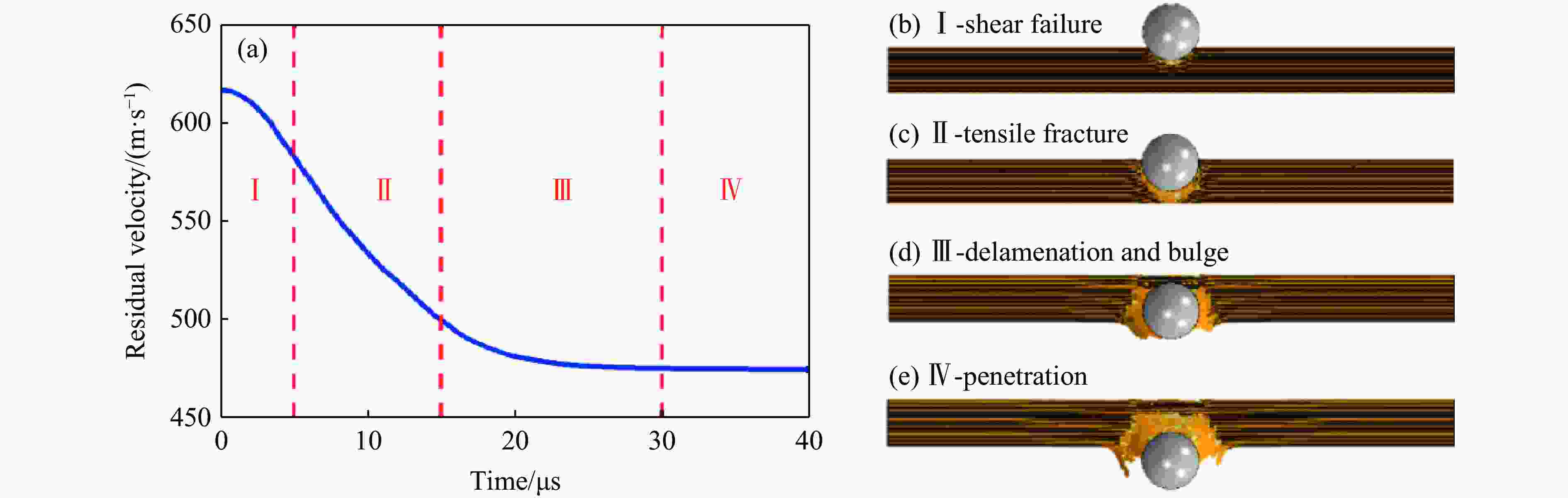
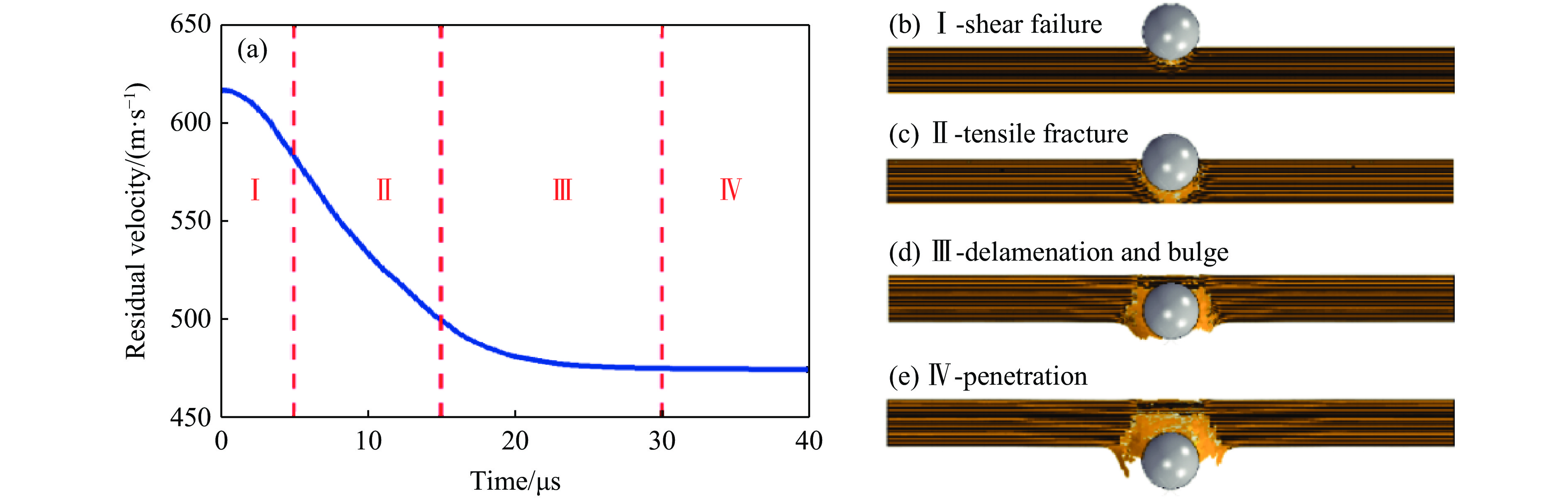
图 3 K27在(610±10) m/s冲击速度下的剩余速度曲线和横截面损伤形态
Figure 3. Residual velocity curve and cross-sectional damage morphology of K27 at an impact velocity of (610±10) m/s
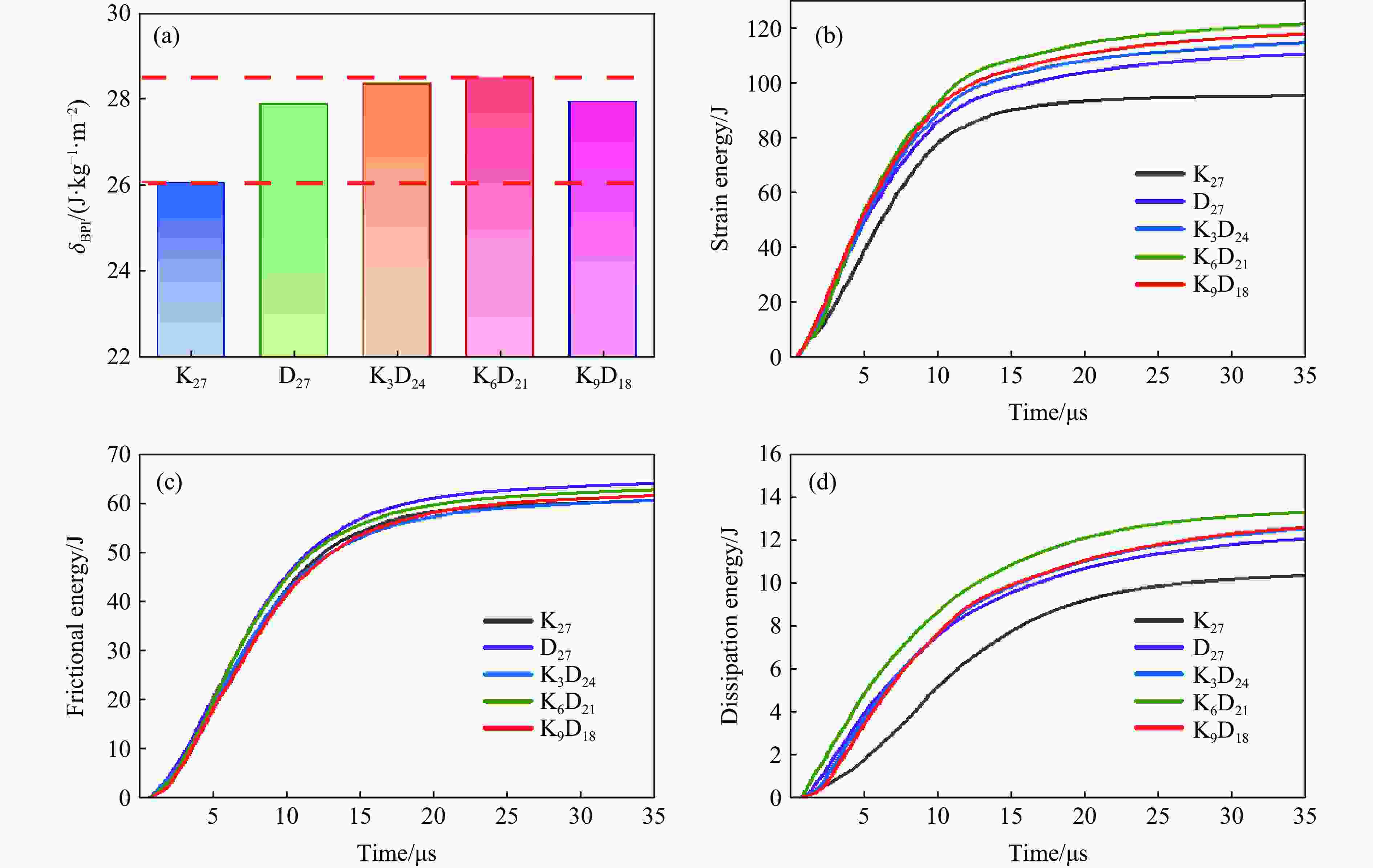
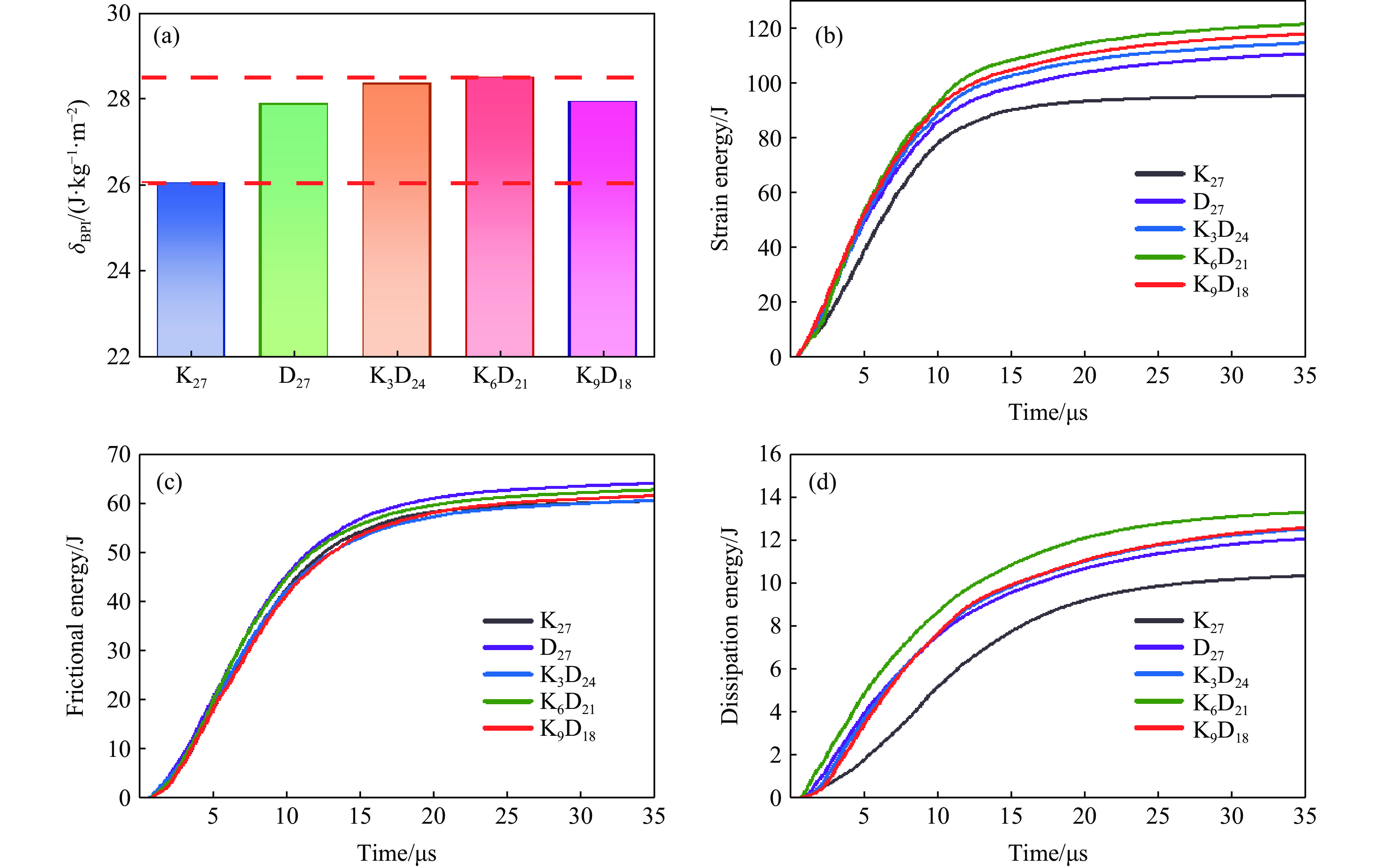
图 4 织物结构混杂复合材料在(610±10) m/s冲击速度下的能量吸收:(a) δBPI,(b) 应变能,(c) 摩擦能,(d) 非弹性损耗能
Figure 4. Energy absorption of fabric-structured hybrid composite material at impact velocity of (610±10) m/s: (a) δBPI; (b) strain energy; (c) frictional energy; (d) dissipation energy
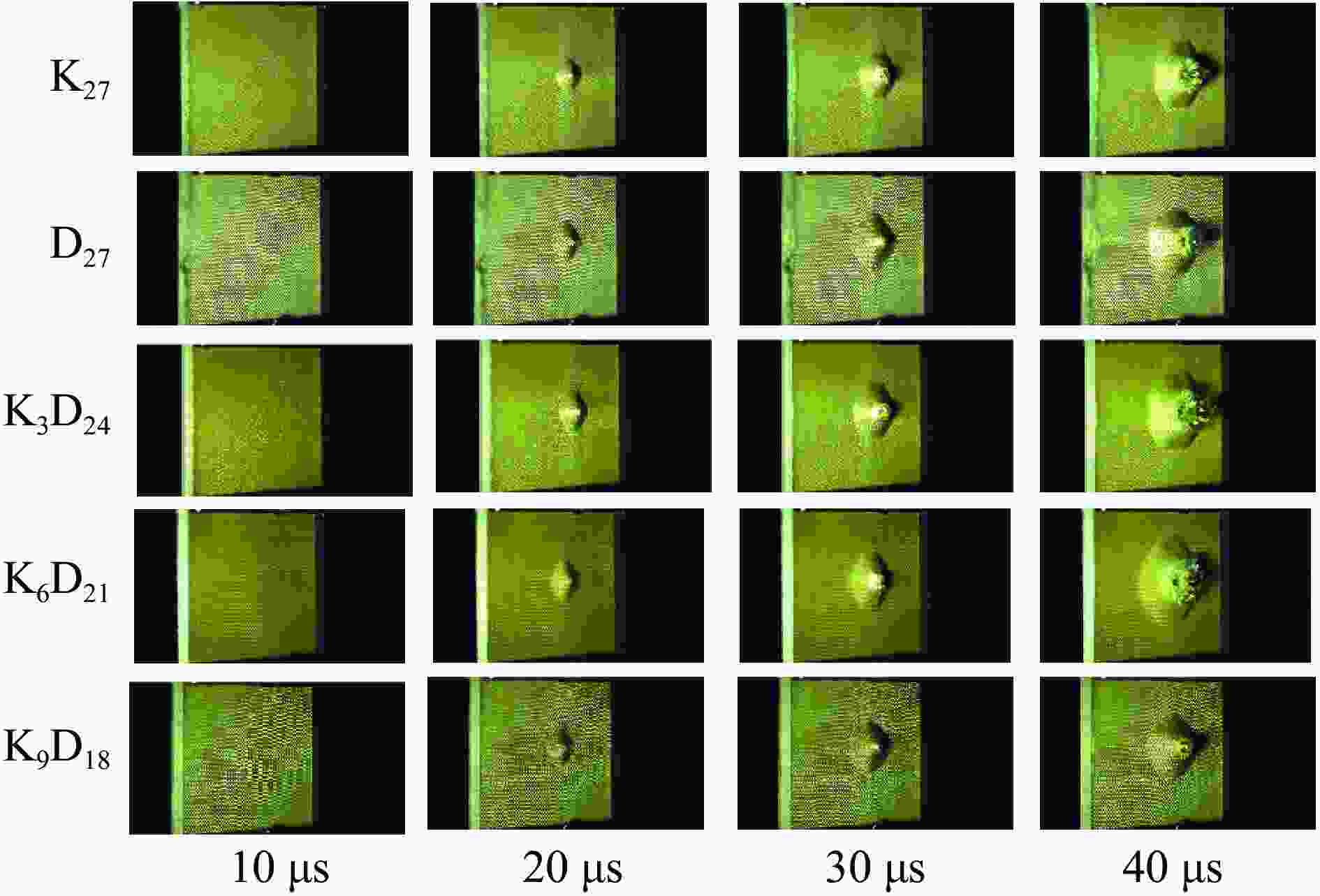
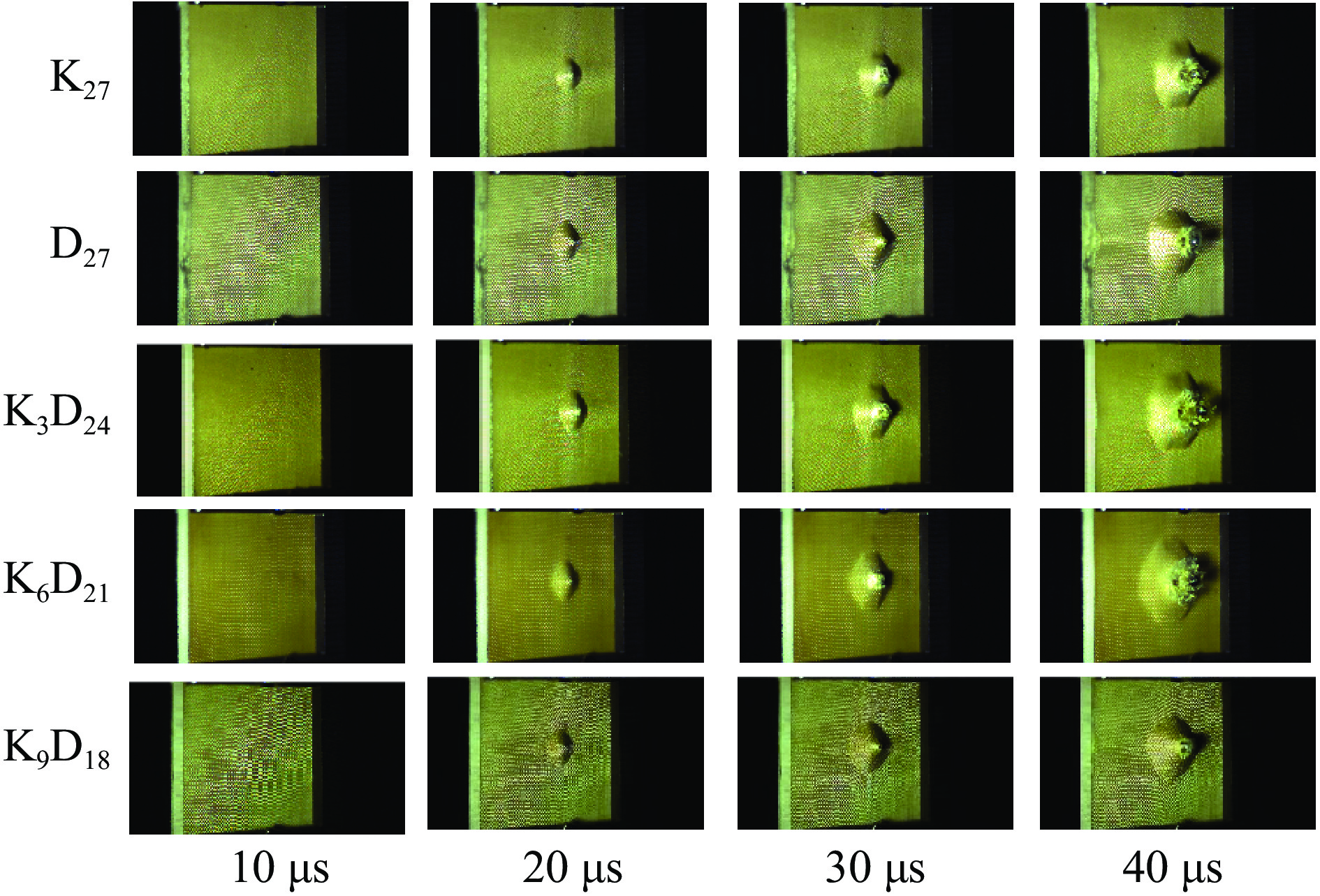
图 5 高速摄影获得的弹丸侵彻下织物结构混杂复合材料的变形进程(背弹面)
Figure 5. Deformation process of fabric-structured hybrid composite material ballistic penetration under high-speed photography (back surface)
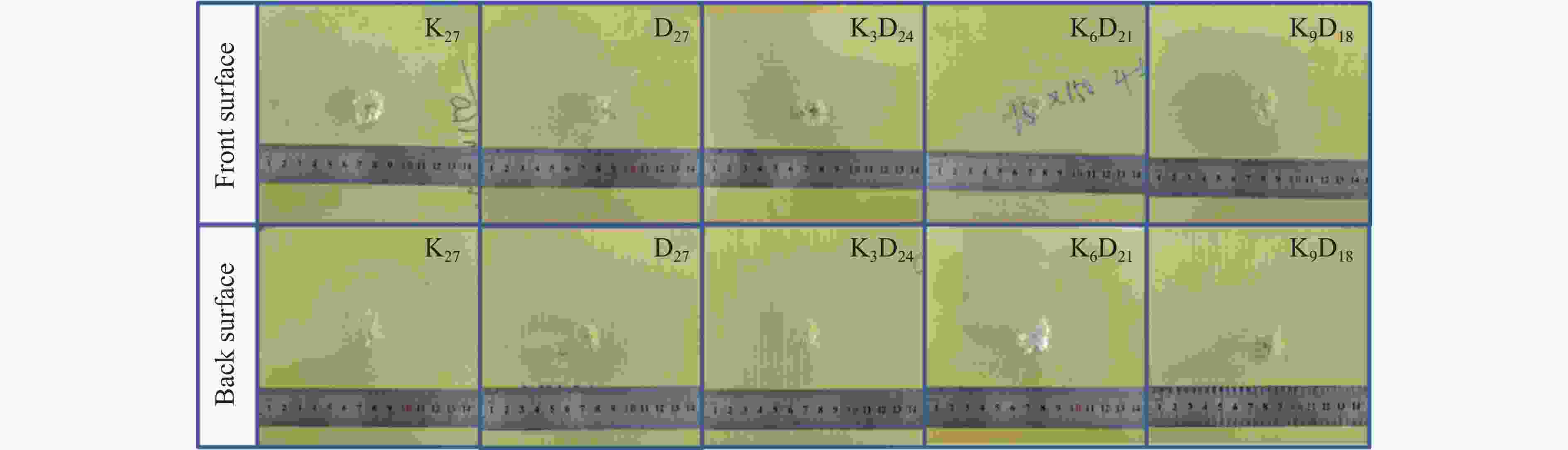
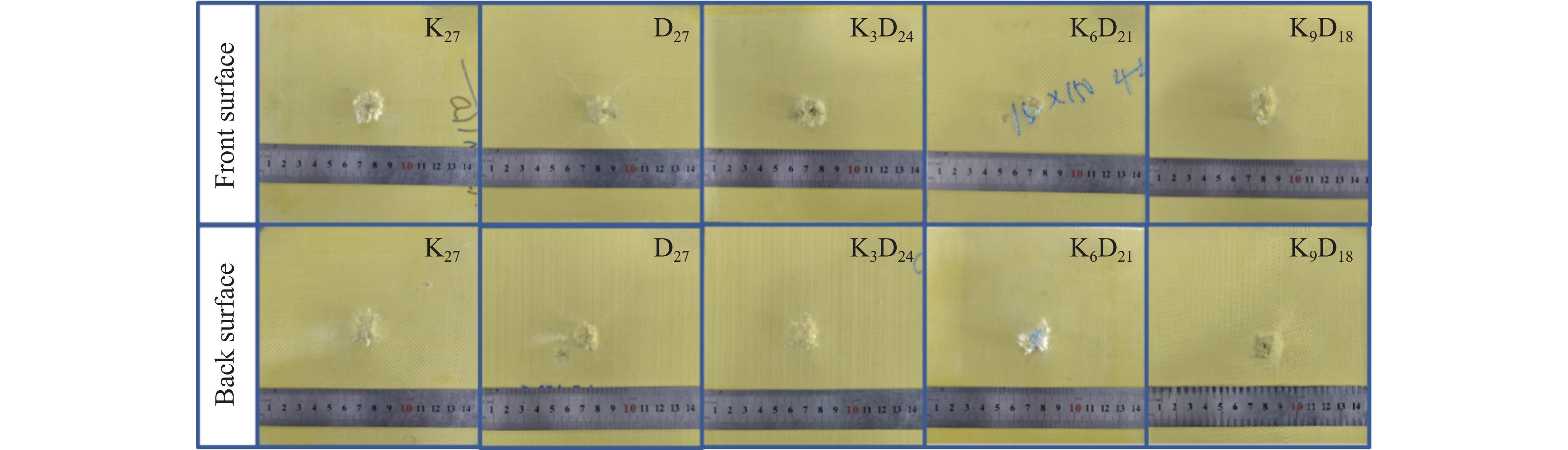
图 6 织物结构混杂复合材料在(610±10) m/s的冲击速度下迎弹面和背弹面的损伤形态
Figure 6. Damage morphologies of the front and back surfaces of fabric-structured hybrid composite materials under an impact velocity of (610±10) m/s
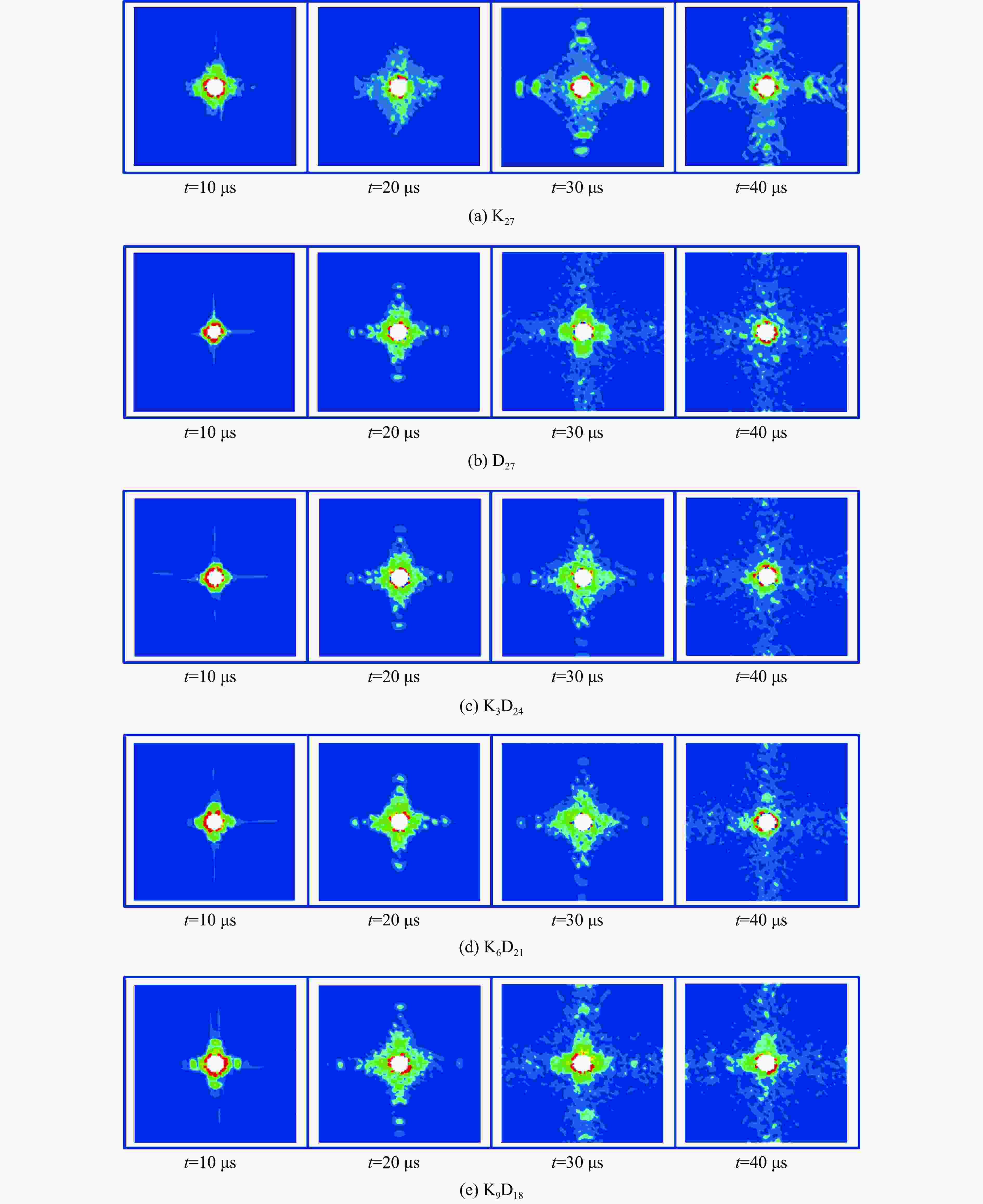
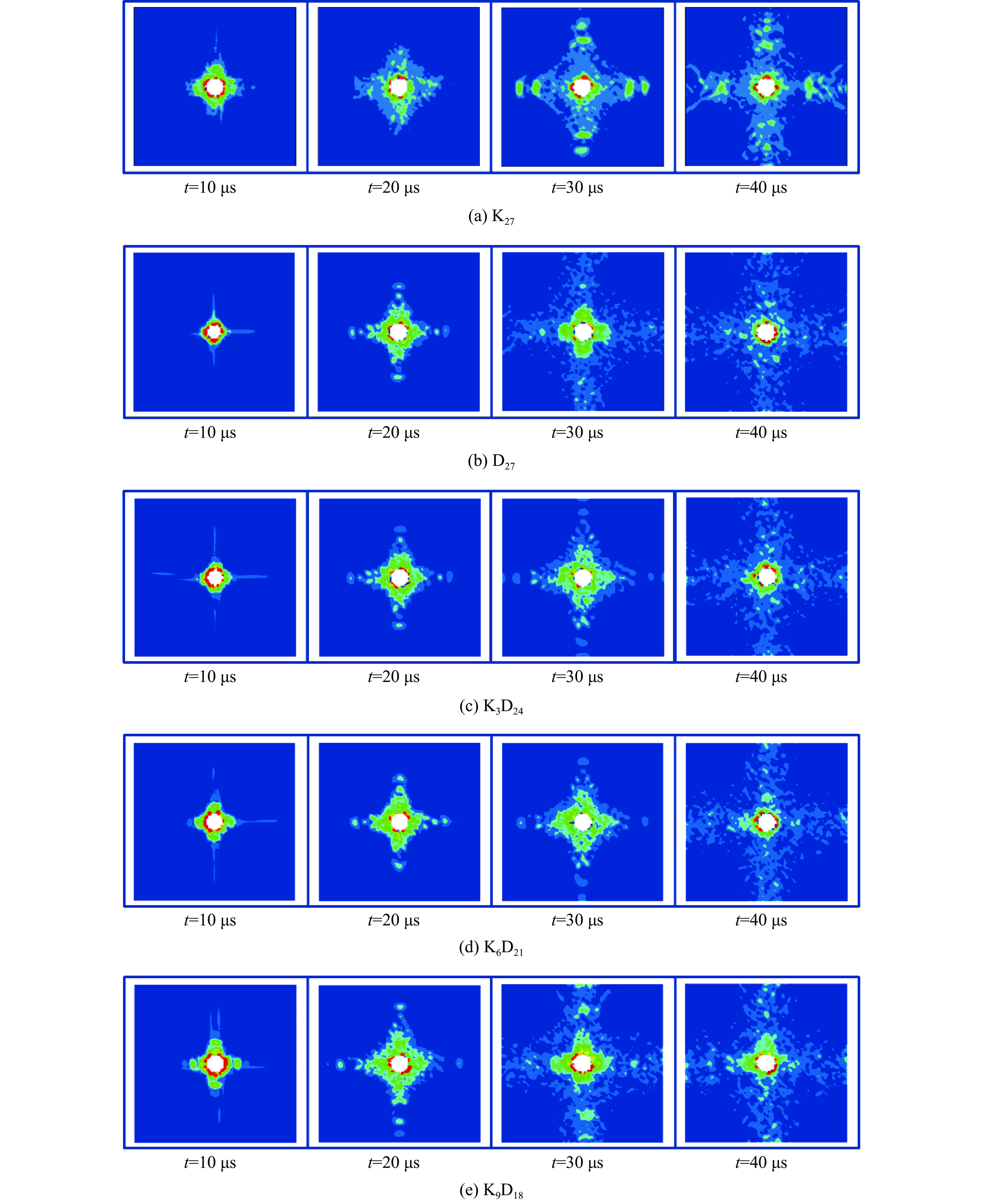
图 7 织物结构混杂复合材料迎弹面的应力分布
Figure 7. Stress distribution of the front surface for fabric-structured hybrid composite material
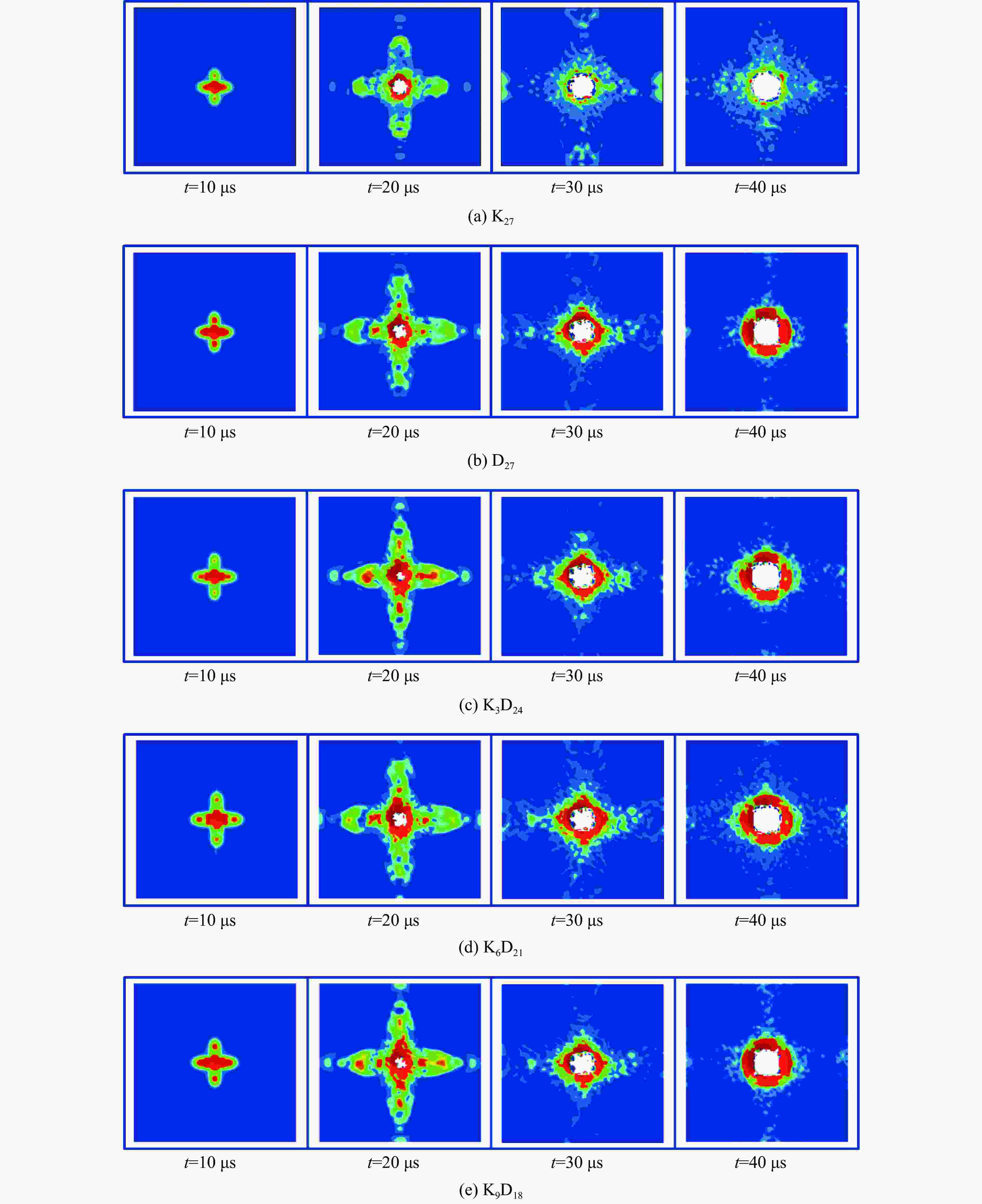
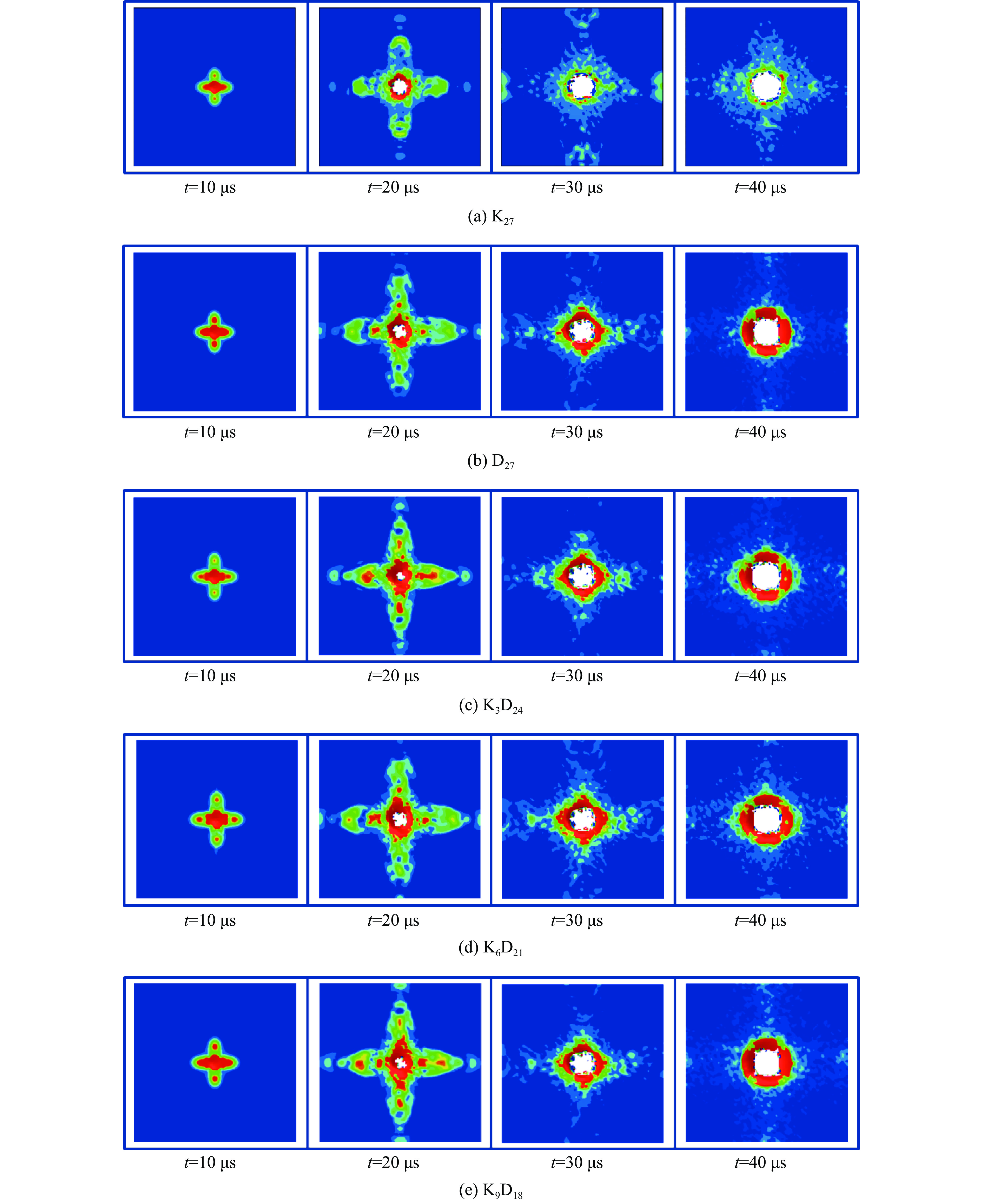
图 8 织物结构混杂复合材料背弹面的应力分布
Figure 8. Stress distribution of the back surface for fabric-structured hybrid composite material
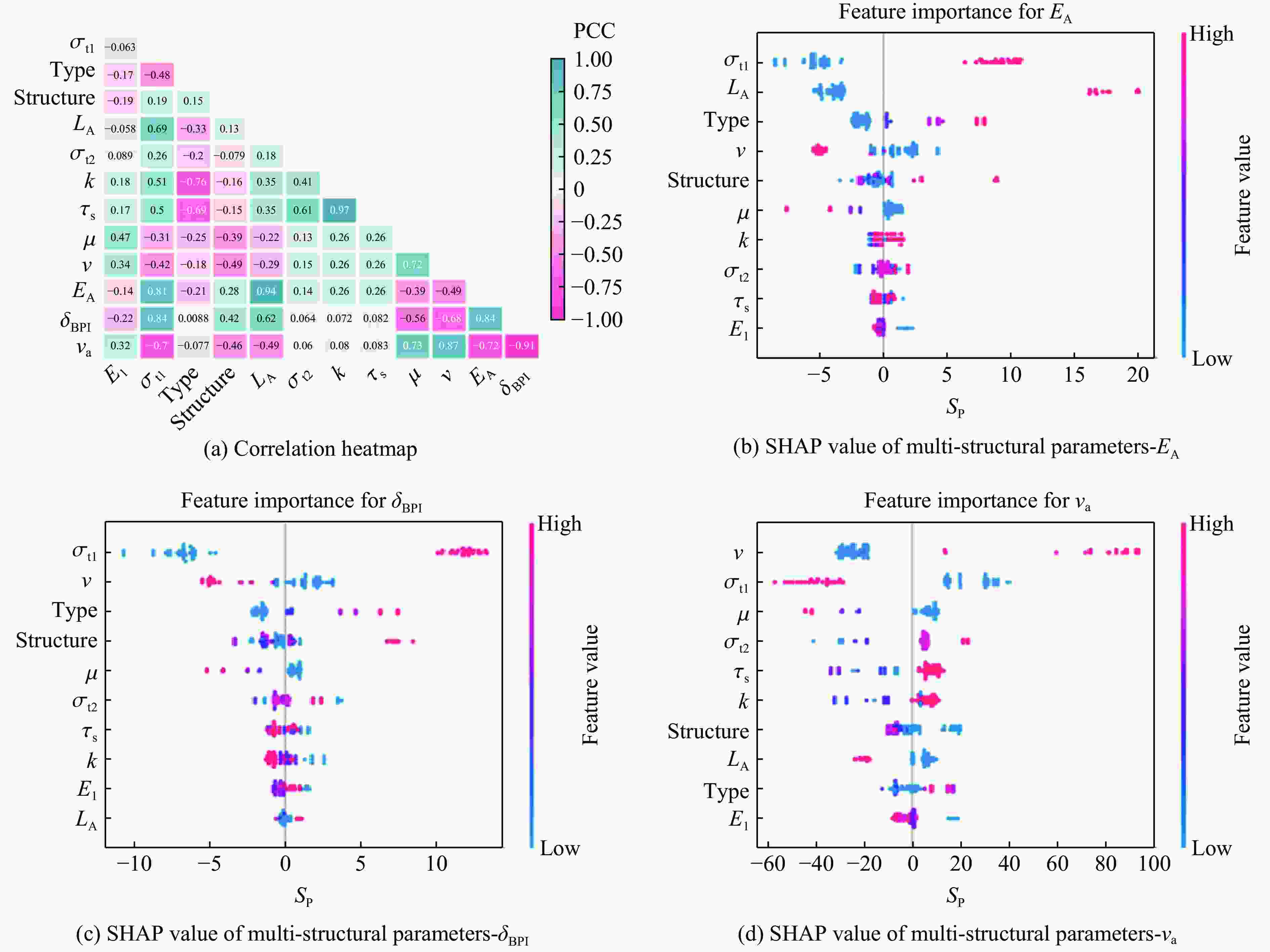
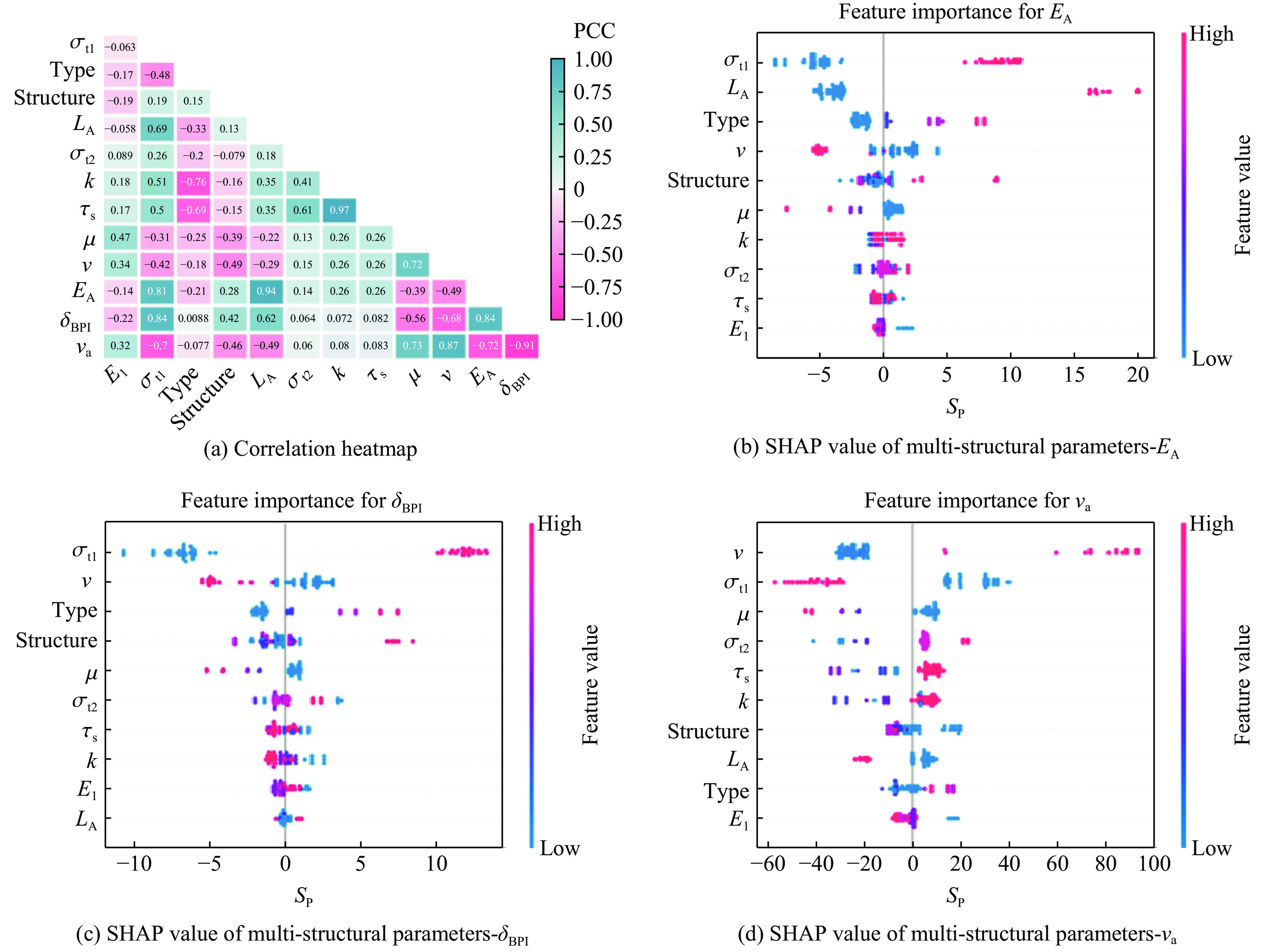
图 9 芳纶复合材料的多结构参数-抗侵彻性能影响分析
Figure 9. Influence of multi-structural parameters on the penetration resistance performance of aramid composite materials
表 1 混杂复合材料参数
Table 1. Parameters of the hybrid composite materials
Material Mass/g Thickness/mm Area density/(kg·m–2) K27 271.4 8.45 12.06 D27 269.3 8.21 11.97 K3D24 268.1 8.29 11.92 K6D21 269.3 8.31 11.97 K9D18 270.6 8.34 12.03  下载: 导出CSV
表 2 纤维增强复合材料的本构模型参数[20]
Table 2. Parameters for constitutive model of fiber reinforced composite materials[20]
Material ρ/(g·cm–3) E1+/GPa E2+/GPa $ {\nu }_{12+} $ G12/GPa $ X $1+/MPa $ X $1−/MPa $ X $2+/MPa $ X $2−/MPa Plain weave AF 1.44 13.486 11.763 0.09 1.387 349.15 53.17 8 15 Satin and sateen AF 1.41 14.297 10.438 0.09 1.247 373.35 49.80 8 15 Material S/MPa $ {G}_{\mathrm{f}}^{1+} $/
(kJ·m–2)$ {G}_{\mathrm{f}}^{1-} $/
(kJ·m–2)$ {G}_{\mathrm{f}}^{2+} $/
(kJ·m–2)$ {G}_{\mathrm{f}}^{2-} $/
(kJ·m–2)$ {\alpha }_{12} $ $ {\alpha }_{12}^{\mathrm{m}\mathrm{a}\mathrm{x}} $ $ {\widetilde{\sigma }}_{\mathrm{y}0} $/GPa $ {d}_{\mathrm{m}\mathrm{a}\mathrm{x}} $ Plain weave AF 20 1 0.307 8.4 0.9 1.44×10⁻⁹ 13 485.67 11.763 0.09 Satin and sateen AF 20 1 0.307 8.4 0.9 1.41×10⁻⁹ 14 297.06 10.438 0.09
下载: 导出CSV
ρ/(g·cm–3) E/GPa $ {{t}}_{\text{n}}^{\text{o}} $/MPa $ {{t}}_{\text{s}}^{\text{o}}/{{t}}_{\text{t}}^{\text{o}} $ $ {G}_{\text{Ⅰ}\text{C}} $/(N·mm–1) $ \mathit{{G}}_{\text{Ⅱ}\text{C}}\text{/}{G}_{\text{Ⅲ}\text{C}} $ 1 1 000 69 79 0.9 2
下载: 导出CSV
表 4 不同织物结构混杂复合材料靶板的弹道侵彻实验结果与多尺度计算结果
Table 4. Ballistic penetration experiment results and multi-scale calculation results of hybrid composite target plates with different fabric structures
Specimens Striking velocity/
(m·s–1)Residual velocity δBPI/
(J·kg–1·m–2)Hoist/% Exp./(m·s−1) Sim./(m·s−1) Error/% K27 618.24 476.21 484.27 2.0 26.04 D27 615.76 462.57 459.28 1.1 27.88 7.05 K3D24 616.51 461.24 457.46 1.0 28.36 8.90 K6D21 613.78 455.81 449.23 1.4 28.51 9.50 K9D18 617.52 463.63 455.67 1.7 27.94 7.29
下载: 导出CSV
-
[1] ABTEW M A, BOUSSU F, BRUNIAUX P, et al. Ballistic impact mechanisms—a review on textiles and fibre-reinforced composites impact responses [J]. Composite Structures, 2019, 223: 110996. doi: 10.1016/j.compstruct.2019.110966 [2] LI Y Q, FAN H L, GAO X L. Ballistic helmets: recent advances in materials, protection mechanisms, performance, and head injury mitigation [J]. Composites Part B: Engineering, 2022, 238: 109890. doi: 10.1016/j.compositesb.2022.109890 [3] FANG H B, GUTOWSKI M, DISOGRA M, et al. A numerical and experimental study of woven fabric material under ballistic impacts [J]. Advances in Engineering Software, 2016, 96: 14–28. doi: 10.1016/j.advengsoft.2015.12.008 [4] 李雪. 国产芳纶纤维性能测试及其复合材料抗侵彻性能研究 [D]. 武汉: 武汉纺织大学, 2023.LI X. Performance testing of domestic aramid fibers and the study of fiber-reinforced composites anti-penetration performance [D]. Wuhan: Wuhan Textile University, 2023. [5] NILAKANTAN G, GILLESPIE JR J W. Ballistic impact modeling of woven fabrics considering yarn strength, friction, projectile impact location, and fabric boundary condition effects [J]. Composite Structures, 2012, 94(12): 3624–3634. doi: 10.1016/j.compstruct.2012.05.030 [6] 刘元坤, 李年华, 陈虹, 等. 三维正交机织复合材料与玄武岩纤维层压复合材料的防弹性能分析研究 [J]. 高科技纤维与应用, 2022, 47(3): 18–23. doi: 10.3969/j.issn.1007-9815.2022.03.002LIU Y K, LI N H, CHEN H, et al. Analysis and research on ballistic performance of three-dimensional orthogonal woven composites and basalt fiber laminated composites [J]. Hi-Tech Fiber and Application, 2022, 47(3): 18–23. doi: 10.3969/j.issn.1007-9815.2022.03.002 [7] RUBIO I, RODRÍGUEZ-MILLÁN M, MARCO M, et al. Ballistic performance of aramid composite combat helmet for protection against small projectiles [J]. Composite Structures, 2019, 226: 111153. doi: 10.1016/j.compstruct.2019.111153 [8] 周庆, 何业茂, 刘婷. 对位芳香族聚酰胺纤维/环氧树脂复合材料防弹性能及其破坏机制 [J]. 复合材料学报, 2019, 36(10): 2235–2246. doi: 10.13801/j.cnki.fhclxb.20181218.005ZHOU Q, HE Y M, LIU T. Bulletproof properties and failure mechanism of para-aromatic polyamide fiber/epoxy resin composite [J]. Acta Materiae Compositae Sinica, 2019, 36(10): 2235–2246. doi: 10.13801/j.cnki.fhclxb.20181218.005 [9] ZHOU Y, CHEN X G. A numerical investigation into the influence of fabric construction on ballistic performance [J]. Composites Part B: Engineering, 2015, 76: 209–217. doi: 10.1016/j.compositesb.2015.02.008 [10] MA Y B, LI X, ZHANG B, et al. Influence of fabric structure of aramid-reinforced polycarbonate composites on its ballistic resistance verified by experiment and simulation [J]. Journal of Materials Engineering and Performance, 2025, 34(3): 2450–2461. doi: 10.1007/s11665-024-09246-4 [11] KARAHAN M, KARAHAN N, NASIR M A, et al. Effect of structural hybridization on ballistic performance of aramid fabrics [J]. Journal of Thermoplastic Composite Materials, 2019, 32(6): 795–814. doi: 10.1177/0892705718780197 [12] WANG Y, CHEN X G, YOUNG R, et al. A numerical and experimental analysis of the influence of crimp on ballistic impact response of woven fabrics [J]. Composite Structures, 2016, 140: 44–52. doi: 10.1016/j.compstruct.2015.12.055 [13] SHUKLA A, GROGAN J, TEKALUR S A, et al. Ballistic resistance of 2D & 3D woven sandwich composites [C]//Proceedings of the 7th International Conference on Sandwich Structures. Aalborg: Springer, 2005: 625−634. [14] GOPINATH G, ZHENG J Q, BATRA R C. Effect of matrix on ballistic performance of soft body armor [J]. Composite Structures, 2012, 94(9): 2690–2696. doi: 10.1016/j.compstruct.2012.03.038 [15] WANG H X, HAZELL P J, SHANKAR K, et al. Impact behaviour of dyneema® fabric-reinforced composites with different resin matrices [J]. Polymer Testing, 2017, 61: 17–26. doi: 10.1016/j.polymertesting.2017.04.026 [16] SAPOZHNIKOV S B, KUDRYAVTSEV O A, ZHIKHAREV M V. Fragment ballistic performance of homogenous and hybrid thermoplastic composites [J]. International Journal of Impact Engineering, 2015, 81: 8–16. doi: 10.1016/j.ijimpeng.2015.03.004 [17] WEI Q S, YANG D, GU B H, et al. Numerical and experimental investigation on 3D angle interlock woven fabric under ballistic impact [J]. Composite Structures, 2021, 266: 113778. doi: 10.1016/j.compstruct.2021.113778 [18] ZHANG D T, SUN Y, CHEN L, et al. Influence of fabric structure and thickness on the ballistic impact behavior of ultrahigh molecular weight polyethylene composite laminate [J]. Materials & Design, 2014, 54: 315–322. doi: 10.1016/j.matdes.2013.08.074 [19] JOHNSON A F. Modelling fabric reinforced composites under impact loads [J]. Composites Part A: Applied Science and Manufacturing, 2001, 32(9): 1197–1206. doi: 10.1016/S1359-835X(00)00186-X [20] SCHWAB M, TODT M, WOLFAHRT M, et al. Failure mechanism based modelling of impact on fabric reinforced composite laminates based on shell elements [J]. Composites Science and Technology, 2016, 128: 131–137. doi: 10.1016/j.compscitech.2016.03.025 [21] LÄSSIG T, NGUYEN L, MAY M, et al. A non-linear orthotropic hydrocode model for ultra-high molecular weight polyethylene in impact simulations [J]. International Journal of Impact Engineering, 2015, 75: 110–122. doi: 10.1016/j.ijimpeng.2014.07.004 [22] LIU Z C, LU S Y, JI R Y, et al. Effect of stacking sequence of the hybrid composite armor on ballistic performance and damage mechanism [J]. E-Polymers, 2025, 25(1): 20250035. doi: 10.1515/epoly-2025-0035 [23] 马玉斌. 表面处理及树脂体系对芳纶机织物弹道性能的影响 [D]. 武汉: 武汉纺织大学, 2024.MA Y B. Influence of surface treatment and resin system on the ballistic performance of aramid woven fabrics [D]. Wuhan: Wuhan Textile University, 2024. -

 下载:
下载:


计量
- 文章访问数: 573
- HTML全文浏览量: 471
- PDF下载量: 39
