




Molecular Dynamics Simulation of Micro-Jetting and Spallation in Helium-Bubble Copper under Double Supported Shocks
-
摘要: 采用分子动力学方法,研究了含氦泡铜在两次稳态波加卸载作用下的微射流增长与损伤演化过程,对比了含氦泡与不含氦泡金属的损伤特征、激活应力阈值、微射流形态和速度分布以及不同区域氦泡的变形特征。结果表明:二次冲击后,氦泡膨胀的临界激活应力阈值低于孔洞形核的应力阈值,且与氦泡分布及氦泡数密度密切相关。低压首次冲击下,含氦泡金属比纯金属形成更显著的微射流;二次冲击下,氦泡使微射流更易断裂,且微射流头部最大速度更高,但微射流主体速度分布相当。二次冲击波对于已经经过首次冲击压缩、由于稀疏波作用发生轻微回弹但未恢复至初始状态的体氦泡几乎不起作用。二次冲击后,近表面已破裂飞出的氦泡壁也可能贴回气泡底部,使得部分氦原子被再次封存。二次冲击卸载后,被封存的氦泡会再次发生膨胀破裂,释放氦原子。在二次冲击作用下,氦泡塌缩机制与氦泡尺寸及冲击强度紧密关联。研究结果将为后续的辐照氦泡对金属微喷-微层裂耦合演化影响的跨尺度理论研究提供物理认识和理论依据。Abstract: Micro-jetting and micro-spallation at metal interfaces under intense shock loading play pivotal roles in applications such as inertial confinement fusion (ICF). These phenomena exhibit inherent complexity due to their multi-scale dynamics, strong nonlinearity, and coupled multi-field interactions. Under extreme irradiation conditions, the formation of high-pressure nanoscale helium bubbles significantly alters interface failure mechanisms. Using molecular dynamics methods, we investigate micro-jet growth and damage evolution in helium-containing copper subjected to double supported shock loadings. Helium bubbles demonstrate lower critical activation stress thresholds for expansion compared to void nucleation, with these thresholds being dependent on bubble distribution and number density. Under low-pressure primary shocks, helium-containing metals produce more pronounced micro-jets than pure metals. During secondary shocks, helium bubbles promote jet fragmentation, resulting in higher maximum velocities at micro-jet tips while maintaining comparable velocity distributions in micro-jet bodies. Secondary shocks show negligible effects on bulk helium bubbles that were previously compressed by initial shocks and partially rebounded due to rarefaction waves without complete recovery. Near-surface ruptured bubble walls may reattach to bubble bases after secondary shocks, temporarily re-trapping helium atoms that are subsequently released during unloading-induced re-expansion and rupture. The collapse mechanism of helium bubbles under secondary shock is closely related to the helium bubbles size and the strength of secondary shock. This study establishes fundamental physical understanding and provides a theoretical foundation for future cross-scale investigations of coupled micro-jetting and micro-spallation evolution in irradiated helium-containing metals.
-
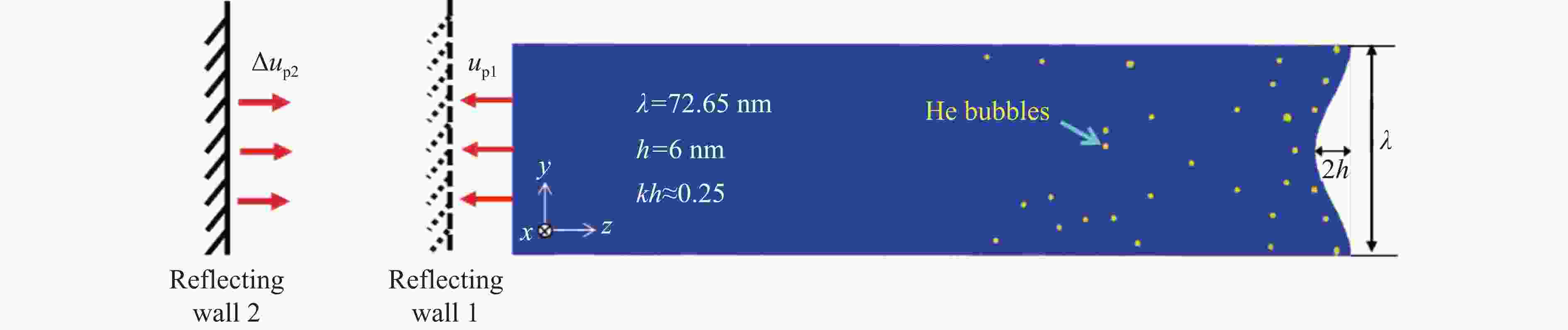
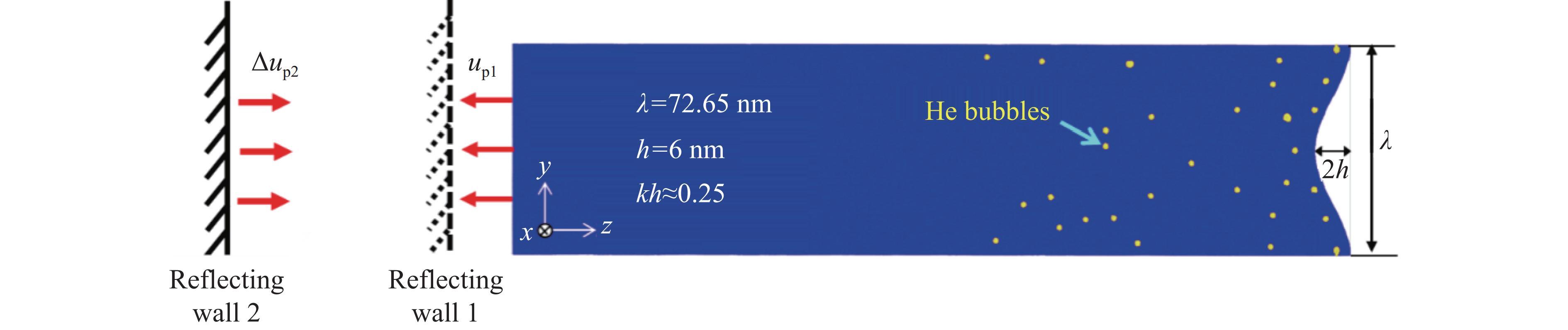
图 1 含氦泡金属铜的yz平面结构示意图(蓝色为铜基体,黄色为氦泡;冲击方向沿z轴;扰动自由表面另一侧的物质为真空)
Figure 1. Schematic diagram of the yz-plane microstructure of helium bubble-embedded copper (The copper matrix is depicted in blue, with helium bubbles represented by yellow regions. A shock wave is applied along the z-axis direction. The perturbed surface interfaces with a vacuum environment side.)
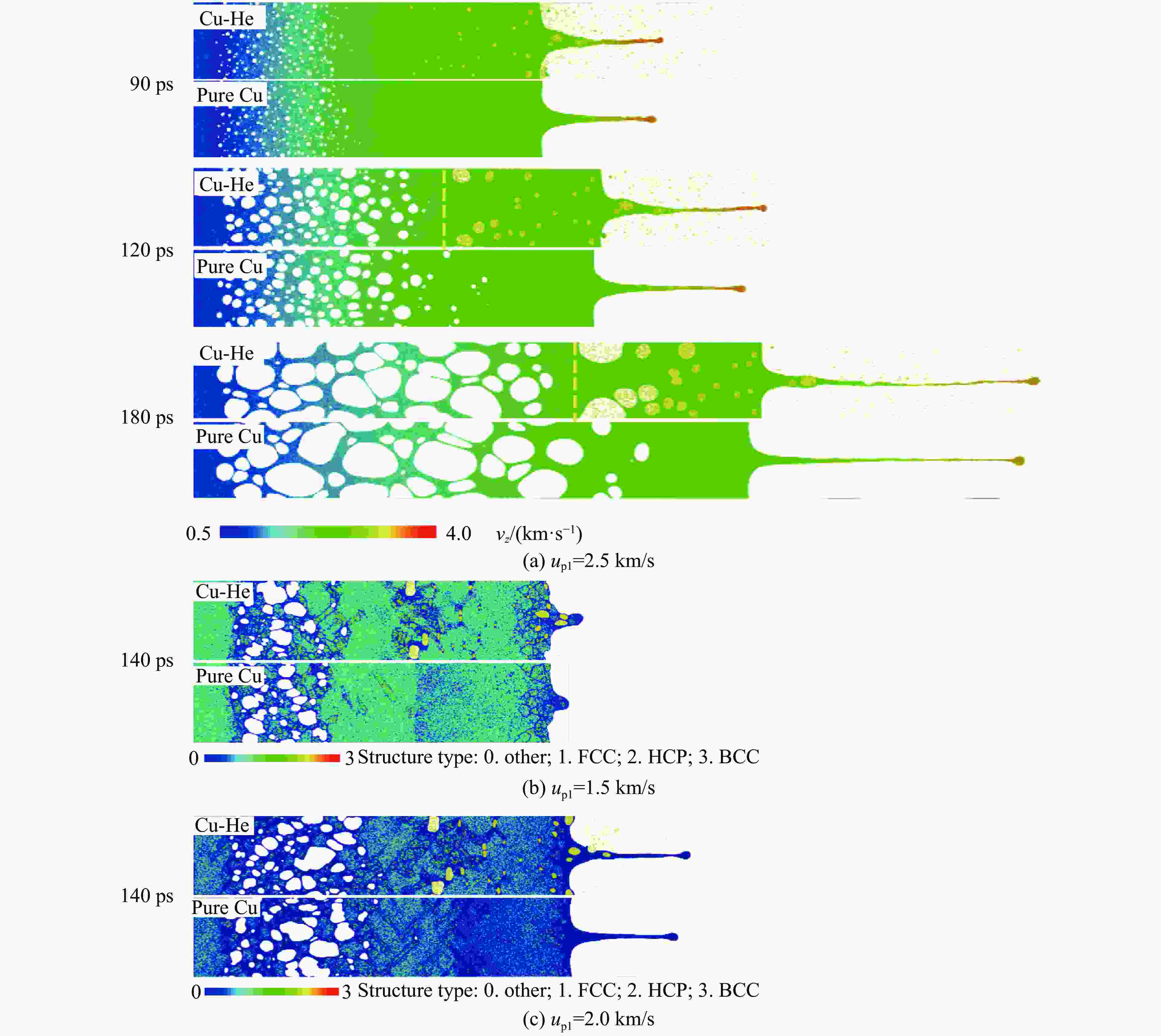
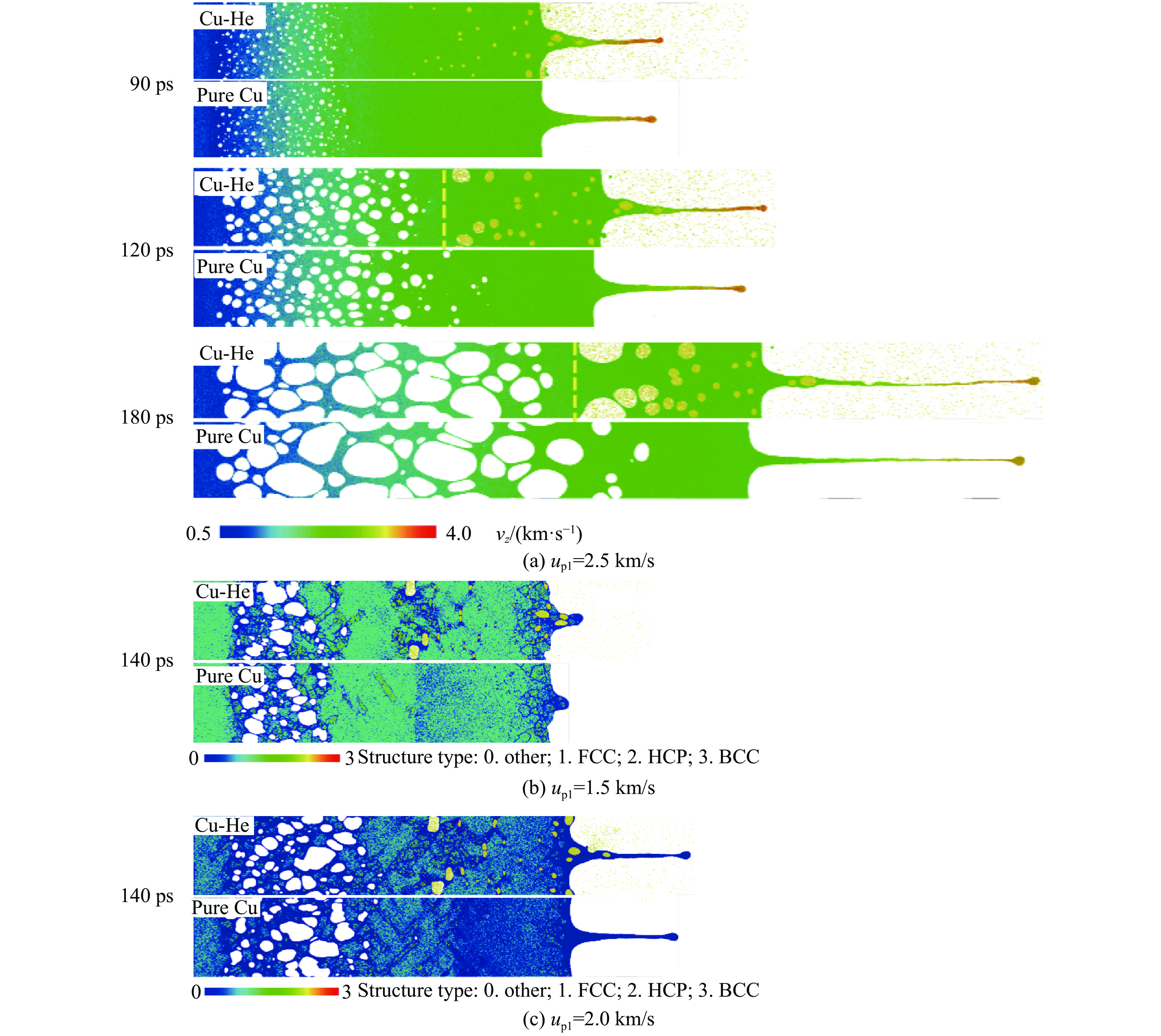
图 2 首次波后粒子速度为2.5、1.5、2.0 km/s的冲击加卸载下含氦泡铜和纯金属铜在不同时刻的动态破坏演化图像
Figure 2. Dynamic failure evolution images of copper with helium bubble and pure copper under shock loading and unloading with particle velocities of 2.5, 1.5, and 2.0 km/s after the first wave at different times
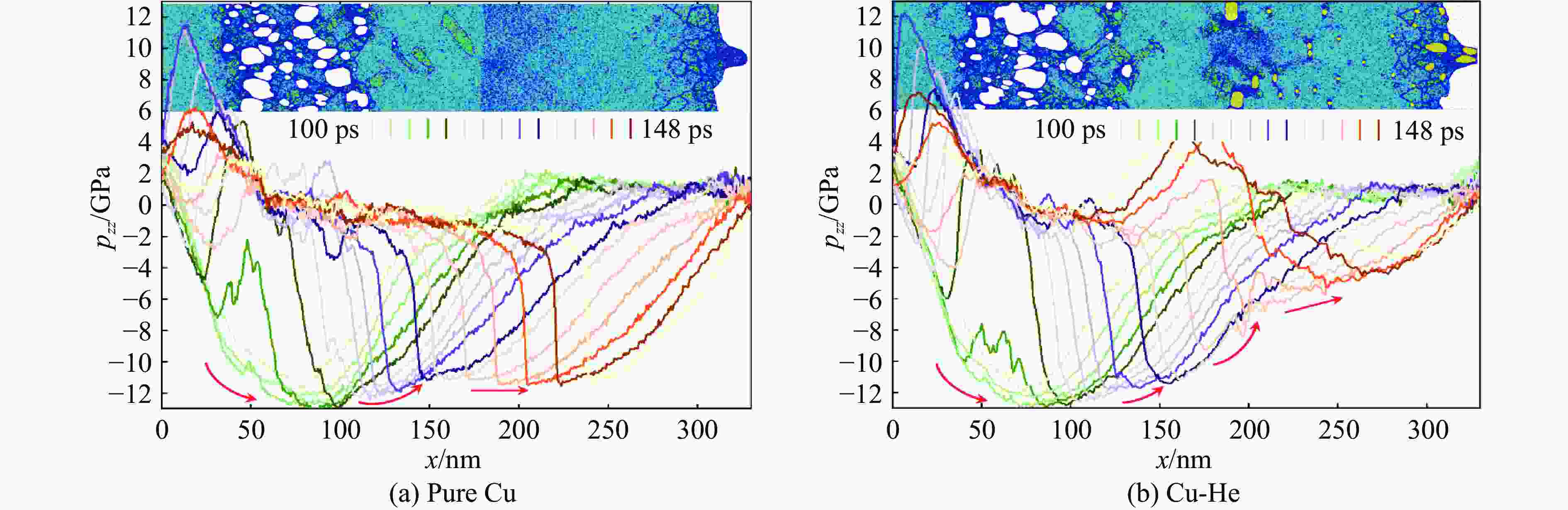
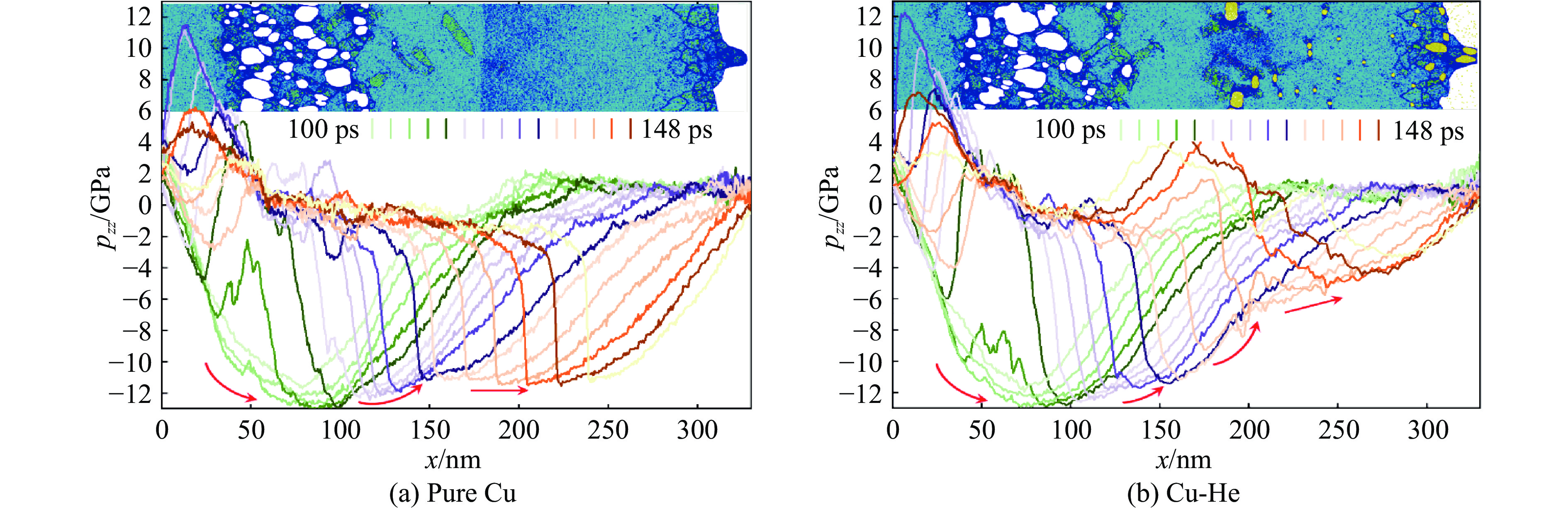
图 3 波后粒子速度为1.5 km/s时纯金属铜与含氦泡铜在不同时刻的应力波剖面曲线
Figure 3. Stress wave profile curves of pure copper and helium bubble-embedded copper at distinct time instants under a post-wave particle velocity of 1.5 km/s
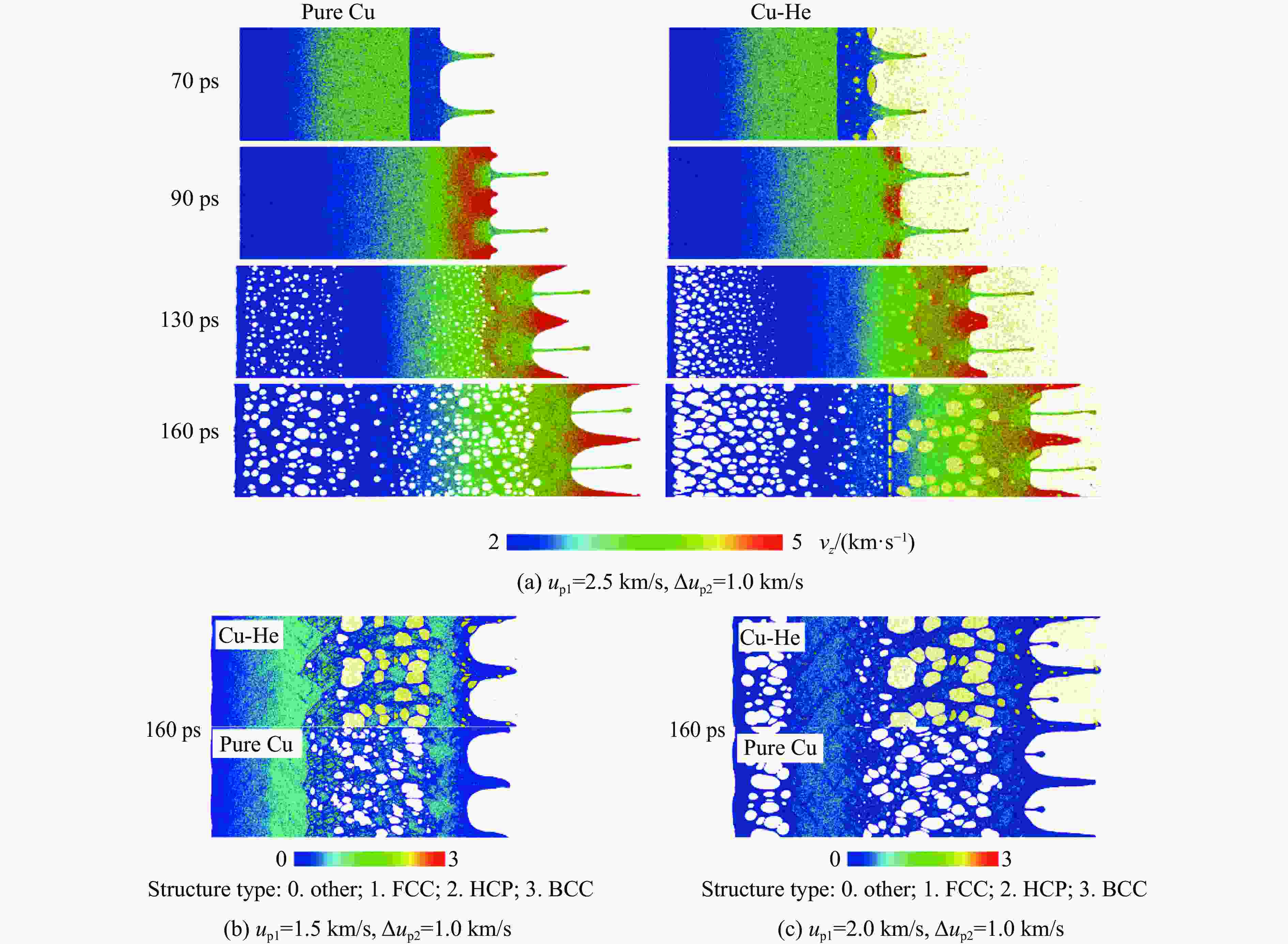
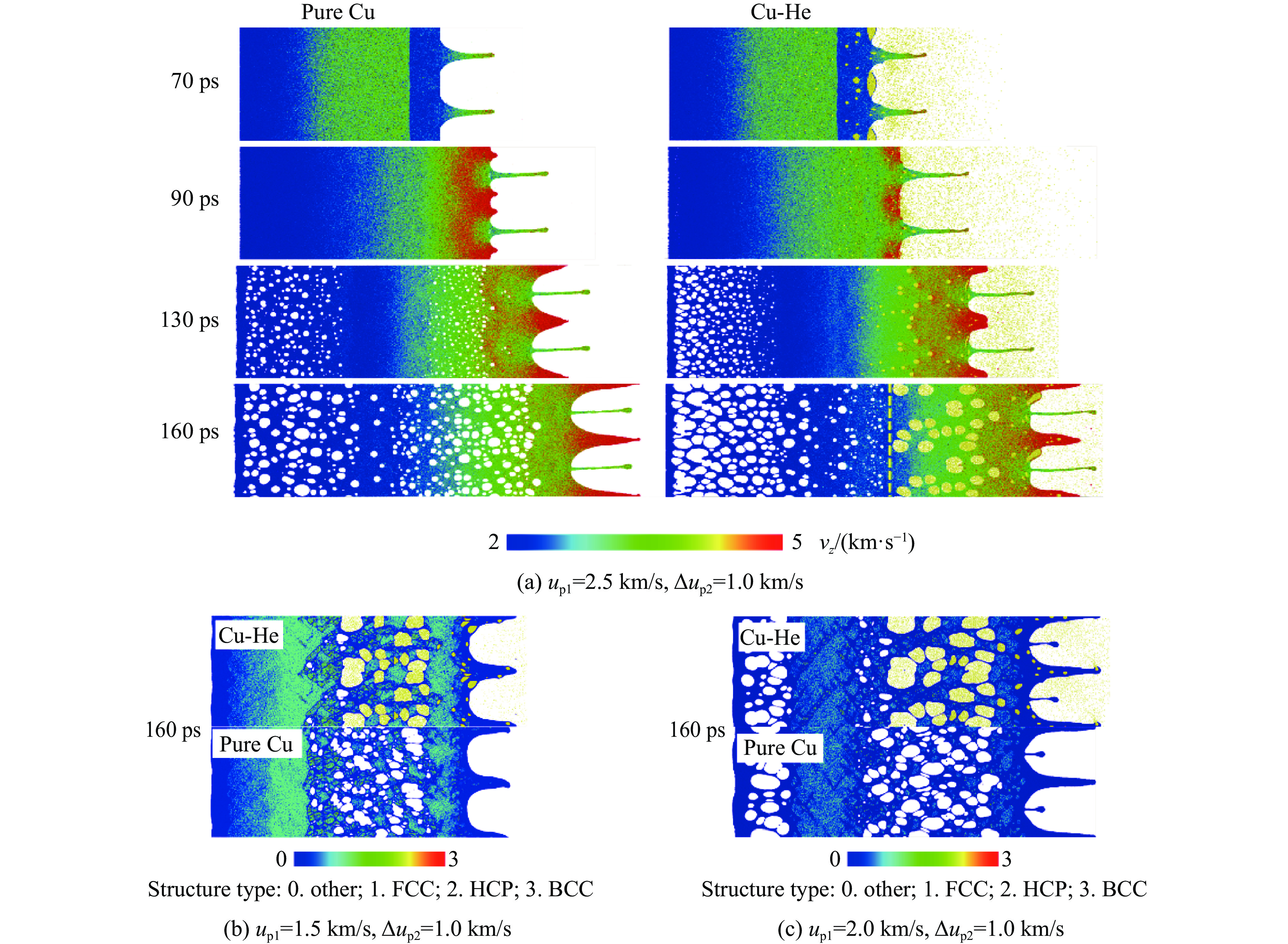
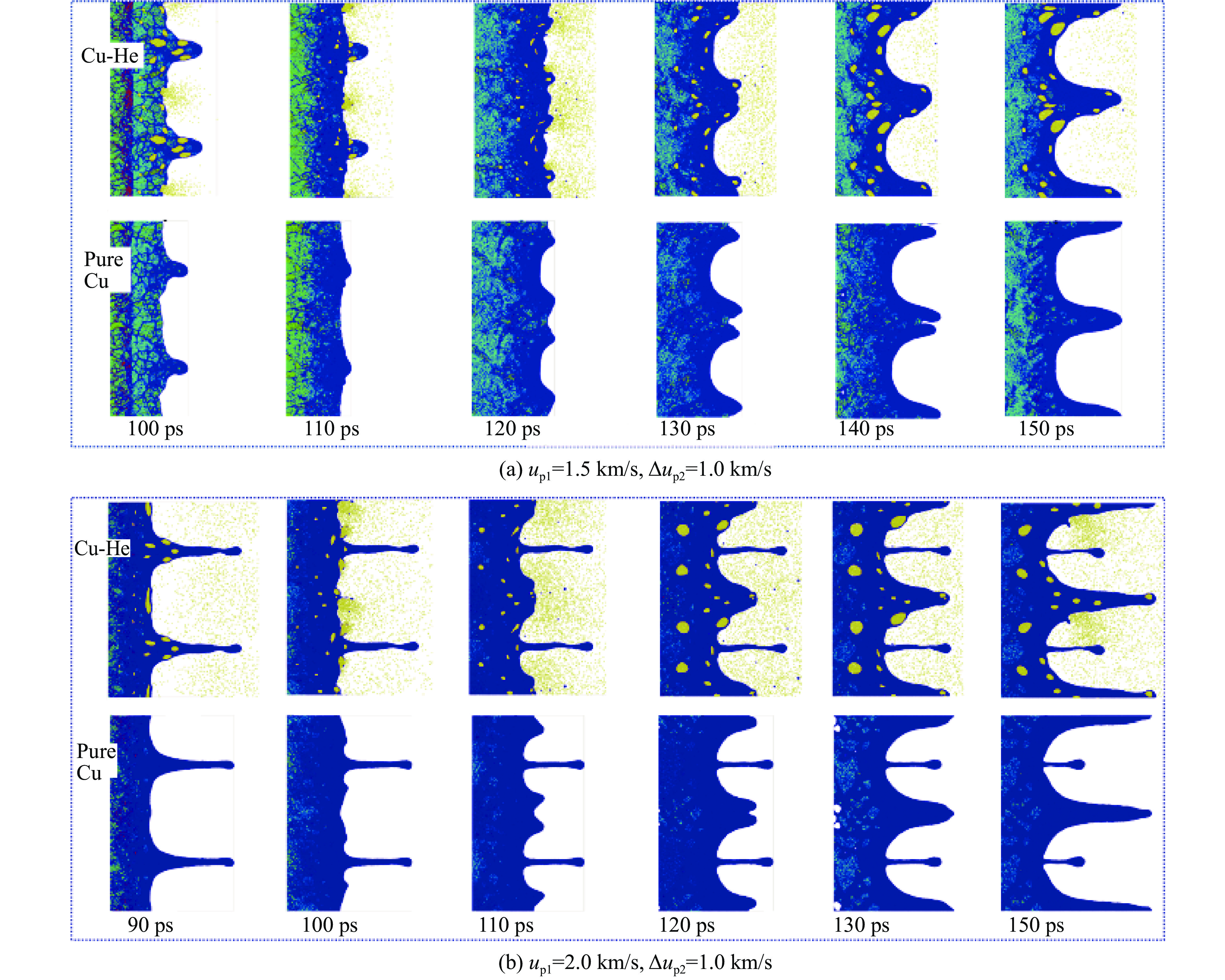
图 4 up1为2.5 km/s、Δup2为1.0 km/s的冲击加卸载下纯铜与含氦泡铜在不同时刻的动态破坏演化图像,以及up1为1.5和2.0 km/s、Δup2为1.0 km/s的冲击加卸载下的界面破坏图像
Figure 4. Dynamic fracture evolution images of pure copper and helium bubble-embedded copper at distinct time instants under shock loading-unloading conditions with up1 of 2.5 km/s and a 1.0 km/s increment (after the second wave) and additional images for 1.5 and 2.0 km/s of up1 with the same 1.0 km/s increment (after the second wave)
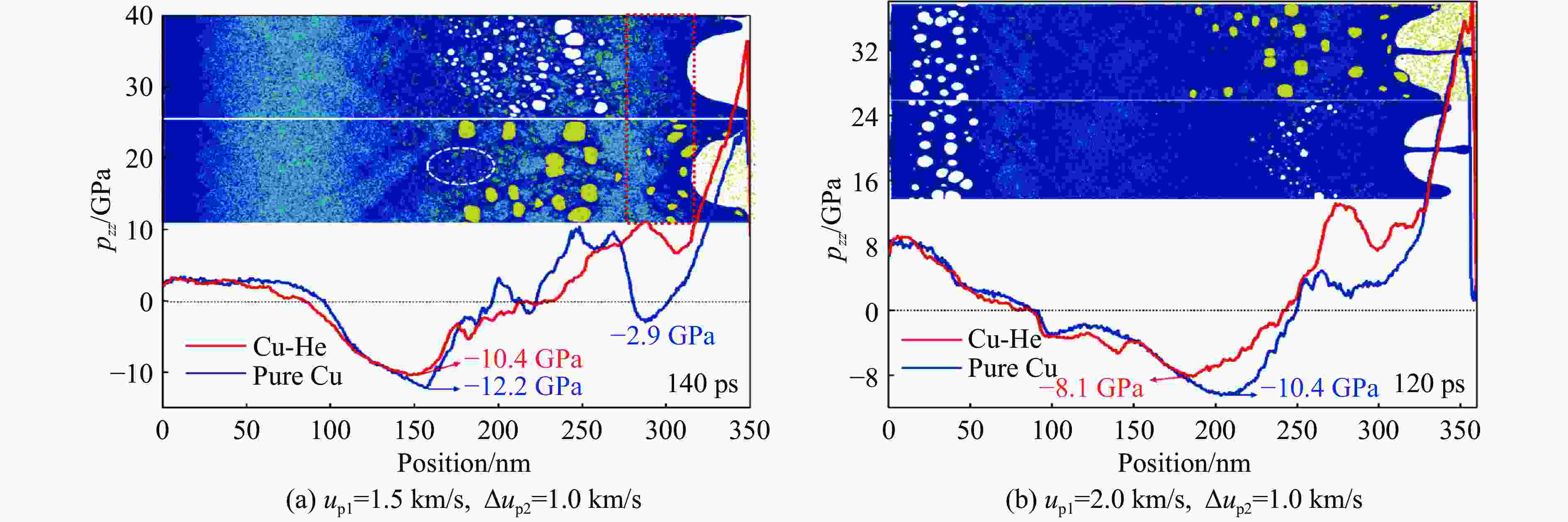
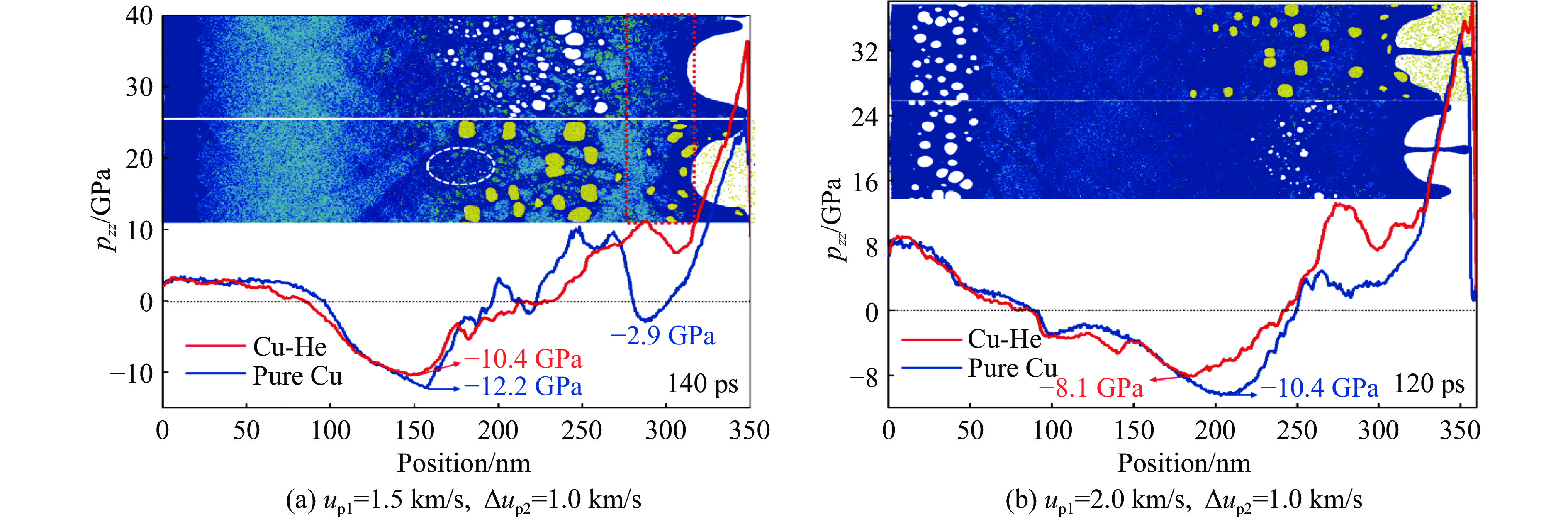
图 5 up1为1.5 和2.0 km/s、Δup2为1.0 km/s的冲击加卸载工况下出现最大拉应力时刻的应力波剖面曲线
Figure 5. Stress wave profile curves at the moment of maximum tensile stress under loading-unloading conditions (up1 are 1.5 and 2.0 km/s with Δup2 of 1.0 km/s)
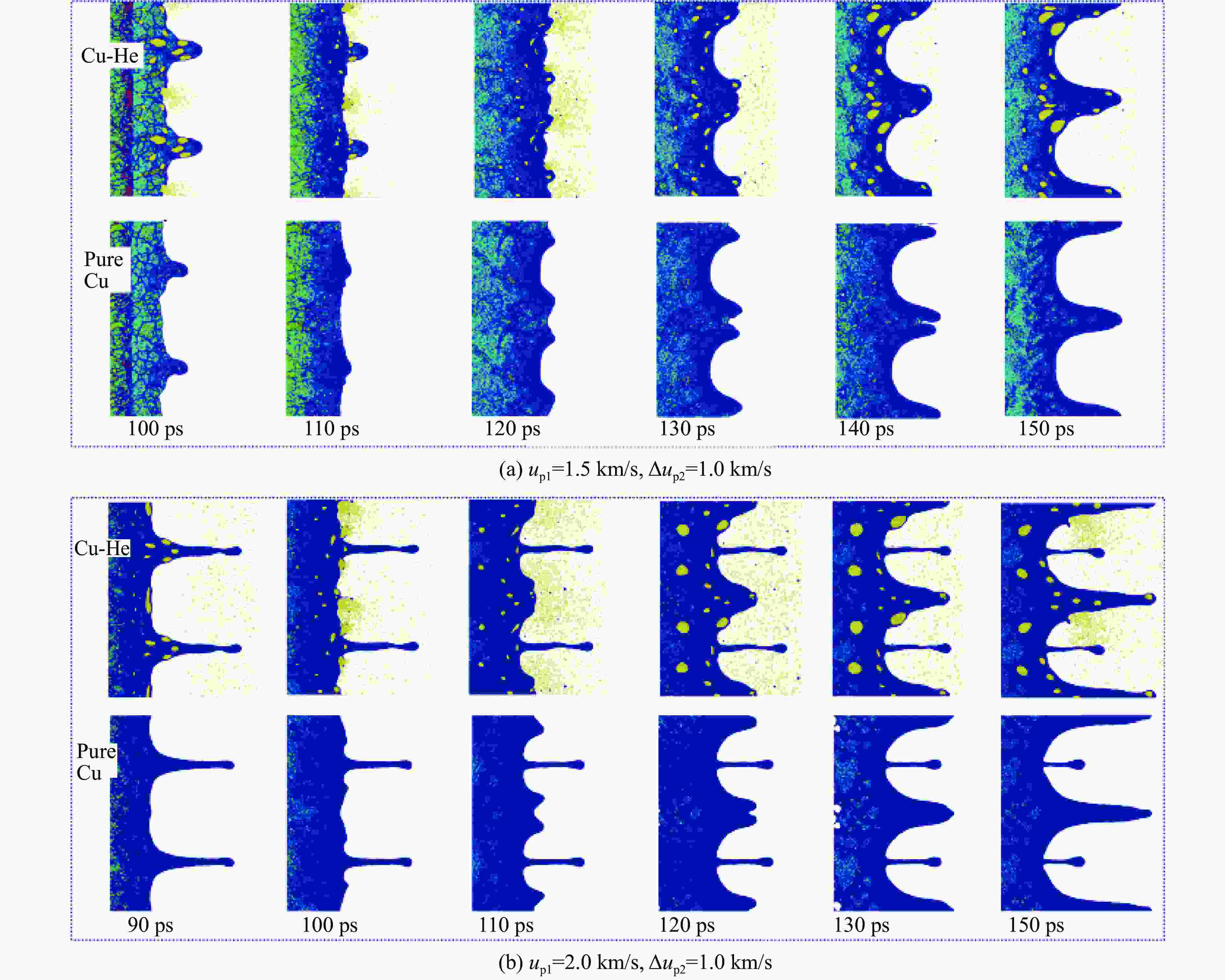
图 6 up1为1.5和2.0 km/s、Δup2为1.0 km/s的冲击加卸载情况下的微射流演化图像
Figure 6. Micro-jet evolution images under loading-unloading conditions (up1 are 1.5 and 2.0 km/s with Δup2 of 1.0 km/s)
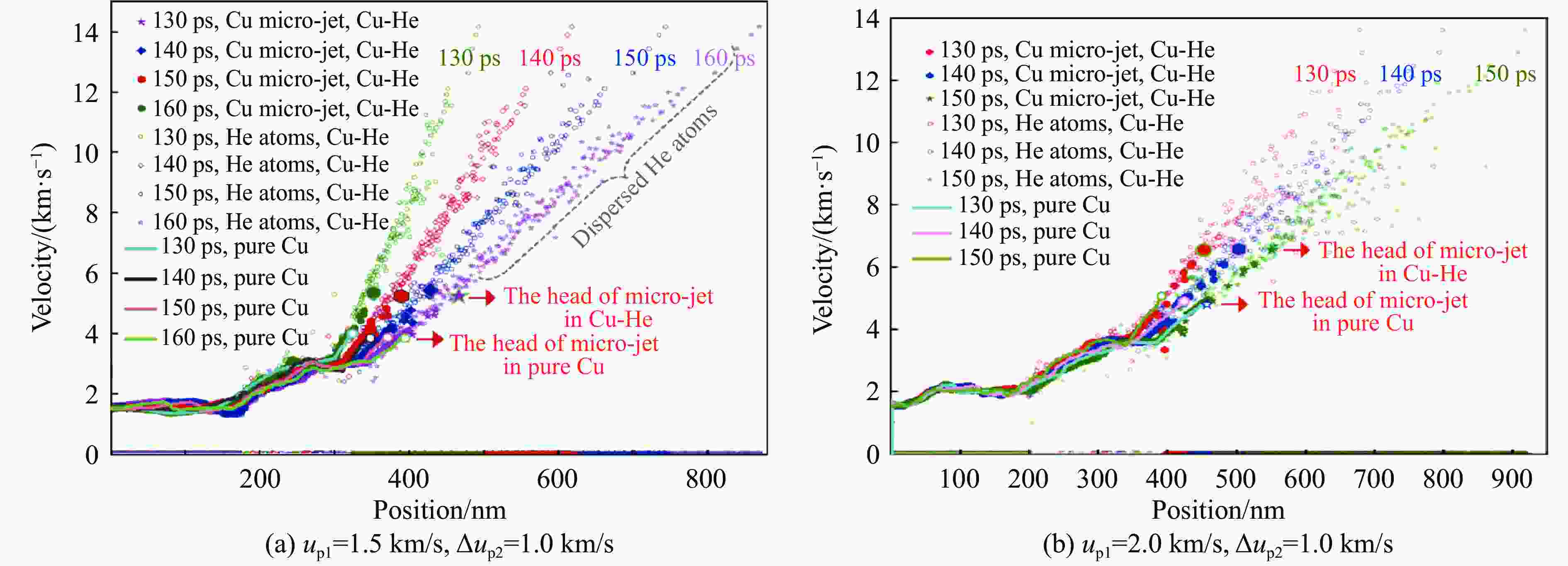
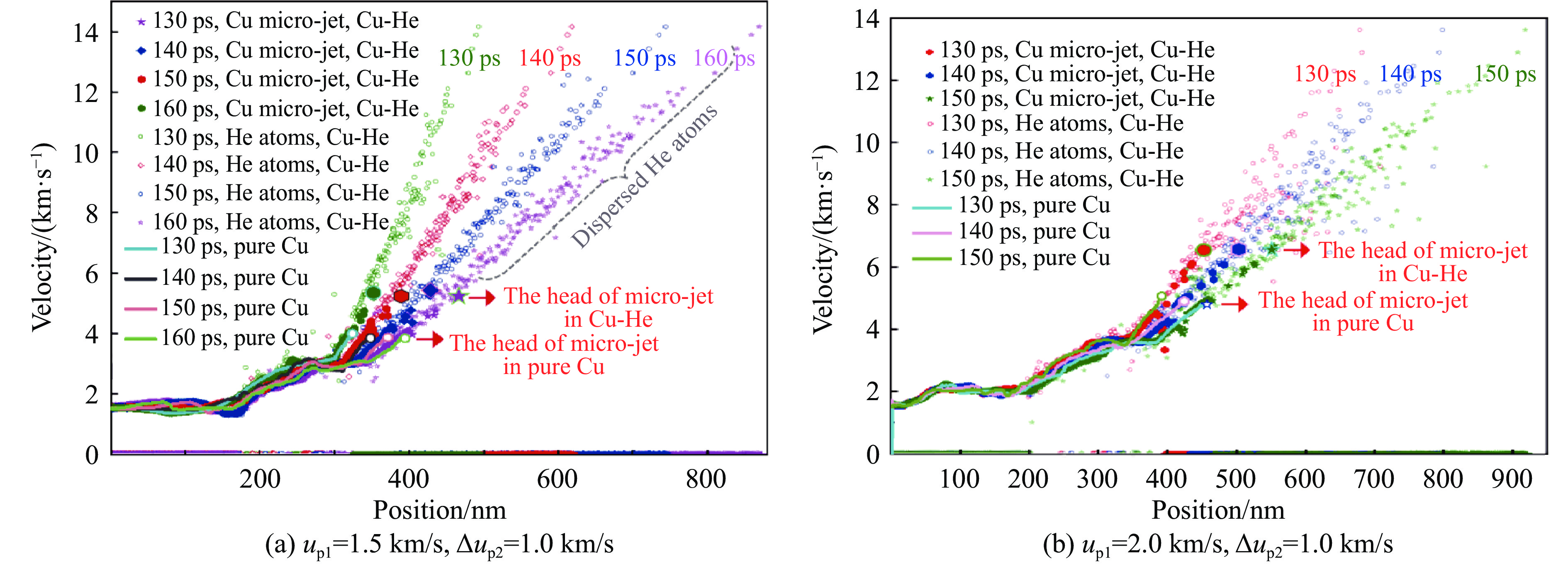
图 7 up1为1.5 和2.0 km/s、Δup2=1.0 km/s的冲击加卸载下的速度-位置分布曲线
Figure 7. Velocity-position distribution curves (up1 are 1.5 and 2.0 km/s with Δup2 of 1.0 km/s)
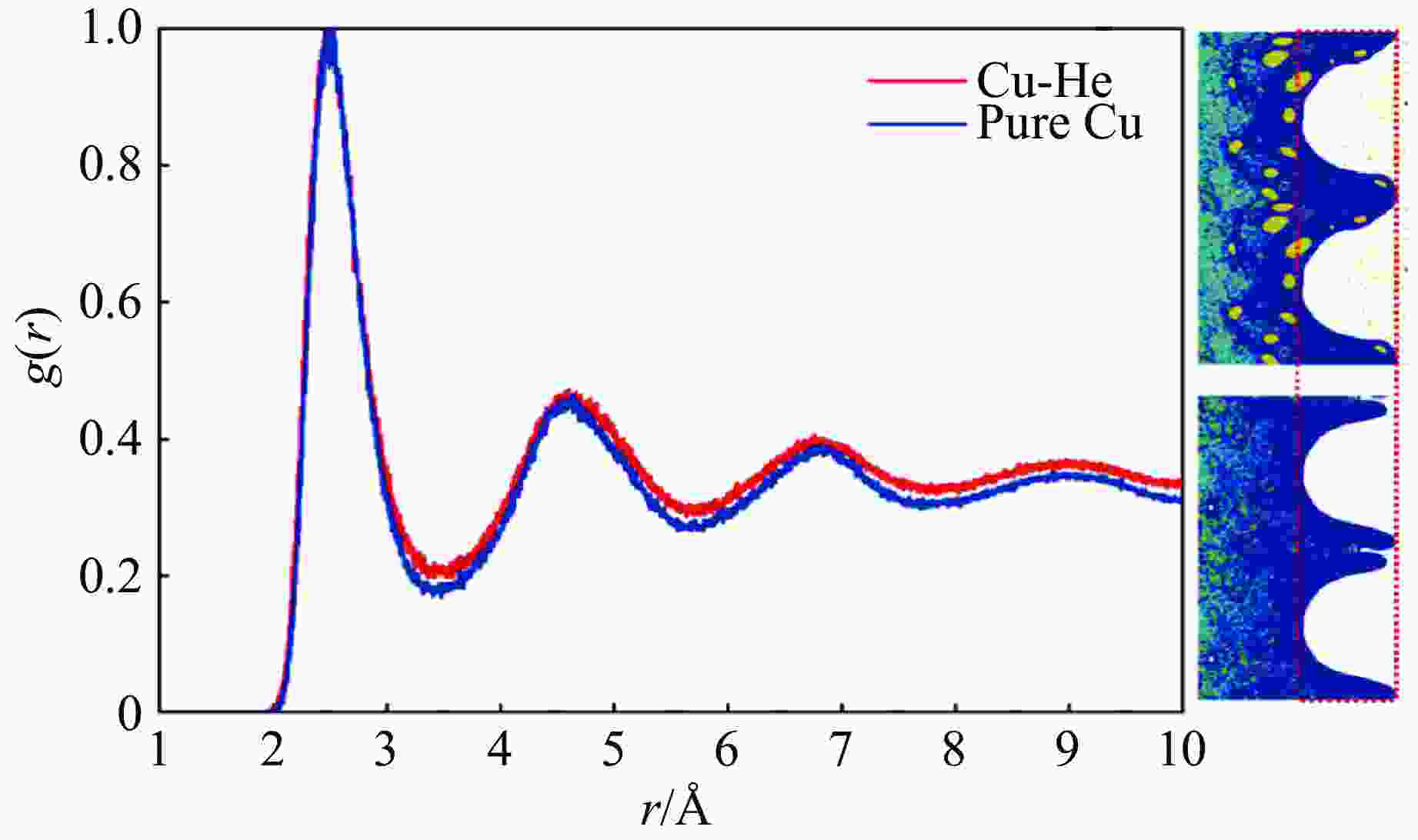
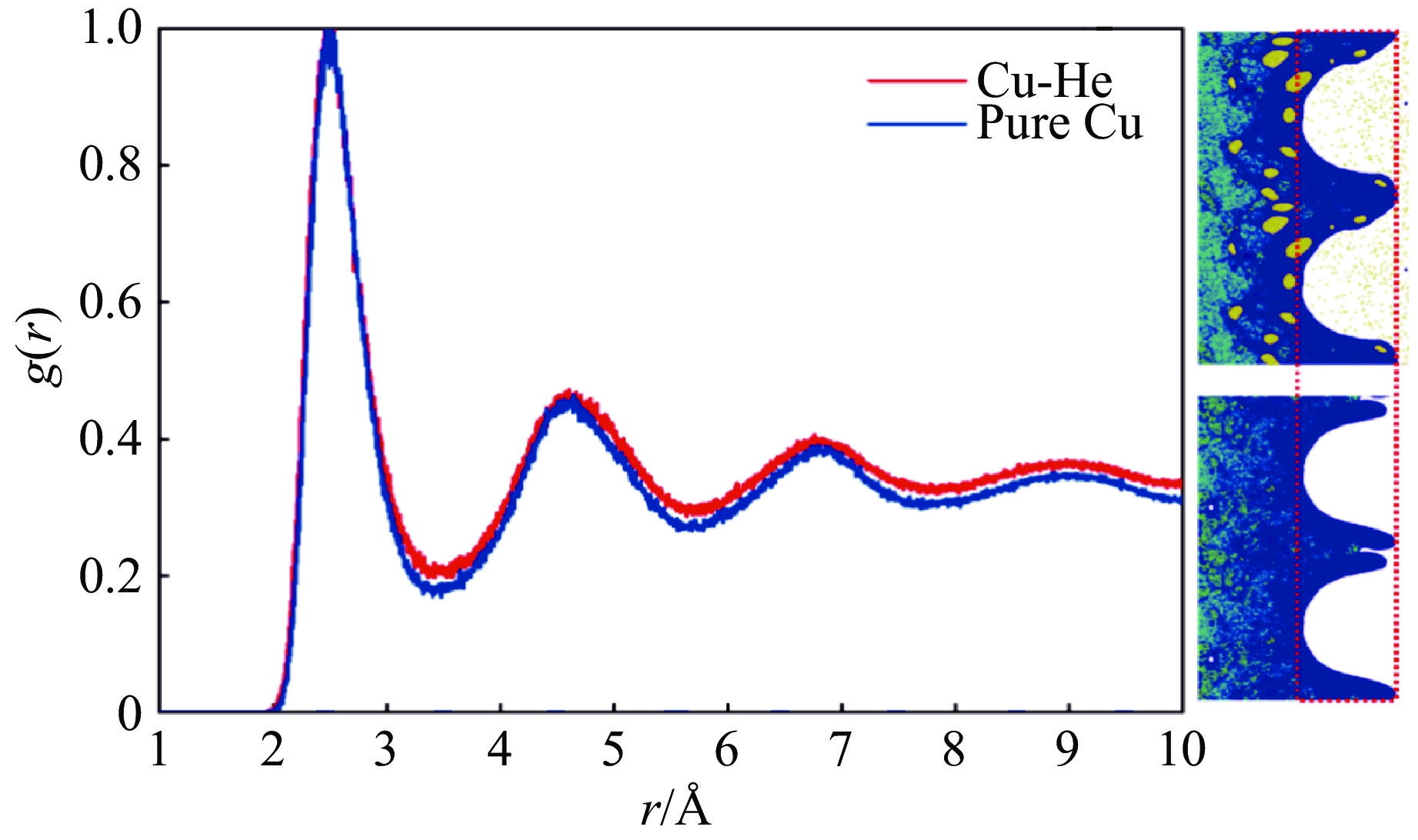
图 8 含氦泡铜和纯铜微射流的径向分布函数
Figure 8. Radial distribution function for micro-jets in He bubble-containing copper and pure copper
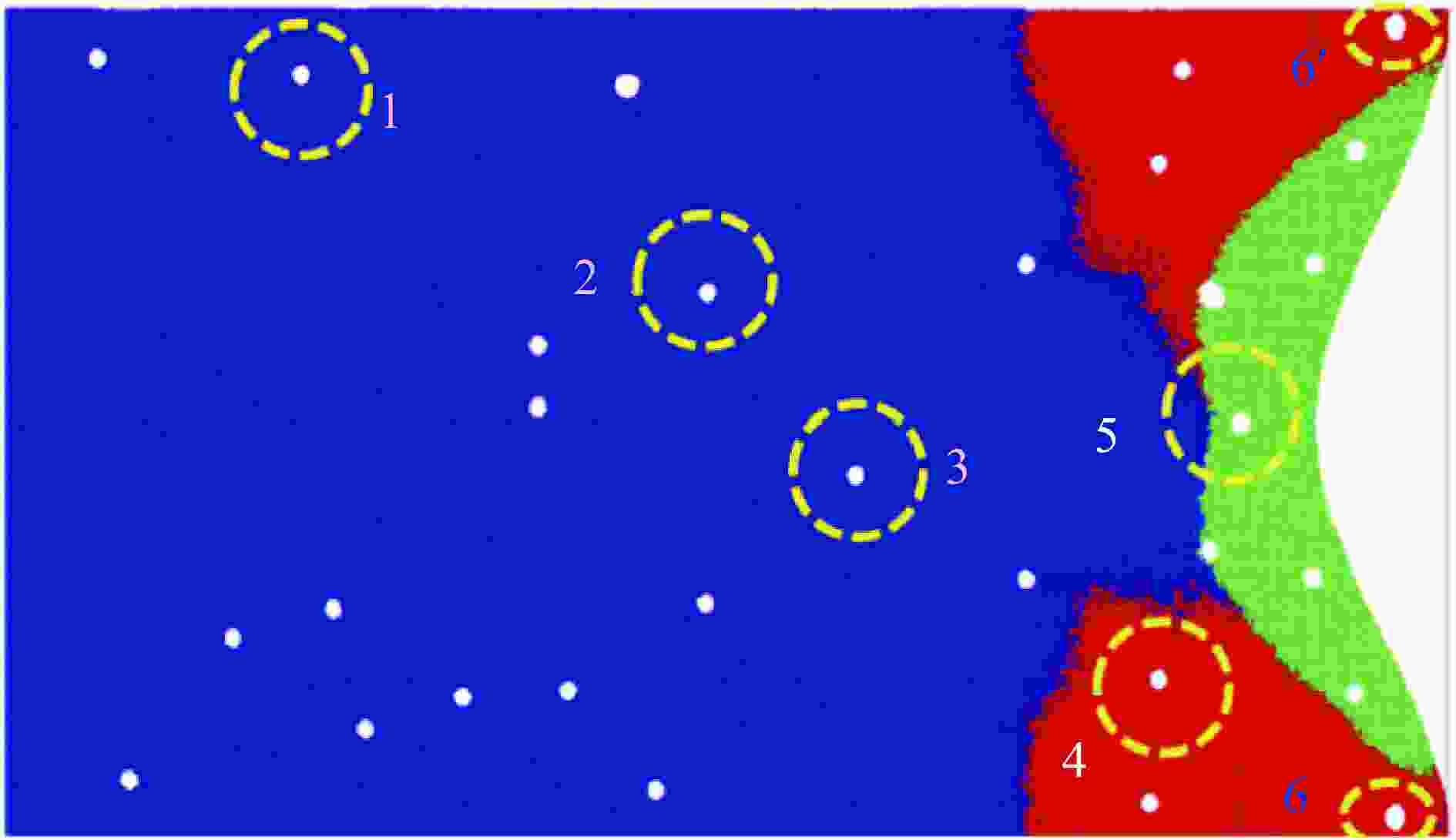
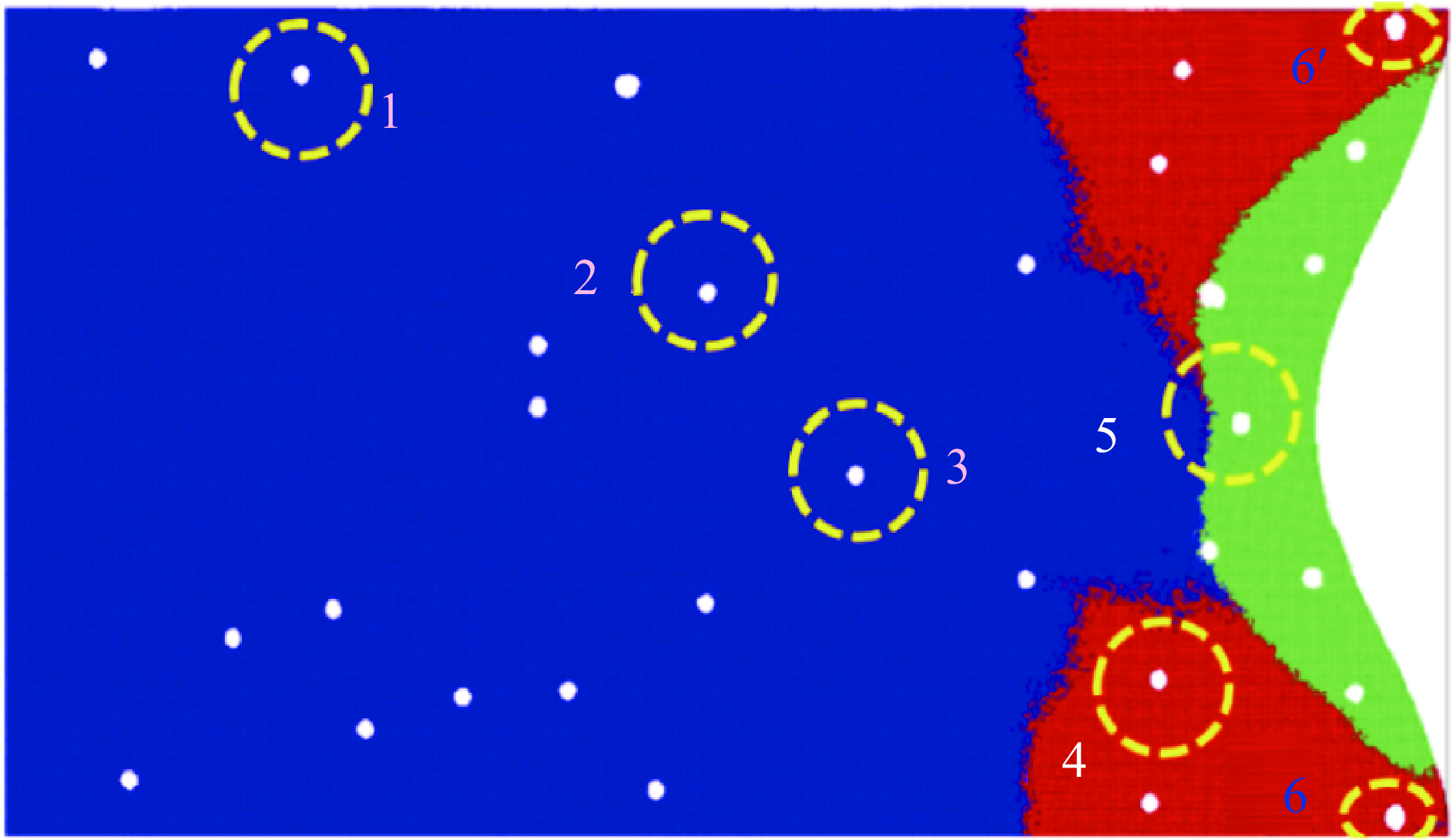
图 9 初始构型中氦泡的分区与对应位置
Figure 9. Corresponding position of He bubbles in the initial configuration of Cu matrix
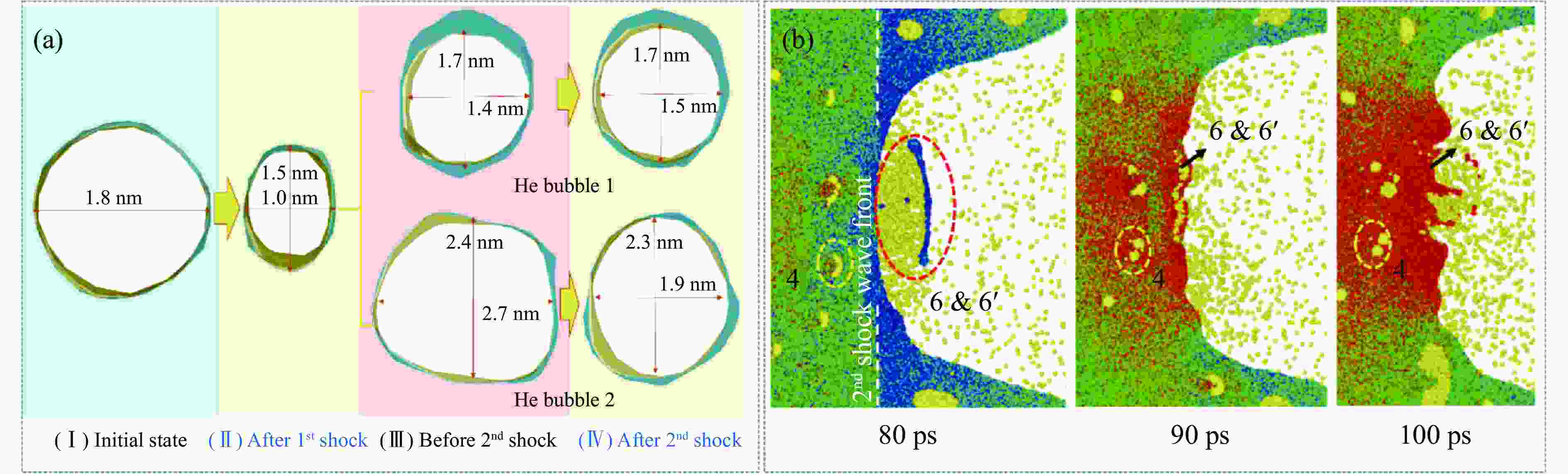
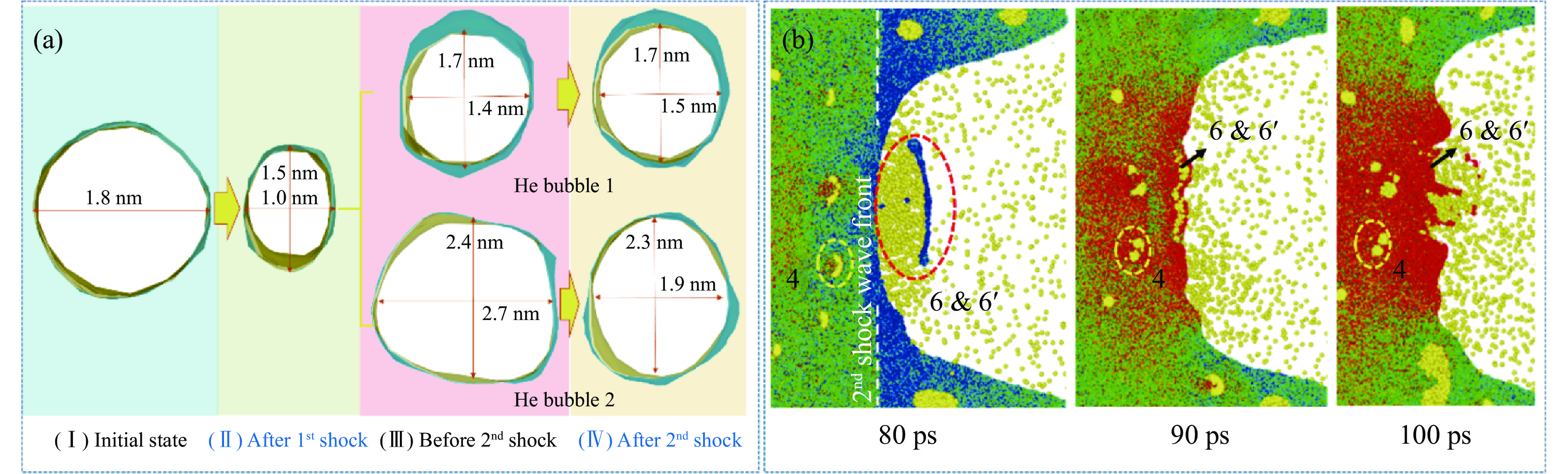
图 10 (a) up1=2.5 km/s、Δup2=1.0 km/s冲击加卸载下体氦泡1和体氦泡2的形态与特征尺寸变化以及(b)微射流底部氦泡6和6′在二次冲击作用下的形态演化
Figure 10. (a) Morphology and size changes of body helium bubbles 1 and 2; (b) morphological evolution of helium bubble 6 & 6′ at the micro-jet base under secondary impact (up1=2.5 km/s, Δup2=1.0 km/s)
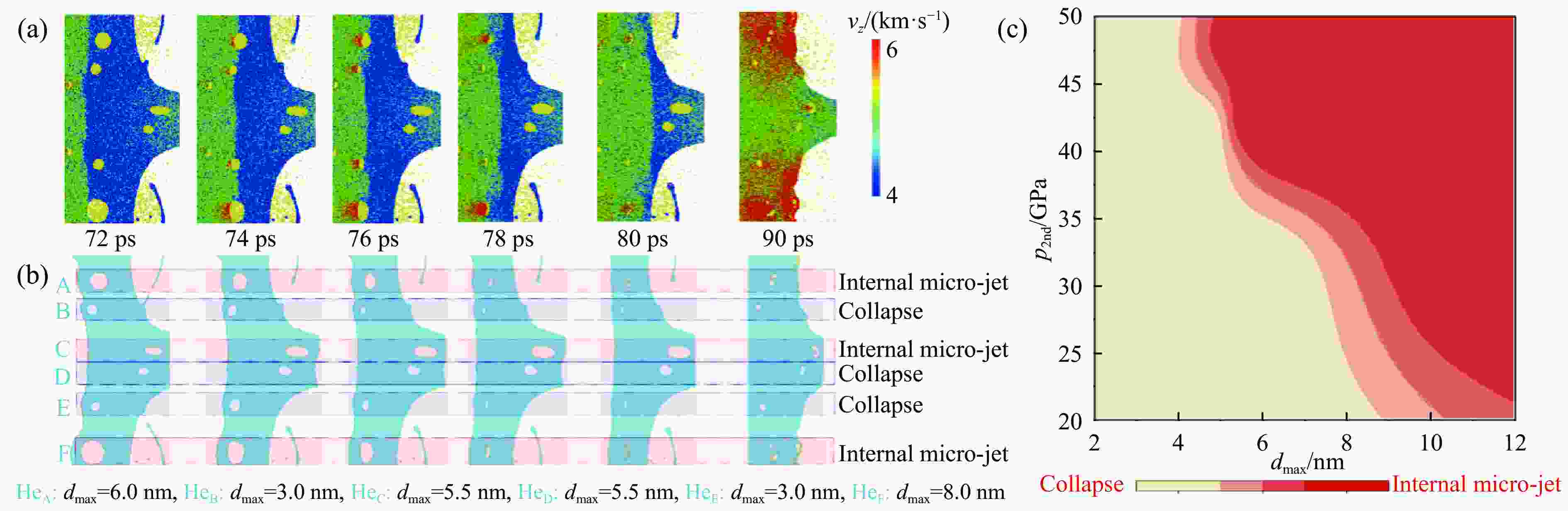
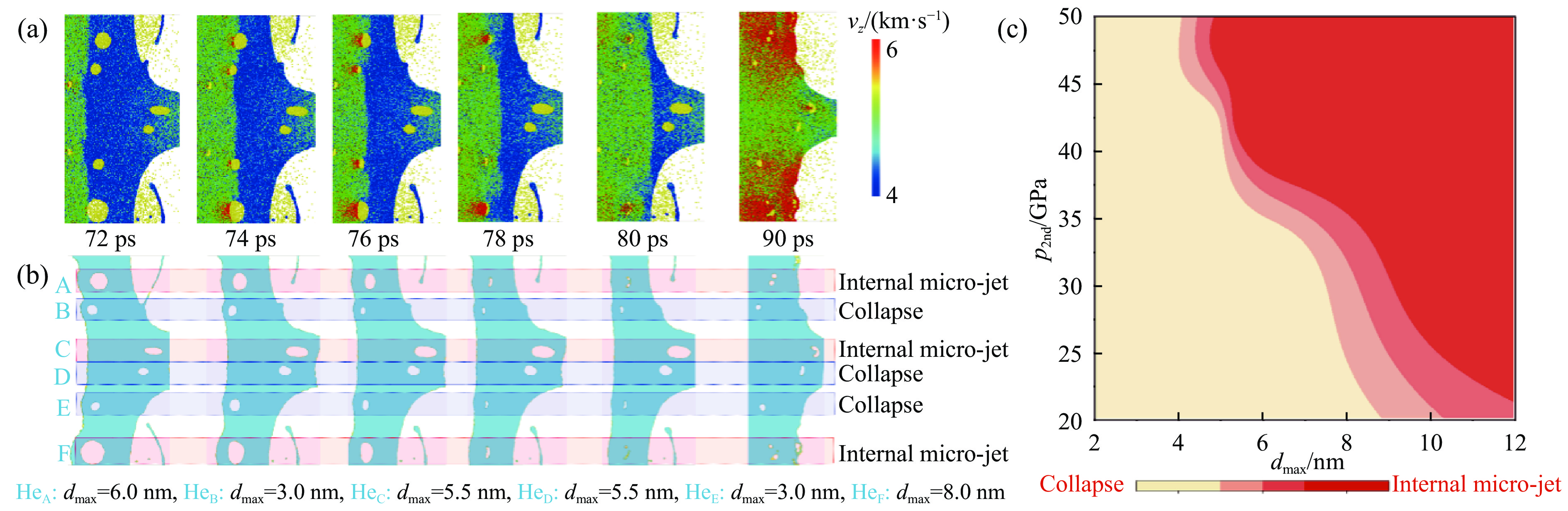
图 11 up1=2.5 km/s、Δup2=1.0 km/s的二次冲击波传播过程中不同尺度氦泡的塌缩演化过程:(a) 速度着色,(b) 构造曲面网格方式显示,(c) 氦泡尺寸和二次冲击强度对氦泡塌缩机制影响相图
Figure 11. Collapse dynamics of helium bubbles across varying sizes during secondary shock wave propagation, with up1 of 2.5 km/s and Δup2 of 1.0 km/s: (a) colored in velocity, (b) displayed by constructing surface mesh, (c) phase diagram of the effect of helium bubble size and secondary shock strength on the collapse mechanism of helium bubbles
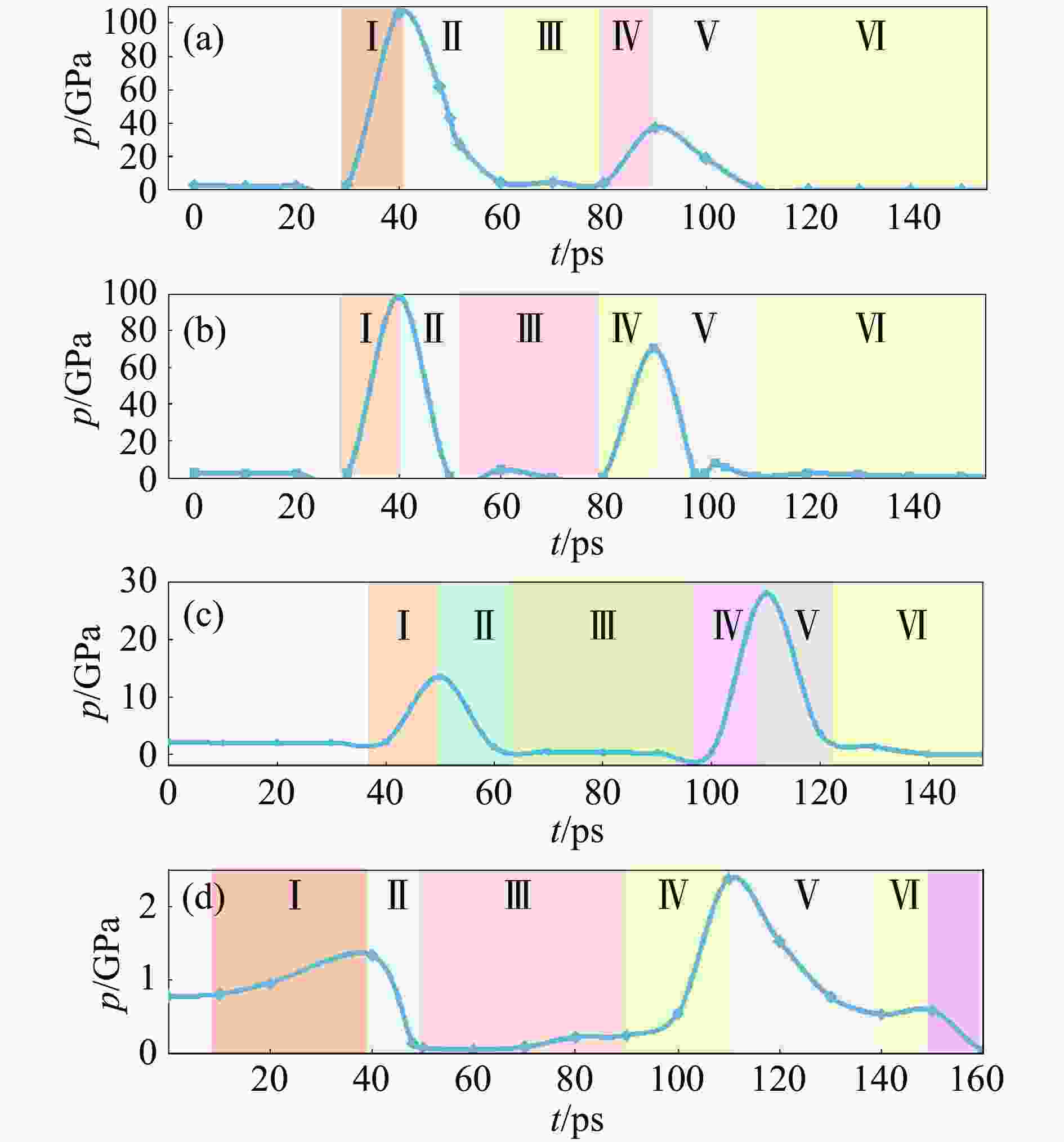
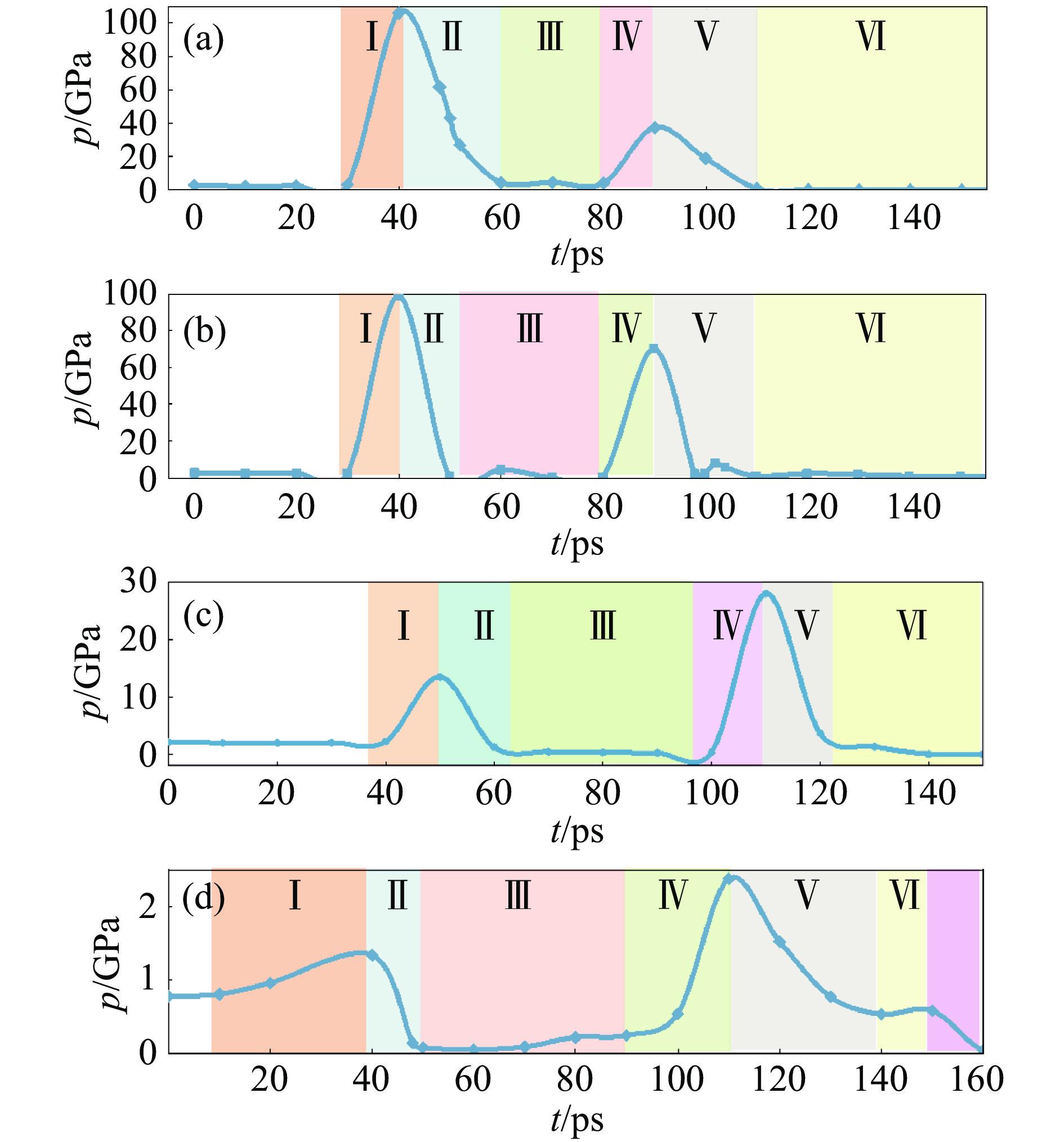
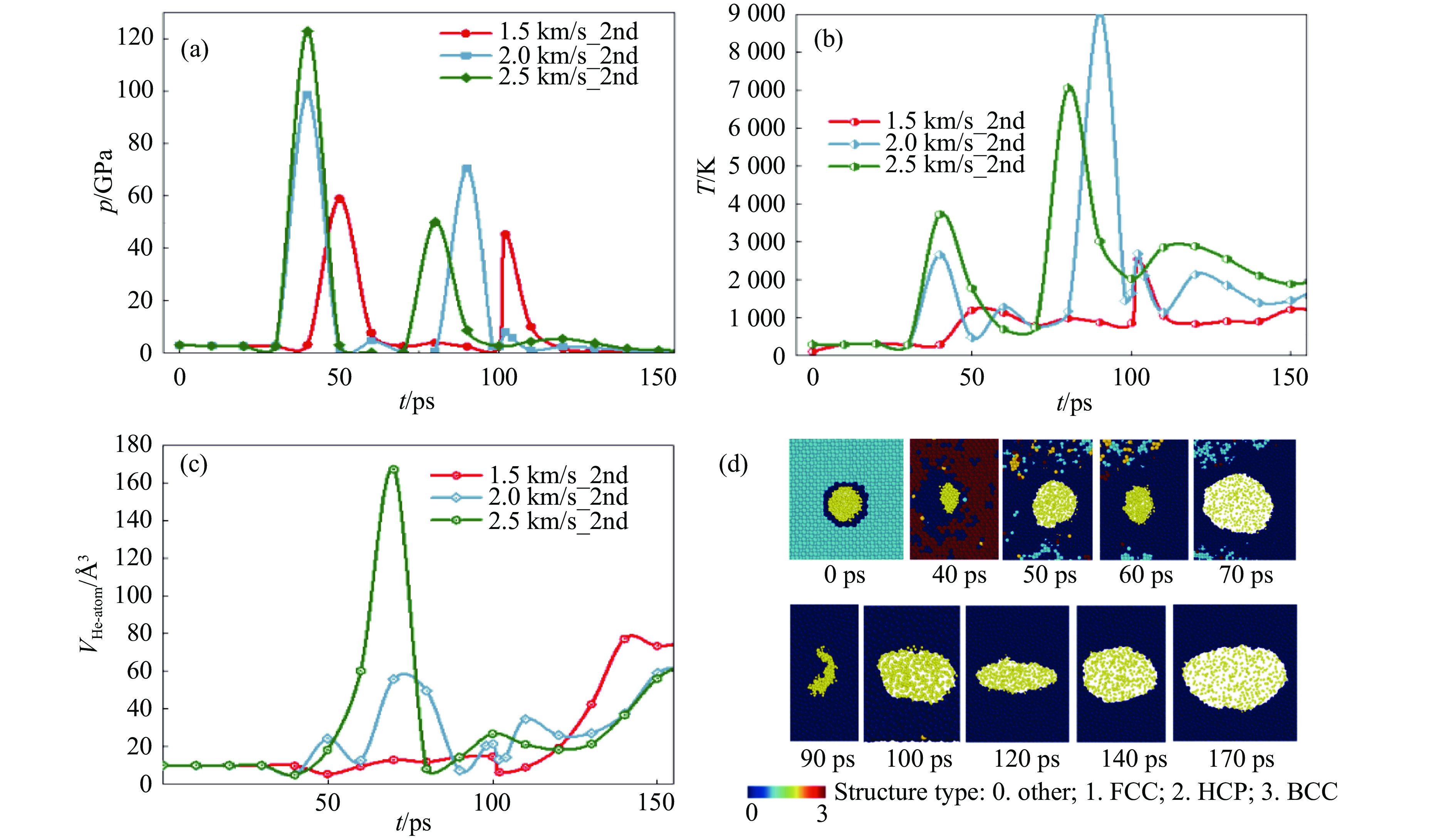
图 12 up1=2.0 km/s、Δup2=1.0 km/s的两次冲击加卸载过程中氦泡3 (a)、氦泡4 (b)、氦泡5 (c)、氦泡6/6′ (d)内压随时间变化
Figure 12. Pressure-time curves of helium bubble 3 (a), helium bubble 4 (b), helium bubble 5 (c), helium bubble 6/6′ (d) during shock loading and unloading (up1=2.0 km/s, Δup2=1.0 km/s)
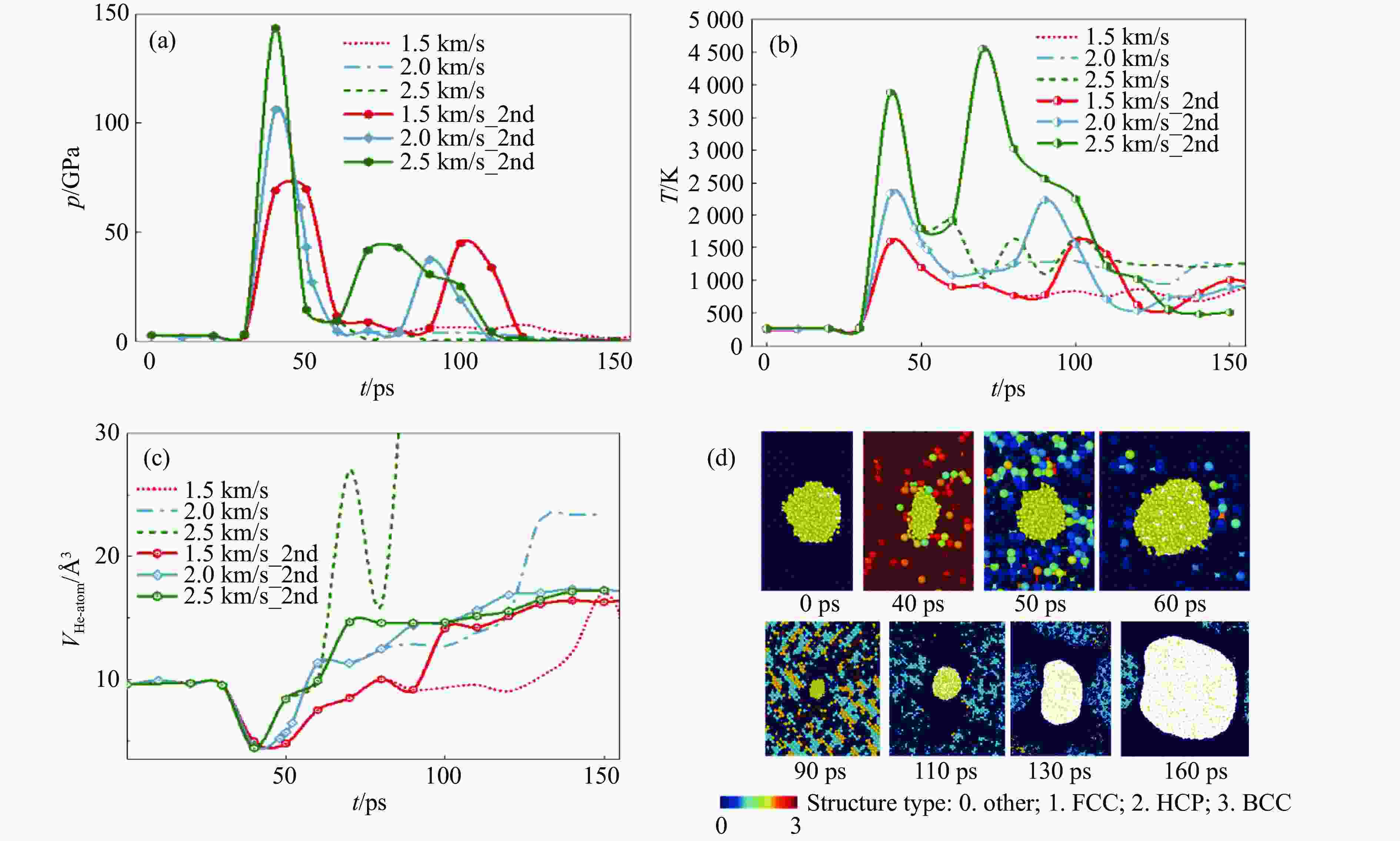
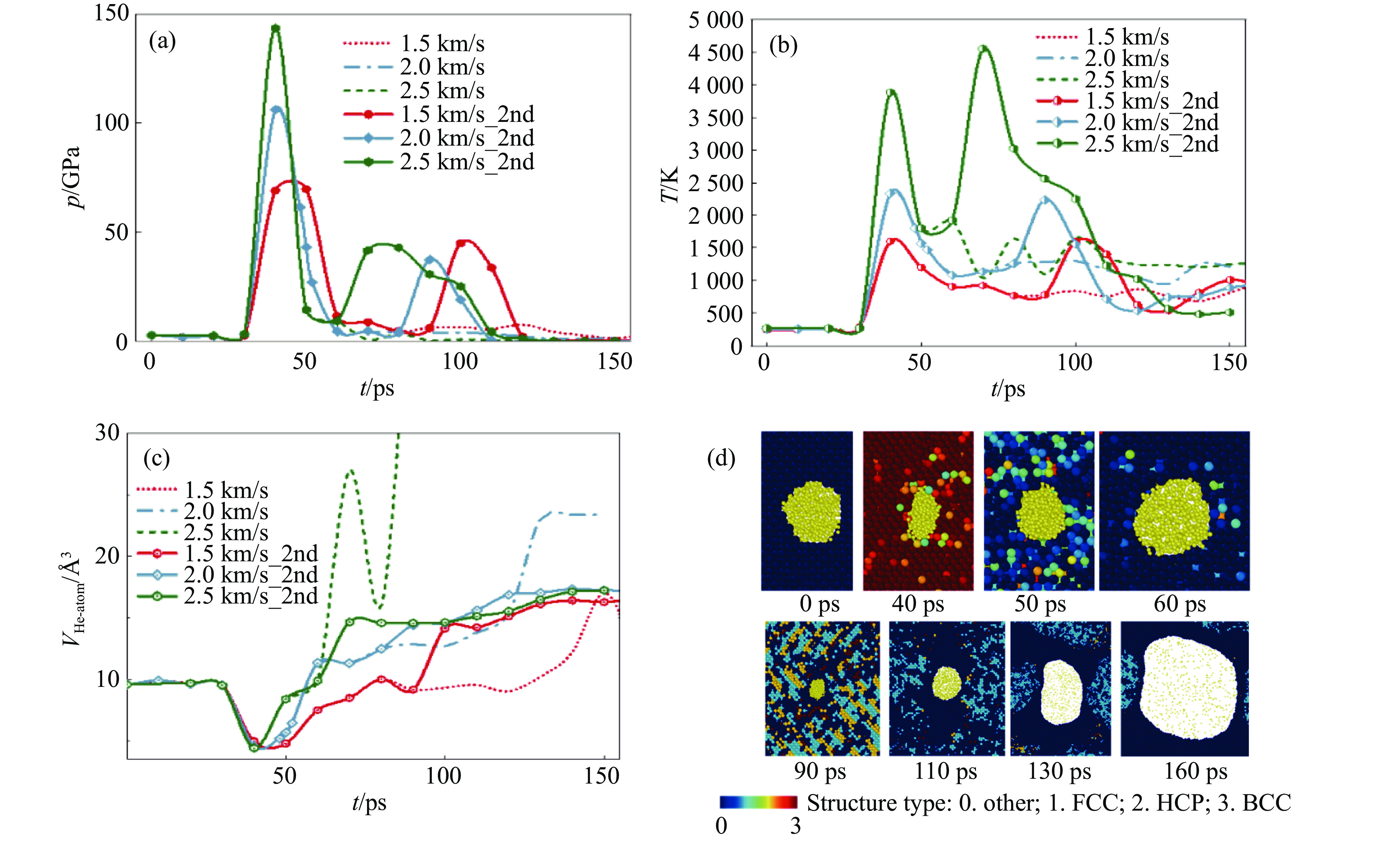
图 13 不同加卸载路径下氦泡3在两次冲击后的压力(a)、温度(b)和体积(c)随时间的变化规律以及up1=2.0 km/s、Δup2=1.0 km/s时氦泡3的演化过程 (d)
Figure 13. Pressure (a), temperature (b), and volume (c) of helium bubble 3 evolved over time following two successive shocks under varying loading and unloading paths, and the evolution process of helium bubble 3 when up1=2.0 km/s and Δup2=1.0 km/s (d)
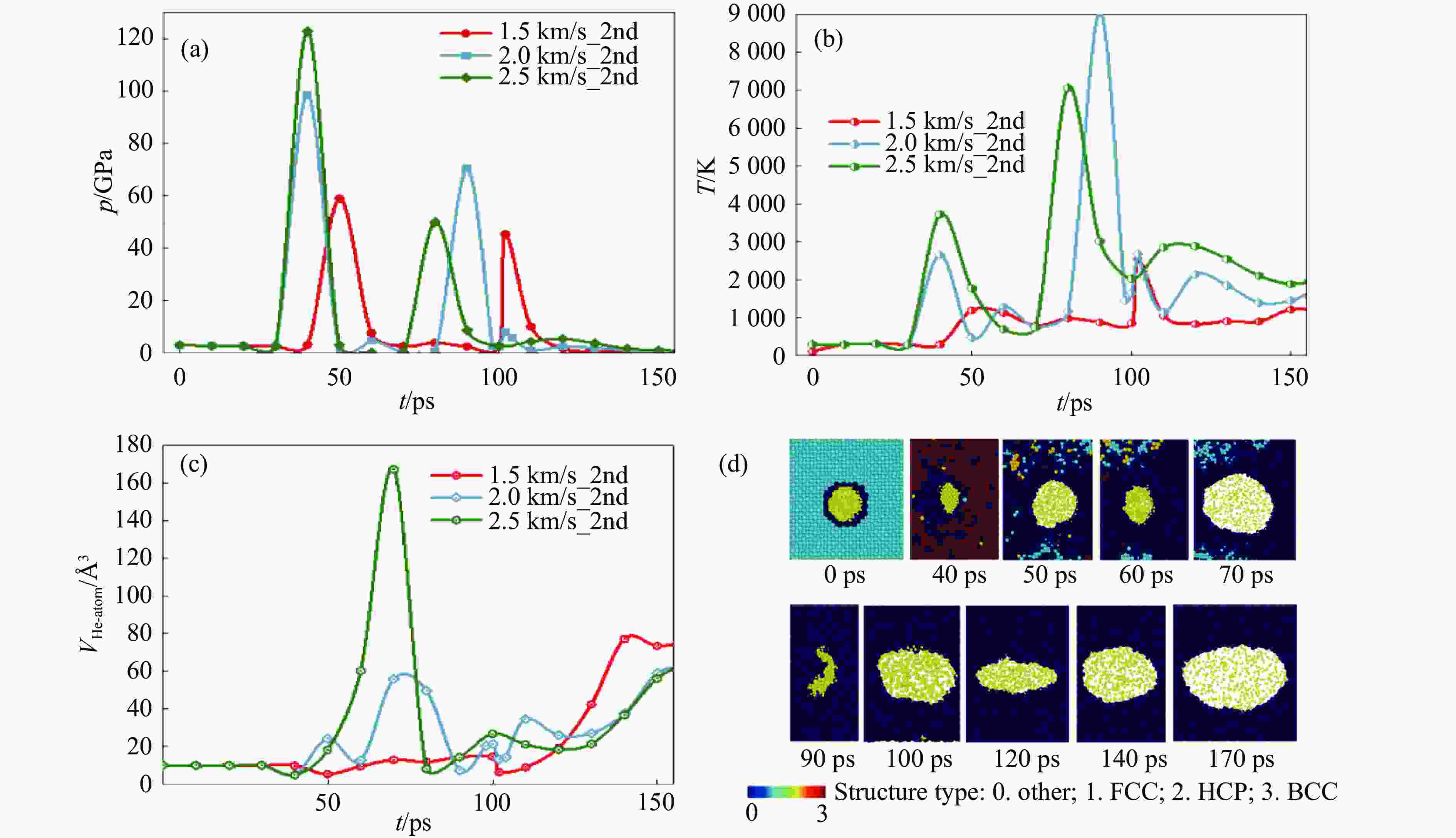
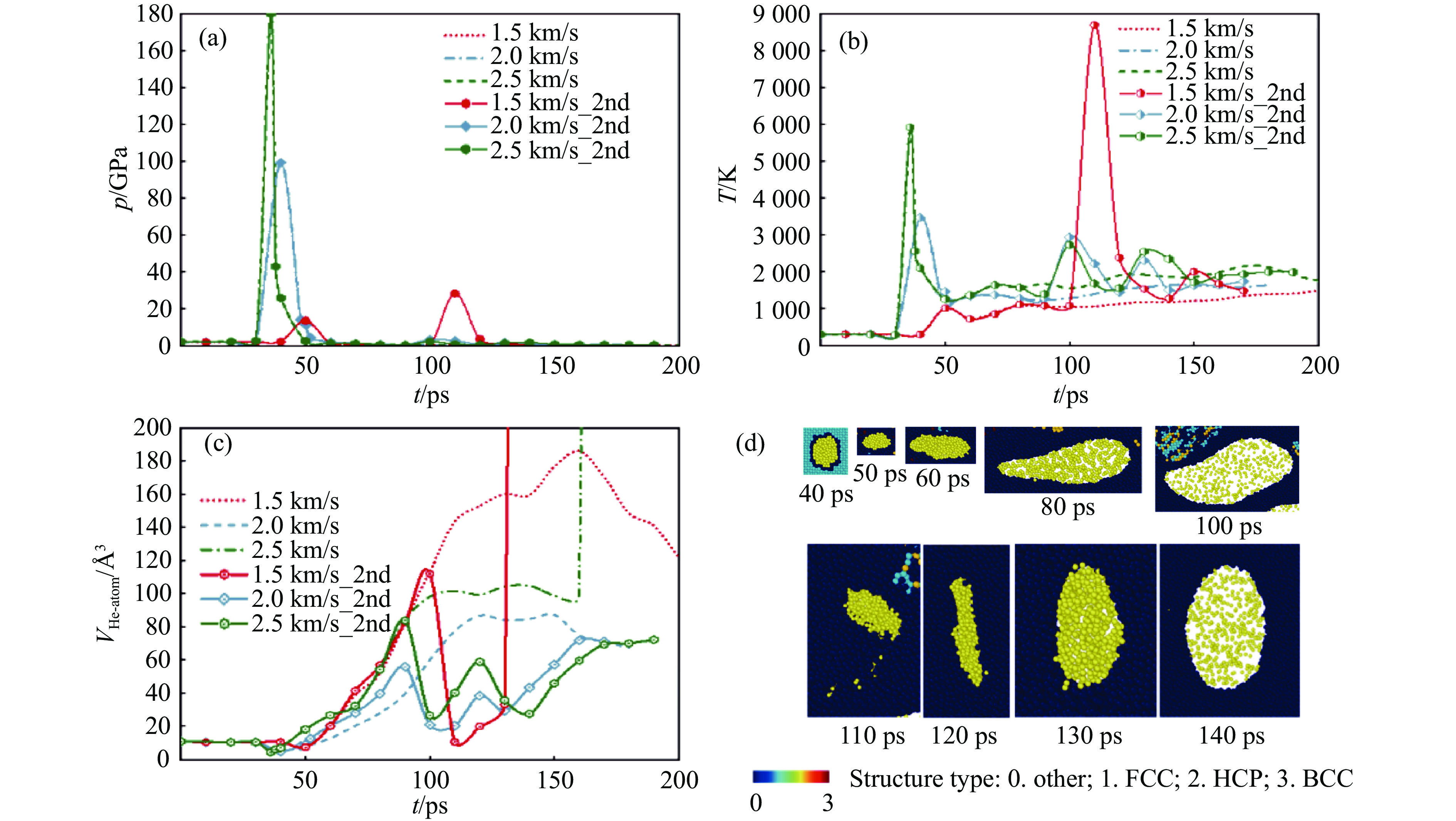
图 14 不同加卸载路径下氦泡4在两次冲击后的压力(a)、温度(b)和体积(c)随时间的变化规律以及up1=2.0 km/s、Δup2=1.0 km/s时氦泡4的演化过程 (d)
Figure 14. Pressure (a), temperature (b), and volume (c) of helium bubble 4 evolved over time following two successive shocks under varying loading and unloading paths, and the evolution process of helium bubble 4 when up1=2.0 km/s and Δup2=1.0 km/s (d)
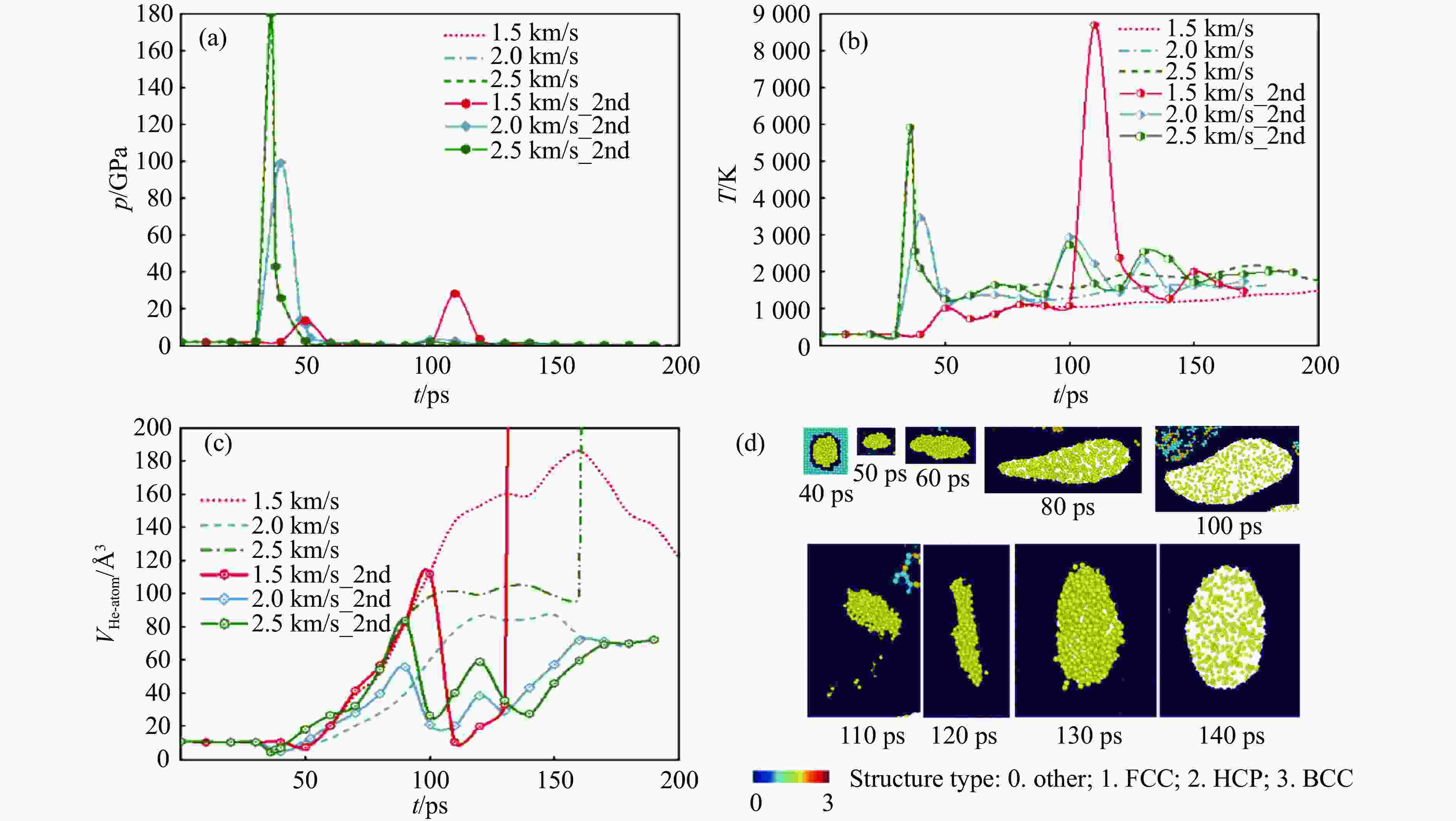
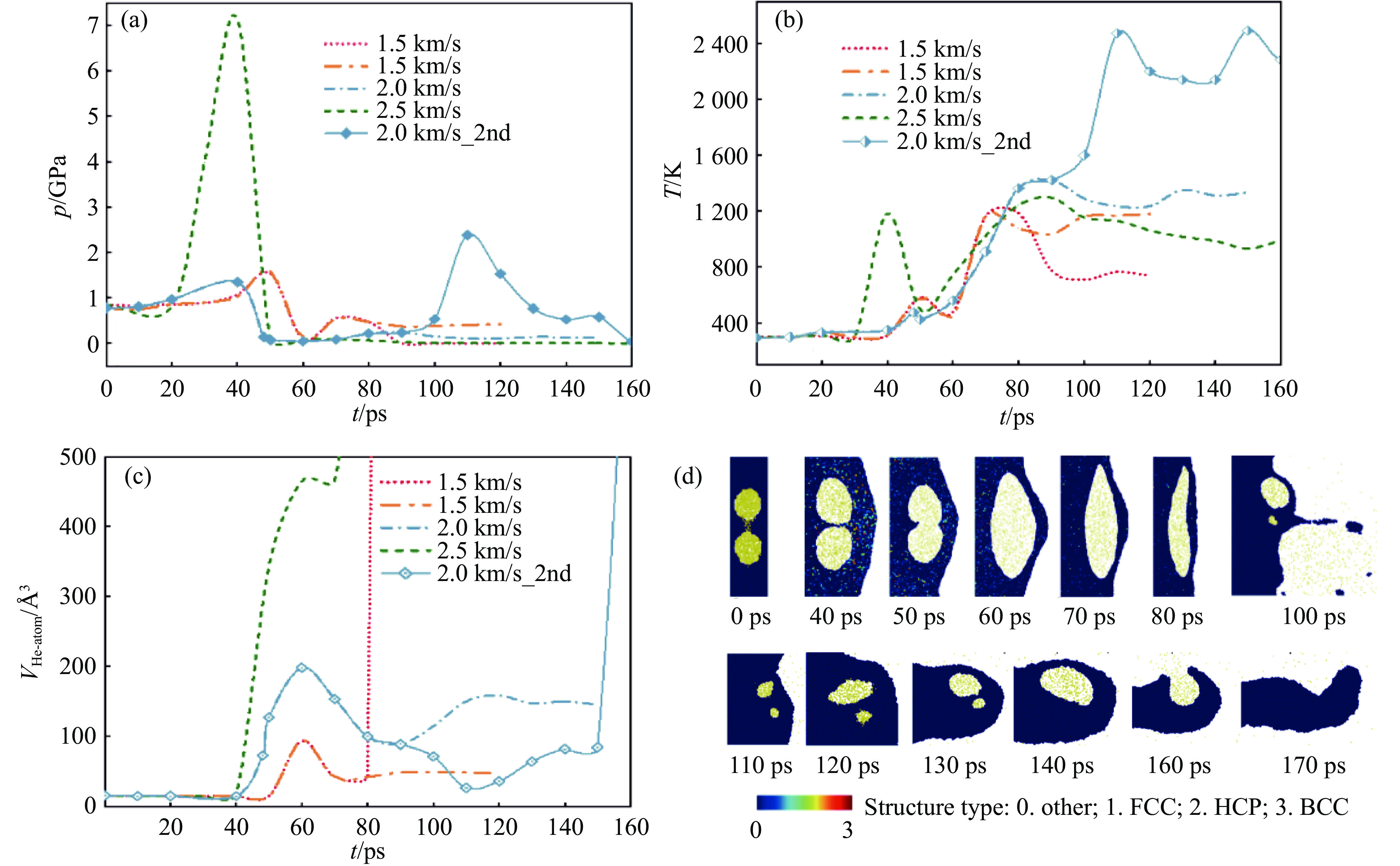
图 15 不同加卸载路径下氦泡5在两次冲击后的压力(a)、温度(b)和体积(c)随时间变化规律以及up1=1.5 km/s、Δup2=1.0 km/s时氦泡5的演化过程 (d)
Figure 15. Pressure (a), temperature (b), and volume (c) of helium bubble 5 evolved over time following two successive shocks under varying loading and unloading paths, and the evolution process of helium bubble 5 when up1=1.5 km/s and Δup2=1.0 km/s (d)
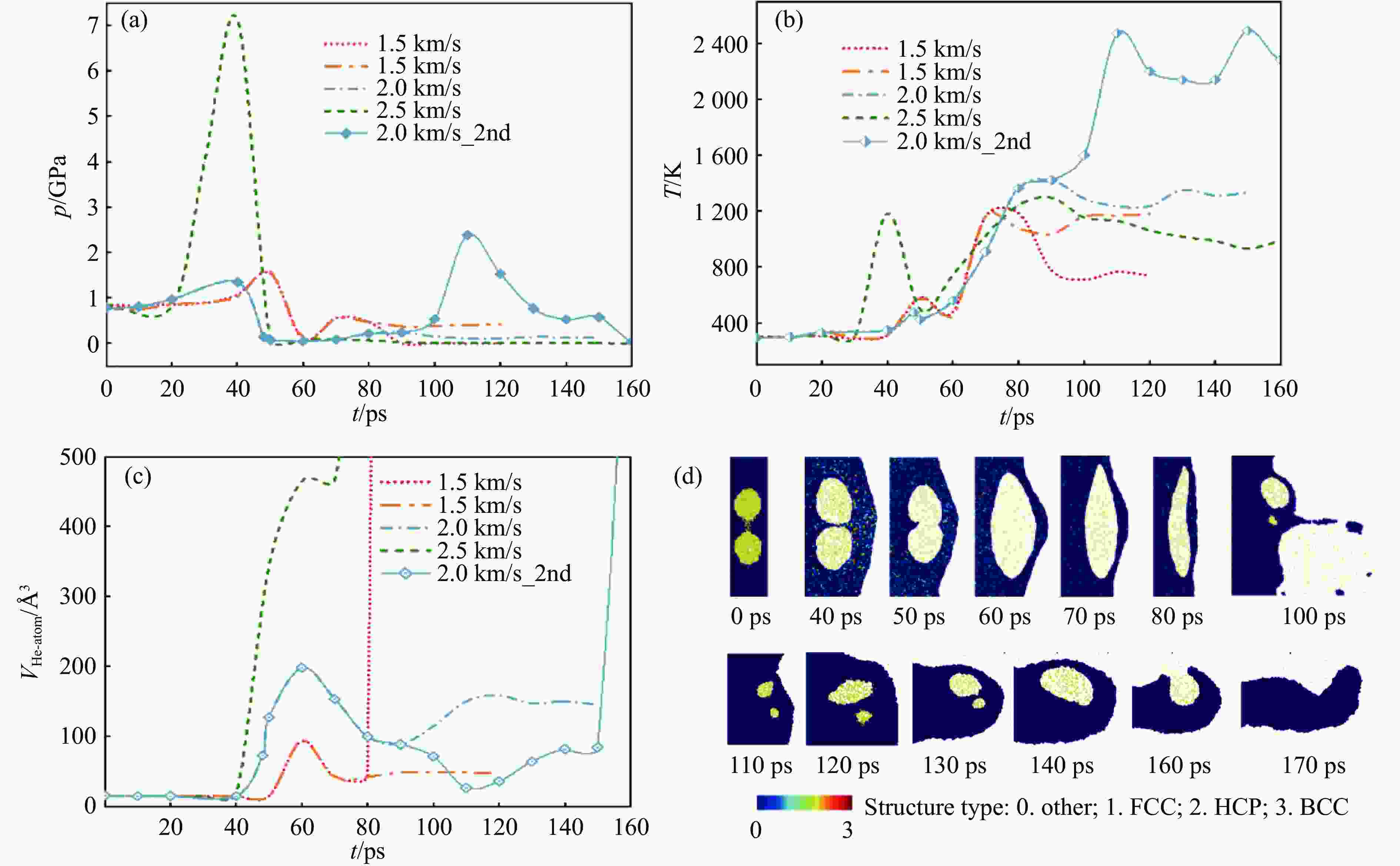
图 16 不同加卸载路径下氦泡6和6′在两次冲击后的压力 (a)、温度 (b)和体积 (c)随时间的变化规律以及up1=2.0 km/s、Δup2=1.0 km/s时氦泡6和6′的演化过程 (d)
Figure 16. Pressure (a), temperature (b), and volume (c) of helium bubble 6 & 6′ evolved over time following two successive shocks under varying loading and unloading paths, and the evolution process of helium bubble 6 & 6′ when up1=2.0 km/s and Δup2=1.0 km/s (d)
-
[1] 韩长生. 估算冲击加载下材料自由面微射喷射量的一个半经验解析公式 [J]. 高压物理学报, 1989, 3(3): 234–240. doi: 10.11858/gywlxb.1989.03.009HAN C S. A semi-empirical equation for estimating the micro-jet ejection from shocked free-surface [J]. Chinese Journal of High Pressure Physics, 1989, 3(3): 234–240. doi: 10.11858/gywlxb.1989.03.009 [2] 韩长生, 经福谦, 丁儆, 等. 不同加载速率下铝自由面微粒子喷射现象研究 [J]. 高压物理学报, 1989, 3(2): 97–106. doi: 10.11858/gywlxb.1989.02.001HAN C S, JING F Q, DING J, et al. Study on the phenomena of the mass ejection from the free surface of aluminum at different dynamic loading rates [J]. Chinese Journal of High Pressure Physics, 1989, 3(2): 97–106. doi: 10.11858/gywlxb.1989.02.001 [3] 王裴, 秦承森, 张树道, 等. SPH方法对金属表面微射流的数值模拟 [J]. 高压物理学报, 2004, 18(2): 149–156. doi: 10.3969/j.issn.1000-5773.2004.02.010WANG P, QIN C S, ZHANG S D, et al. Simulated microjet from free surface of aluminum using smoothed particle hydrodynamics [J]. Chinese Journal of High Pressure Physics, 2004, 18(2): 149–156. doi: 10.3969/j.issn.1000-5773.2004.02.010 [4] MARTZ J C, SCHWARTZ A J. Plutonium: aging mechanisms and weapon pit lifetime assessment [J]. JOM, 2003, 55(9): 19–23. doi: 10.1007/s11837-003-0023-0 [5] GLAM B, ELIEZER S, MORENO D, et al. Dynamic fracture and spall in aluminum with helium bubbles [J]. International Journal of Fracture, 2010, 163(1/2): 217–224. doi: 10.1007/s10704-009-9437-1 [6] GLAM B, STRAUSS M, ELIEZER S, et al. Shock compression and spall formation in aluminum containing helium bubbles at room temperature and near the melting temperature: experiments and simulations [J]. International Journal of Impact Engineering, 2014, 65: 1–12. doi: 10.1016/j.ijimpeng.2013.10.010 [7] ZHU Q, SHAO J L, WANG P. The growth and coalescence of helium bubbles in bicrystal copper under tension [J]. Journal of Nuclear Materials, 2023, 582: 154489. doi: 10.1016/j.jnucmat.2023.154489 [8] ZHU Q, SHAO J L, WANG P. Mechanism of nanoscale helium bubbles influencing dynamic tensile response of polycrystalline copper [J]. Mechanics of Materials, 2023, 185: 104755. doi: 10.1016/j.mechmat.2023.104755 [9] JIANG D D, ZHOU T T, WANG P, et al. Dynamic tensile fracture of liquid copper containing helium bubbles [J]. International Journal of Mechanical Sciences, 2022, 232: 107585. doi: 10.1016/j.ijmecsci.2022.107585 [10] WANG X X, NIU L L, WANG S Q. Strong trapping and slow diffusion of helium in a tungsten grain boundary [J]. Journal of Nuclear Materials, 2017, 487: 158–166. doi: 10.1016/j.jnucmat.2017.02.010 [11] JIANG D D, SHAO J L, HE A M, et al. Dynamic fracture characteristics of nanocrystalline Al containing He bubbles [J]. Scripta Materialia, 2023, 234: 115546. doi: 10.1016/j.scriptamat.2023.115546 [12] 祁美兰, 贺红亮, 王永刚, 等. 高应变率拉伸下纯铝中氦泡长大的动力学研究 [J]. 高压物理学报, 2007, 21(2): 145–150. doi: 10.3969/j.issn.1000-5773.2007.02.005QI M L, HE H L, WANG Y G, et al. Dynamic analysis of helium bubble growth in the pure Al under high strain-rate loading [J]. Chinese Journal of High Pressure Physics, 2007, 21(2): 145–150. doi: 10.3969/j.issn.1000-5773.2007.02.005 [13] 张凤国, 胡晓棉, 王裴, 等. 含氦泡金属铝层裂响应的数值分析 [J]. 爆炸与冲击, 2017, 37(4): 699–704. doi: 10.11883/1001-1455(2017)04-0699-06ZHANG F G, HU X M, WANG P, et al. Numerical analysis of spall response in aluminum with helium bubbles [J]. Explosion and Shock Waves, 2017, 37(4): 699–704. doi: 10.11883/1001-1455(2017)04-0699-06 [14] FENSIN S, JONES D, MARTINEZ D, et al. The role of helium on ejecta production in copper [J]. Materials, 2020, 13(6): 1270. doi: 10.3390/ma13061270 [15] WANG X X, SHAO J L, WU B, et al. Enhancement of metal surface micro-jet by nanoscale helium bubbles under supported and unsupported shocks [J]. Physics of Fluids, 2023, 35(5): 052112. doi: 10.1063/5.0147095 [16] LI B, WANG L, E J C, et al. Shock response of He bubbles in single crystal Cu [J]. Journal of Applied Physics, 2014, 116(21): 213506. doi: 10.1063/1.4903732 [17] WANG X X, HE A M, YANG Y, et al. Shock responses of nanoporous copper with helium doping by molecular dynamics simulations [J]. Computational Materials Science, 2021, 188: 110190. doi: 10.1016/j.commatsci.2020.110190 [18] WU H W, ZHOU T T, WANG P. The rupture and ejection of near-surface helium bubble in single crystal Cu under shock loading [J]. Journal of Nuclear Materials, 2022, 558: 153404. doi: 10.1016/j.jnucmat.2021.153404 [19] YAN S N, WU B, WANG X X, et al. The mechanisms of temperature rise and wavefront broadening induced by nanoscale He bubbles in copper during shock loadings [J]. Journal of Applied Physics, 2025, 137(20): 205903. doi: 10.1063/5.0265864 [20] FLANAGAN R M, HAHN E N, GERMANN T C, et al. Molecular dynamics simulations of ejecta formation in helium-implanted copper [J]. Scripta Materialia, 2020, 178: 114–118. doi: 10.1016/j.scriptamat.2019.11.005 [21] ZHOU T T, ZHAO F Q, ZHOU H Q, et al. Atomistic simulation and continuum modeling of the dynamic tensile fracture and damage evolution of solid single crystalline Al with He bubble [J]. International Journal of Mechanical Sciences, 2022, 234: 107681. doi: 10.1016/j.ijmecsci.2022.107681 [22] DURAND O, JAOUEN S, SOULARD L, et al. Comparative simulations of microjetting using atomistic and continuous approaches in the presence of viscosity and surface tension [J]. Journal of Applied Physics, 2017, 122(13): 135107. doi: 10.1063/1.4994789 [23] BAO Q, WU B, WANG X X, et al. Molecular dynamics investigation of unsupported double-shock induced micro-jet behaviors in copper containing helium bubbles [J]. Physics of Fluids, 2024, 36(11): 112101. doi: 10.1063/5.0232654 [24] BAO Q, SUI H N, WU B, et al. Near-surface fragmentation in irradiated copper under two successive shock loading: effects of local temperature re-distribution and helium bubble expansion [J]. Materials & Design, 2025, 254: 114013. doi: 10.1016/j.matdes.2025.114013 [25] TRINKAUS H, SINGH B N. Helium accumulation in metals during irradiation—where do we stand? [J]. Journal of Nuclear Materials, 2003, 323(2/3): 229–242. doi: 10.1016/j.jnucmat.2003.09.001 [26] SCHWARTZ A J, WALL M A, ZOCCO T G, et al. Characterization and modelling of helium bubbles in self-irradiated plutonium alloys [J]. Philosophical Magazine, 2005, 85(4): 479–488. doi: 10.1080/02678370412331320026 [27] WU W D, SHAO J L. Numerical and theoretical study on shock-induced coalescence of He bubbles [J]. International Journal of Mechanical Sciences, 2022, 234: 107699. doi: 10.1016/j.ijmecsci.2022.107699 [28] SHAO J L, WU W D. Shock-induced collapse and migration of nanoscale He bubble in single crystal Al [J]. Scripta Materialia, 2023, 222: 115033. doi: 10.1016/j.scriptamat.2022.115033 [29] PLIMPTON S. Fast parallel algorithms for short-range molecular dynamics [J]. Journal of Computational Physics, 1995, 117(1): 1–19. doi: 10.1006/jcph.1995.1039 [30] MISHIN Y, MEHL M J, PAPACONSTANTOPOULOS D A, et al. Structural stability and lattice defects in copper: ab initio, tight-binding, and embedded-atom calculations [J]. Physical Review B, 2001, 63(22): 224106. doi: 10.1103/PhysRevB.63.224106 [31] BRINGAE M, CAZAMIAS J U, ERHART P, et al. Atomistic shock Hugoniot simulation of single-crystal copper [J]. Journal of Applied Physics, 2004, 96(7): 3793–3799. doi: 10.1063/1.1789266 [32] LUO S N, HAN L B, XIE Y, et al. The relation between shock-state particle velocity and free surface velocity: a molecular dynamics study on single crystal Cu and silica glass [J]. Journal of Applied Physics, 2008, 103(9): 93530. doi: 10.1063/1.2919571 [33] WANG L, NING X J. Molecular dynamics simulations of helium behaviour in copper crystals [J]. Chinese Physics Letters, 2003, 20(9): 1416–1419. doi: 10.1088/0256-307X/20/9/302 [34] SHAO J L, WANG P, HE A M, et al. Influence of voids or He bubbles on the spall damage in single crystal Al [J]. Modelling and Simulation in Materials Science and Engineering, 2014, 22(2): 025012. doi: 10.1088/0965-0393/22/2/025012 -

 下载:
下载:

计量
- 文章访问数: 2113
- HTML全文浏览量: 1639
- PDF下载量: 122
